About Francis Williams
Lived 1702 – 1770 (aged 67–68). Francis Williams was a British mathematician, poet, astronomer, polymath and scholar.
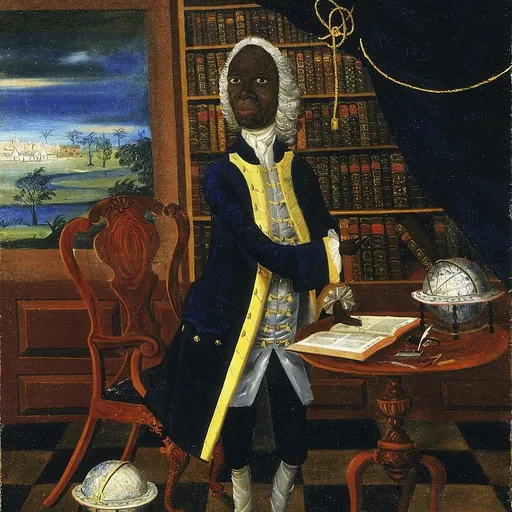
Francis Williams ( 1690 – 1770) was a Jamaican polymath, scholar, astronomer and poet who was one of the most notable free black people in Jamaica. Born in Kingston, Jamaica, into a slaveholding family, Williams subsequently travelled to England where he officially became a British subject. After returning to Jamaica, he established a free school for free people of colour in Jamaica. His portrait is considered to be the earliest-known example in the canon of western art to have been commissioned by a known Black person to record their own intellectual achievements.
Due to poor archival conditions, most information about Williams comes from a lengthy racist attack on him by his white contemporary Edward Long, and from the portrait itself, which displays some of Williams' library and shows that he had observed the return of Halley's Comet which confirmed Newton's laws of motion. The portrait was purchased by Long after Williams' death.
Early life
Francis Williams was born 1690 in the English colony of Jamaica to John and Dorothy Williams, both of whom were free people of colour. John had been emancipated in 1699 through the will and testament of his former enslaver. The Williams family's status as free, property-owning black people set them apart from other Jamaican inhabitants, who were at the time mostly white colonists and enslaved Africans. Eventually, the Williams family property expanded to include both land and slaves. Although it was rare for black people in the 18th century to receive an education, Francis Williams and his siblings were able to afford schooling due to their father's wealth. Francis travelled to Europe, where he was reported to be in 1721.
In England
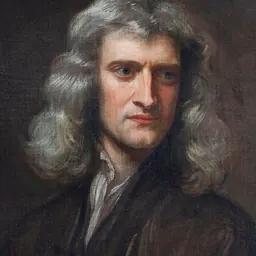
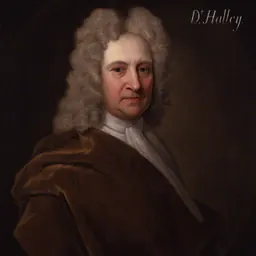
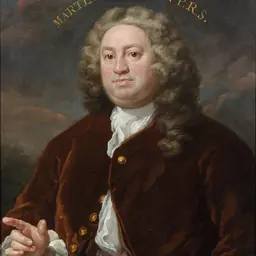
On 8 August 1721, Williams became a member of Lincoln's Inn in London, one of the four Inns of Court for barristers of England and Wales. Williams was allowed to attend scientific Royal Society meetings, but in 1716, when he was proposed by Martin Folkes as a fellow of the Royal Society at a large meeting—in the presence of Isaac Newton and Edmond Halley
Williams was officially made a British subject and took the oath of citizenship in 1723.
In Jamaica
In the 1720s, Williams returned to Jamaica, where he set up a free school for black children. In 18th-century Jamaica, most free schools were only open to the children of poor white inhabitants. Wealthy planters had bequeathed property and funds to establish foundations to educate poor white children and people of colour who could be classified as white. In his school, Williams taught reading, writing, Latin and mathematics. Long's History of Jamaica contains a note about the possible attribution of "Welcome, Brother Debtor", a folk tune that gained popularity in Britain during the 18th century, to Williams or to Wetenhall Wilkes.
In Jamaica, Williams kept enslaved people he inherited from his father.
The Assembly, which comprised elected white planters, was alarmed at the success with which Williams argued his case, and how he secured the dismissal of Brodrick's attempts to prosecute him. Complaining that "Williams's behaviour is of great encouragement to the negroes of the island in general", the Assembly then decided to "bring in a bill to reduce the said Francis Williams to the state of other free negroes in this island". This legislation made it illegal for any black person in Jamaica to strike a white person, even in self-defence.
Legacy The Victoria and Albert Museum acquired a portrait of Francis Williams in 1928 because of its depiction of mahogany furniture, rather than its human subject.
In 2024, academic Fara Dabhoiwala published a reevaluation of the painting, drawn from scans and x-rays of the portrait, which revealed that the work is likely to have been commissioned by Williams himself c. 1760 to commemorate his computing and observing the trajectory of Halley's Comet over Jamaica in 1759. Until its publication, credit for confirming Edmund Halley's work on the comet's reappearance had not been given to Williams.
On 7 April 2025, the International Astronomical Union named the main-belt asteroid 20610 Franciswilliams in his honour.
Don’t just read it —
keep it.
Full-length biographies made to live with: read them, listen on the way to work, watch them tonight.
- E-book
- Audio
- Video
Instant download · yours to keep · every purchase keeps this site free
Important facts
People in Francis Williams's life
Named in this biography and alive at the same time

Related people
Same field, nearest in time




Contemporaries
People whose lives overlapped Francis Williams's




Frequently asked questions
Who was Francis Williams?
Jamaican scholar and polymath
When was Francis Williams born?
Francis Williams was born in 1702 in Kingston.
When did Francis Williams die?
Francis Williams died in 1770 in Jamaica.
What was Francis Williams's occupation?
Francis Williams was a mathematician, poet, astronomer, polymath and scholar.
What nationality was Francis Williams?
Francis Williams was British.
Sources & further reading
· DBpedia: Francis Williams (polymath)
Cite this page
APA: Biography.guide. (2026). Francis Williams. https://biography.guide/francis-williams-mathematician/
MLA: "Francis Williams." Biography.guide, https://biography.guide/francis-williams-mathematician/.
Chicago: "Francis Williams." Biography.guide. https://biography.guide/francis-williams-mathematician/.
Data last updated: 2026-09-24 · Spot an error? Report a correction.
Portrait: Wikimedia Commons · author & licence
Page generated 2026-09-27 05:09 UTC