
About Francesco Orlando
Lived 1934 – 2010 (aged 75). Francesco Orlando was an Italian literary critic and university teacher.
Francesco Orlando (July 2, 1934 – June 22, 2010) was an Italian literary critic, essayist and university professor who specialized in French literature.
Life
Childhood and adolescence Francesco Orlando was born in Palermo to a wealthy family: his father, Camille Orlando, was a lawyer and the grandson of Vittorio Emanuele Orlando, President of the Italian Council. Following the onset of WWII, the Orlando family was forced to move to a country home near Terrasini, where Orlando began his studies. In 1943, following the American arrival in Sicily, his family returned to Palermo where the young Orlando attended Jesuit secondary school before ultimately studying at the public secondary school. These secondary-school years were formative for Orlando's intellectual development; he became interested in music, literature and theatre. In addition, Orlando's family environment was stimulating, they often hosted musical evenings in which the young Francesco was asked to perform on the piano and sing. Through his father's substantial library, he was able to explore a wide range of topics: indeed, at the age of 15, he published a translation of Victor Hugo's Hernani.
Orlando retired from his university career in 2004, but pursues continued research in literature and published his first novel, titled La doppia seduzione.
He died in Pisa in 2010.
Obsolete objects in the literary imagination: ruins, relics, rarities, rubbish, uninhabited places, and hidden treasures Obsolete objects in the literary imagination: ruins, relics, rarities, rubbish, uninhabited places, and hidden treasures, text first published in Italian in 1993, is considered Francesco Orlando's magnum opus. Therein, he posits that the theoretical effort of defining literature is analogous to the passionate reading of texts in the Western tradition, from Antiquity to the 19th century.
The theoretical crux of the books is faithful to the ambivalent orlandian view of time: time destroys or valorizes, but also destroys and valorizes. According to Orlando, this fundamental ambivalence is an anthropological constant for humankind, one that can be emphasized through literature, as this medium has the right to consider the representation of useless and disgusting objects, while also rejecting their esthetic value. The proliferation of this type of literary images, according to Orlando's perspective, testifies to a critique of existing expectations of order, efficiency and functionality typical of bourgeois society.
Published works La foresta è tutta del sole. 1949-1954, poetry, S.F. Flaccovio editore, 1954 L'opera di Louis Ramond, Feltrinelli, 1960 Routrou dalla tragicommedia alla tragedia, Bottega d'Erasmo, 1963 Ricordo di Lampedusa, All'insegna del pesce d'oro, 1963 ; 1985 Per una teoria freudiana della letteratura, Einaudi, 1965 ; 1973, 1987, 1992 Infanzia, memoria e storia da Rousseau ai romantici, Liviana, 1966 ; Pacini, 2007 Proust, Sainte-Beuve e la ricerca in direzione sbagliata, in Critica e storia letteraria: studi offerti a Mario Fubini, Liviana, 1970 Lettura freudiana della « Phèdre », Einaudi, 1971 ; Due letture freudiane: Fedra e il Misantropo, 1980 ; 1990 Introduzione a Sigmund Freud, Il motto di spirito e la sua relazione con l'inconscio, Boringhieri, 1975 Lettura freudiana del Misanthrope e due scritti teorici, Einaudi, 1979 ; 1990 Illuminismo e retorica freudiana, Einaudi, 1982 ; Illuminismo, barocco e retorica freudiana, 1997 « Rhétorique des Lumières et dénégation freudienne », Poétique, n° 41, février 1980, pp. 78–89 Le costanti e le varianti : studi di letteratura francese e di teatro musicale, Il Mulino, 1983 « Freud and Literature. Eleven Ways He Did It », in Poetics, 1984 « Letteratura e psicanalisi: alla ricerca dei modelli freudiani », in Letteratura italiana, IV, L’interpretazione, Torino, Einaudi, 1985, pp. 549–587 Gli oggetti desueti nelle immagini della letteratura. Rovine, reliquie, rarità, robaccia, luoghi inabitati e tesori nascosti, Einaudi, 1993 ; 1994, 2010, Yale University Press; 2006, preface by Carlo Ginzburg Introduzione a William Beckford, Vathek : racconto arabo, Marsilio, 1996 L'altro che è in noi : arte e nazionalità, Bollati Boringhieri, 1996 Ricordo di Lampedusa (1962) suivi de Da distanze diverse (1996), Bollati Boringhieri, 1996 ; 2001 Introduzione a Mario Praz, La carne, la morte e il diavolo nella letteratura romantica, Sansoni, 1996 L'intimità e la storia : lettura del Gattopardo, Einaudi, 1998 Cura del convegno e degli atti di Giuseppe Tomasi di Lampedusa, cento anni dalla nascita, quaranta dal Gattopardo, Palerme, Palais Chiaramonte, 12, 13 et 14 décembre 1996, Assessorato alla cultura, 1999 Statuti del soprannaturale nella narrativa, in Franco Moretti (direction), Il romanzo, vol. I (La cultura del romanzo), Einaudi, 2001 La doppia seduzione, Einaudi, 2010 (roman)
English translations Toward a Freudian Theory of Literature: with an Analysis of Racine's « Phèdre », trans. by Charmaine Lee, Baltimore, Johns Hopkins University Press, 1978 Obsolete Objects in the Literary Imagination: Ruins, Relics, Rarities, Rubbish, Uninhabited Places, and Hidden Treasures, trans. by Gabriel Pihas and Daniel Seidel, in collaboration with Alessandra Grego ; preface by David Quint, New Haven, Yale University Press, 2006
French translations Lecture freudienne de « Phèdre », trans. by Danièle and Thomas Aron, Paris, Les Belles Lettres, 1986 Un souvenir de Lampedusa (1962) followed by A distances multiples (1996), trans. by Michel Balzamo, Paris, l'Inventaire, 1996 Les objets désuets dans l'imagination littéraire: ruines, reliques, raretés, rebuts, lieux inhabités et trésors cachés, trans. by Paul-André et Aurélie Claudel, Paris, Garnier, 2010 L'Intimité et l'Histoire: lecture du « Guépard », trans. by Chetro De Carolis, Paris, Garnier, 2014
Prefaces Sigmund Freud, Il motto di spirito e la sua relazione con l'inconscio (Der Witz und seine Beziehung zum Unbewussten), trans. by S. Daniele et E. Sagittario, Torino, Bollati Boringhieri, 1975 Carmelo Samonà, Fratelli e tutta l'opera narrativa, Mondadori, 2002 'Il vero in maschera: dialogismi galileiani. Idee e forme nelle prose scientifiche del Seicento by Emanuele Zinato, Liguori, 2003 Racconti, facezie, libelli by Voltaire, Gianni Iotti's edition, Einaudi, 2004 Corrispondenza con la madre (1887-1905) by Marcel Proust, Rocco Carabba, 2010 Marcel Proust, Contro Sainte-Beuve, trans. from French by M. Bertini and P. Sarini, Torino, Einaudi, 1974
Don’t just read it —
keep it.
Full-length biographies made to live with: read them, listen on the way to work, watch them tonight.
- E-book
- Audio
- Video
Instant download · yours to keep · every purchase keeps this site free
Important facts
People in Francesco Orlando's life
Named in this biography and alive at the same time
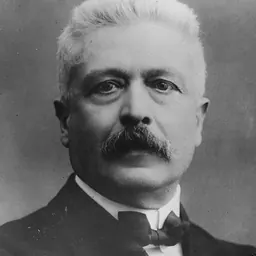




Related people
Same field, nearest in time




Contemporaries
People whose lives overlapped Francesco Orlando's





Frequently asked questions
Who was Francesco Orlando?
Italian literary critic (1934-2010)
When was Francesco Orlando born?
Francesco Orlando was born on 2 July 1934 in Palermo.
When did Francesco Orlando die?
Francesco Orlando died on 22 June 2010 in Pisa.
What was Francesco Orlando's occupation?
Francesco Orlando was a literary critic and university teacher.
What nationality was Francesco Orlando?
Francesco Orlando was Italian.
Sources & further reading
· Wikipedia: Francesco Orlando
· DBpedia: Francesco Orlando (critic)
Cite this page
APA: Biography.guide. (2026). Francesco Orlando. https://biography.guide/francesco-orlando-literary-critic/
MLA: "Francesco Orlando." Biography.guide, https://biography.guide/francesco-orlando-literary-critic/.
Chicago: "Francesco Orlando." Biography.guide. https://biography.guide/francesco-orlando-literary-critic/.
Data last updated: 2026-09-20 · Spot an error? Report a correction.
Page generated 2026-09-27 05:02 UTC