
About Carlo Ginzburg
Lived 1939 – 2026 (aged 87). Carlo Ginzburg was an Italian historian, university teacher, cultural studies scholar, translator and essayist.
Carlo Ginzburg (; 15 April 1939 – 17 June 2026) was an Italian historian and one of the founders of the field of microhistory. Coming from a Jewish family from Turin, he received a PhD from the University of Pisa in 1961. He subsequently pursued an academic career. His works include The Night Battles, The Cheese and the Worms, and Ecstasies: Deciphering the Witches' Sabbath.
Early life and education Ginzburg was born in Turin on 15 April 1939, to a family of Lithuanian/Russian-Jewish and Italian-Jewish origins, he was the eldest of three children. His father, Leone, was a philologist, historian, and literary critic and co-founder of the publishing firm Einaudi. The family had emigrated to Italy from Odesa in present-day Ukraine. He also studied at the Warburg Institute in London. Career Ginzburg subsequently held teaching positions at the University of Bologna, the University of California, Los Angeles (1988–2006), and the Scuola Normale Superiore di Pisa. In 1975–76, he taught at the Institute for Advanced Study of Princeton University on a Fulbright grant. His fields of interest ranged from the Italian Renaissance to early modern European history, with contributions to art history, literary studies, and the theory of historiography.
He is considered to be among the founders of the subdiscipline of microhistory.
In 1979, Ginzburg formally requested that Pope John Paul II open the Inquisition Archives. While the immediate response of the Vatican had not yet come to light, a limited group of scholars were granted access by 1991. In January 1998, the archives were formally opened to "qualified researchers". Cardinal Ratzinger (who later became Pope Benedict XVI) credited Ginzburg and his 1979 letter as having been instrumental in the Vatican's decision to open these archives. Ginzburg had his doubts about using statistics to reach a judgment about the period. "In many cases, we don't have the evidence, the evidence has been lost", said Ginzburg.
Along with Paul Ginsborg, Marcello Flores, Sergio Luzzatto, Claudio Pavone, Enzo Traverso, etc., Ginzburg called, in January 2007, for the rejection of a bill, presented by Justice Minister Clemente Mastella, that would have outlawed Holocaust denial. They argued that Italy's legislation was sufficient to cope with such acts. The amended bill finally restricted itself to reinforcing sentences concerning hate speech.
Ginzburg was awarded the 2010 Balzan Prize and was elected an International Member of the American Philosophical Society in 2013.
Work
In The Night Battles and Ecstasies, Ginzburg traced a complex path from certain European witch persecutions to the benandanti and a wide variety of practices which he describes as evidence of a substrate of shamanic cults in Europe. His 1999 work, The Judge and the Historian, sought to expose injustice in the trial of Adriano Sofri, but failed to win a new trial. His book was not only about Sofri but was also a general reflection on the scientific methods used by a historian, and their similarity to the work of a judge, who also has to correlate testimonies with material evidence in order to deduce what really happened. Thus, he explains how the judicial model of early historiography made it focus on easily verifiable facts, resulting in studies that centred on individuals or on what Lucien Febvre and Marc Bloch called in the Annales d'histoire économique et sociale an "evenemential history". In his book History, Rhetoric, and Proof (1999), he contrasts the ancient rhetoric of Aristotle with the modern rhetoric of Nietzsche. Personal life and death Ginzburg's first marriage, which ended in divorce, was to fellow historian Anna Rossi-Doria; they had two children, one of whom is writer Lisa Ginzburg. He later married Luisa Ciammitti.
Ginzburg died in the early hours of 17 June 2026, at the age of 87, in Bologna, where he had spent his last years.
Don’t just read it —
keep it.
Full-length biographies made to live with: read them, listen on the way to work, watch them tonight.
- E-book
- Audio
- Video
Instant download · yours to keep · every purchase keeps this site free
Important facts
People in Carlo Ginzburg's life
Named in this biography and alive at the same time






Related people
Same field, nearest in time

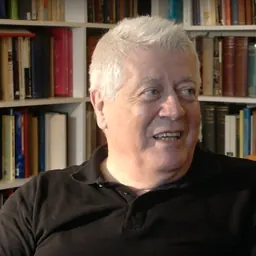
Contemporaries
People whose lives overlapped Carlo Ginzburg's



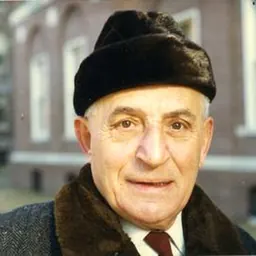


Frequently asked questions
Who was Carlo Ginzburg?
Italian historian (1939–2026)
When was Carlo Ginzburg born?
Carlo Ginzburg was born on 15 April 1939 in Turin.
When did Carlo Ginzburg die?
Carlo Ginzburg died on 17 June 2026 in Bologna.
What was Carlo Ginzburg's occupation?
Carlo Ginzburg was a historian, university teacher, cultural studies scholar, translator and essayist.
What nationality was Carlo Ginzburg?
Carlo Ginzburg was Italian.
Sources & further reading
Cite this page
APA: Biography.guide. (2026). Carlo Ginzburg. https://biography.guide/carlo-ginzburg/
MLA: "Carlo Ginzburg." Biography.guide, https://biography.guide/carlo-ginzburg/.
Chicago: "Carlo Ginzburg." Biography.guide. https://biography.guide/carlo-ginzburg/.
Data last updated: 2026-09-20 · Spot an error? Report a correction.
Page generated 2026-09-27 05:30 UTC