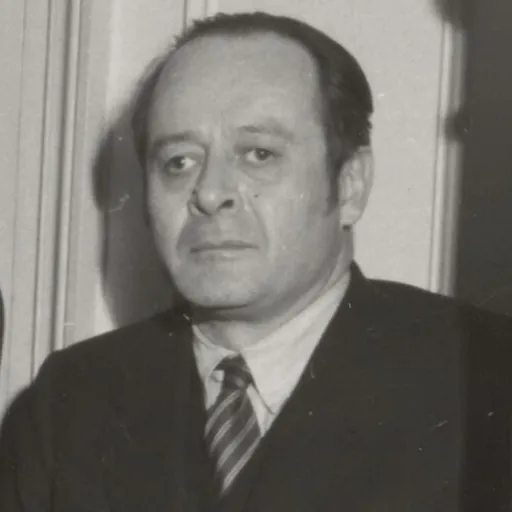
Mario Praz
Italian anglist, art collector, art historian, journalist and writer
About Mario Praz
Lived 1896 – 1982 (aged 85). Mario Praz was an Italian art collector, art historian, journalist, translator, university teacher and literary critic.
Mario Praz (; 6 September 1896 in Rome – 23 March 1982 in Rome) was an Italian critic of art and literature, and a scholar of English literature. His best-known book, The Romantic Agony, was a survey of the decadent, erotic and morbid themes that characterised European authors of the late 18th and 19th centuries (see Femme fatale for a reference of one of his chapters). The book was written and published first in Italian as in 1930; and the most recent edition was published in Florence by Sansoni in 1996.
Biography Praz was the son of Luciano Praz (died 1900), a bank clerk, and his wife, the former Giulia Testa di Marsciano (died 1931), daughter of Count Alcibiade Testa di Marsciano. His stepfather was Carlo Targioni (died 1954), a physician, whom his mother married in 1912.
He studied at the University of Bologna (1914–15), received a law degree from the University of Rome (1918), and received a doctorate in literature from the University of Florence (1920).
Praz married, on 17 March 1934 (separated 1942, divorced 1947), Vivyan Leonora Eyles (1909–1984), an English-literature lecturer at the University of Liverpool whom Praz met during his time there as a special lecturer in Italian studies. She was a daughter of the English novelist and feminist writer Margaret Leonora Eyles (1889–1960), who addressed to her in 1941 an autobiographical work entitled For My Enemy Daughter. She remarried in 1948, as her second husband, art historian Wolfgang Fritz Volbach. Praz and Eyles had one child, a daughter, Lucia Praz (born 1938).
Praz's only other known romantic attachment was to an Anglo-Italian woman named Perla Cacciguerra, whom he met in 1953 and called "Diamante" in the book The House of Life.
Praz's residence in Palazzo Primoli in Rome has been turned into the Museo Mario Praz. In Orhan Pamuk's novel The Museum of Innocence it is mentioned as "the most magnificent writer's museum I had seen".
Life and writings Praz was a well-respected Italian-born art critic and scholar of the English language. He taught Italian Studies at the Victoria University of Manchester between 1932 and 1934. He then went on to teach English Literature at the University of Rome from 1934, until he retired in 1966. In 1962, he became an honorary Knight Commander of the Order of the British Empire. Though Praz is perhaps best known for his writings in the English literary field, he has made strong contributions to the concepts, writings and perception of both interior design and interior decoration. The concepts that were presented in his The Romantic Agony have been shaped into his design and art criticism. This writing style has been successfully employed in Praz's two most noteworthy design books, The House of Life and An Illustrated History in Interior Design. These works highlight his theories of the interiority of a space, and reveal his concepts of how a person inhabits the interior and how they shape it to make it their own. His ground-breaking work Studies in seventeenth-century imagery, first published in 1939 and reissued many times since, is one of the first attempts to produce a systematic catalogue and analysis of the early modern allegorical genres of the emblem and the personal device.
Design writings Praz has had a profound impact not only on writings about interior design and decoration but also on the history, and the development, of design. The work, An Illustrated History of Interior Decoration from Pompeii to Art Nouveau has allowed the creation of a photographic album to be made, "Praz's rediscovery of this minor but fascinating art . . . was a revelation, and the historic no less than aesthetic importance of the subject is now recognised by a group of informed collectors". His work "provides a selection of visual representations of domesticity from ancient Greece through to the Art Nouveau, and a commentary upon them." The images show the interior decor and design of Greek, Roman, Medieval, Renaissance and Victorian Homes in Europe between the period of 1770 and 1860. The sketches, paintings, and watercolour representations capture the spatial qualities and features of the interiority and decoration of the overall space. The images record accuracy to the shape of the room, from the carpet to the furniture, pictures, fabrics, wall colour, the hang of curtains and the placement of light. Praz's work has documented all these interior characteristics that would have shaped the space for the residents in the eighteenth and nineteenth centuries. This work has had a strong contribution to the impact of not only researching the interiority of a space, but also providing a new groundwork for recording the history of an interior.
Further, Praz has made an influential impact on the way interior design has been studied and documented since the mid-twentieth century. He helped foster the change in the growth of historical design studies and research. His work, An Illustrated History of Interior Decoration, "merges a traditional art-historical approach with philosophical musings about the role of interior assemblage". Praz was one of the first critics to look into the links between the contexts of art history, and link it to the interior workings of a space. He was one of the first designers to note that furnishings were a representation of the individual. This is shown in this writing as he states "furnishings are tangible artefacts of social history". Through the grounding of this concept, "Praz takes the idea of the inhabiting subject, and the interior and its decoration, as pre-given concepts for the construction of this history, not ones that have emerged out of particular historical conditions", The thorough recount of the interiority of this space "shows the apartment (in a manner of a television program), providing autobiographical accounts of associations with furnishings". His writing provides an insight into firstly how he accesses the space in which he lives, and how he inhabits that space. The House of Life basically mimics the writing style of An Illustrated History. This detailed recount and writing style has been mimicked in subsequent design writing, in order to document every aspect of the interiority of a space.
The concept of in art is associated with Praz, who used the term to refer to cluttered visual interior design.
Influences on the future of design journals and design study The initial findings that are presented in An Illustrated History of Interior Decoration have made influential impacts on the writings in George Savage's A concise history of Interior Design. The concepts of linking the interior to social history are basically echoed in Savage's work. This early influence of Praz's writing in the mid-1960s continued throughout the remainder of the twentieth century. The concepts that were addressed in Praz's work An Illustrated History of Interior Decoration highlight the context of the interior designer, as a profession, in twenty-first-century societies. The work of the interior designer needs to be able to mimic individual needs and wants, so the person can correctly be represented in the interiority of their home. This concept was initially introduced and highlighted by Praz, and this statement allows an insight into how the workings of the interior are conducted.
Critical views on design writing The varying opinions on Praz's design work can be seen in the writings of Cyril Connolly and Edmund Wilson. While Wilson praises Praz's work as a "masterpiece", Connolly calls The House of Life "one of the most boring books I have ever read. . . . It's unbelievably exhausting. . . . It has a bravura of boredom, an audacity of ennui that makes one hardly believe one's eyes."
Critical views In his preface of Voce dietro la scena: Un'antologia personale, Mario Praz shows his peculiar irony and understatement in reporting cases of misquotations and misinterpretations of his studies or his personality abroad. He reports the following facts: In the Life and Letters of Sir Edmund Gosse, Gosse writes in a letter dated 17 November 1923: "Mario Praz is an interesting young professor, a great Swinburnian." In the "Italian Pageant", Derek Patmore states: "Dr. Mario Praz, so long a staunch friend of England." Charles Du Bos writes in his diary in 1923: "I dined with Abraham and Mario Praz. He is a great friend of Vernon Lee." Marie-Anne Comnène, the widow of Benjamin Crémieux, writes in Hommes et Mondes, December 1949: "There were authoritative critics: Marco Pron, Franci, Rossi, count Morra and Mademoiselle Bellonci, great animators of the Pen Club." Marco Pron is actually Mario Praz, misspelt. Charles Jackson says in The Outer Edges: "Mario Praz and Bertold Brecht make the best reading in the world for a sexual criminal." Around 1950, Kadar Jennö translated Neoclassic Taste into Hungarian; he asserted that comrade Praz is a harsh enemy of capitalism. Besides these fun facts, though, Praz has been highly admired in Italy and abroad. Edmund Wilson, in "The Genie of the Via Giulia", wrote that Praz "will come to be known to posterity—so far as a foreigner can judge—as one of the best Italian writers of his time".
Don’t just read it —
keep it.
Full-length biographies made to live with: read them, listen on the way to work, watch them tonight.
- E-book
- Audio
- Video
Instant download · yours to keep · every purchase keeps this site free
Important facts
People in Mario Praz's life
Named in this biography and alive at the same time





Related people
Same field, nearest in time
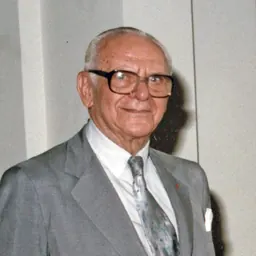


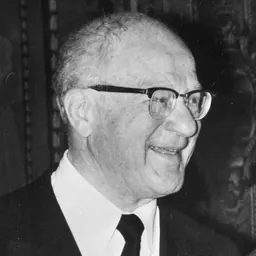
Contemporaries
People whose lives overlapped Mario Praz's


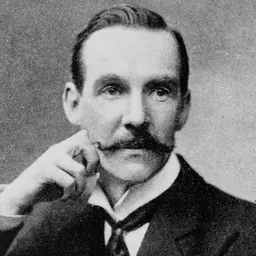


Frequently asked questions
Who was Mario Praz?
Italian anglist, art collector, art historian, journalist and writer (1896-1982)
When was Mario Praz born?
Mario Praz was born on 6 September 1896 in Rome.
When did Mario Praz die?
Mario Praz died on 23 March 1982 in Rome.
What was Mario Praz's occupation?
Mario Praz was an art collector, art historian, journalist, translator, university teacher and literary critic.
What nationality was Mario Praz?
Mario Praz was Italian.
Sources & further reading
Cite this page
APA: Biography.guide. (2026). Mario Praz. https://biography.guide/mario-praz/
MLA: "Mario Praz." Biography.guide, https://biography.guide/mario-praz/.
Chicago: "Mario Praz." Biography.guide. https://biography.guide/mario-praz/.
Data last updated: 2026-09-22 · Spot an error? Report a correction.
Portrait: Wikimedia Commons · author & licence
Page generated 2026-09-27 05:01 UTC