
About Florian Ștefănescu-Goangă
Lived 1881 – 1958 (aged 76). Florian Ștefănescu-Goangă was a Romanian psychologist and politician.
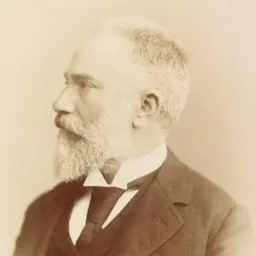
Florian Ștefănescu-Goangă (born Florian Ștefănescu; 5 April 1881 – 26 March 1958) was a Romanian psychologist. The son of a peasant family from Curtea de Argeș, he attended the University of Bucharest, followed by doctoral studies in psychology at Leipzig University under Wilhelm Wundt. Following World War I, he became a professor at the newly founded University of Cluj, emerging as a pioneer in experimental psychology in Romania over the ensuing decades. He led the university between 1932 and 1940, also serving in government for a time. An assassination attempt against him in 1938 precipitated the killing of Iron Guard leader Corneliu Zelea Codreanu. After 1945, he initially worked with the new communist government, but his insistence on an apolitical teaching environment ultimately saw him held at Sighet prison from 1950 to 1955, and he died three years after his release.
Biography Education and research Born in Curtea de Argeș, his parents Ion and Maria were landed peasants (moșneni) who owned a mill and an apiary. He attended primary school in his native town, followed by Matei Basarab High School in the national capital Bucharest. After graduation in 1899, He specialized in experimental psychology and studied under Wilhelm Wundt, who endorsed his doctorate in 1911. In 1927, he established an experimental psychology laboratory, which became a separate institute the following year, the first of its kind in Romania. In 1929, he founded a publishing house for the institute, which brought out 34 monographs, mainly doctoral theses defended at the institute. In 1931, he laid the foundation for a psychology society divided into four sections: educational psychology, behavioral economics, legal psychology and medical psychology.
University administrator and government official He served as rector of Cluj University between 1932 and 1940. As such, he played a prominent role in the building of an Academic College. More broadly, his rectorial term coincided with the Great Depression and a serious shortfall in university funding, so that he consistently used his position to call for budgetary increases. As early as 1924, when Sextil Pușcariu proposed inviting Lucian Blaga to teach at Cluj, he stood in opposition due to a wish to bring in one of his own students. Antipathies toward Blaga's literary style and philosophical outlook among the faculty, led by Gheorghe Bogdan-Duică and seconded by Ștefănescu-Goangă, continued for years. He finally relented in 1938, when Blaga was hired to lecture on the philosophy of culture. Meanwhile, a special department of modern Romanian culture had been created for Octavian Goga in 1936.
A member of the National Liberal Party (PNL), According to his own account, he was brought into government in order to restore order into a university system that was plagued by disturbances and terror from the Iron Guard. For acting against the group, its leadership decided he should die. The policeman who was accompanying him was killed on the spot. When the university had to withdraw to Sibiu in 1940 as a result of the Second Vienna Award, he organized its orderly transition to another city, although himself settled in Bucharest, working at a government ministry. When the university moved back to Cluj in 1945, he resumed teaching there, to the acclaim of students and faculty.
However, as an opponent of politicizing higher education, he eventually drew the anger of the communist press. Elected a corresponding member of the Romanian Academy in May 1937, but posthumously restored in July 1990, after the Romanian Revolution. Due to the fact that he had served under a "bourgeois" government, he was held at Sighet prison between 1950 and 1955. His books, manuscripts and letters were burned, his Cluj house expropriated, his personal property seized. Of his four children, one daughter studied literature and philosophy, with the rest opting for the polytechnic or architecture.
The cognomen Goangă was adopted later in life.
Don’t just read it —
keep it.
Full-length biographies made to live with: read them, listen on the way to work, watch them tonight.
- E-book
- Audio
- Video
Instant download · yours to keep · every purchase keeps this site free
Important facts
People in Florian Ștefănescu-Goangă's life
Named in this biography and alive at the same time
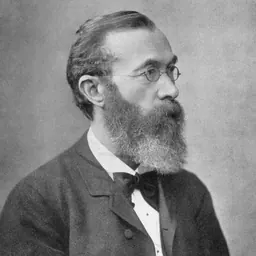
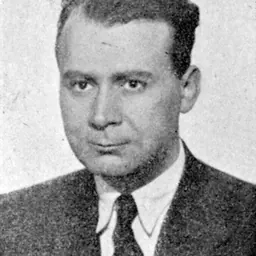

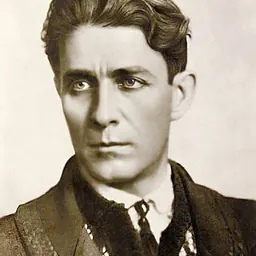
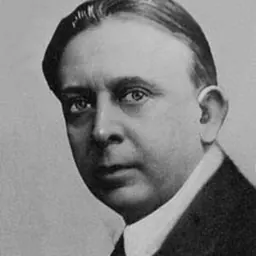
Related people
Same field, nearest in time



Contemporaries
People whose lives overlapped Florian Ștefănescu-Goangă's



Frequently asked questions
Who was Florian Ștefănescu-Goangă?
Romanian psychologist
When was Florian Ștefănescu-Goangă born?
Florian Ștefănescu-Goangă was born on 5 April 1881 in Curtea de Argeș.
When did Florian Ștefănescu-Goangă die?
Florian Ștefănescu-Goangă died on 26 March 1958 in Bucharest.
What was Florian Ștefănescu-Goangă's occupation?
Florian Ștefănescu-Goangă was a psychologist and politician.
What nationality was Florian Ștefănescu-Goangă?
Florian Ștefănescu-Goangă was Romanian.
Sources & further reading
· Wikipedia: Florian Ștefănescu-Goangă
· DBpedia: Florian Ștefănescu-Goangă
Cite this page
APA: Biography.guide. (2026). Florian Ștefănescu-Goangă. https://biography.guide/florian-stefanescu-goanga/
MLA: "Florian Ștefănescu-Goangă." Biography.guide, https://biography.guide/florian-stefanescu-goanga/.
Chicago: "Florian Ștefănescu-Goangă." Biography.guide. https://biography.guide/florian-stefanescu-goanga/.
Data last updated: 2026-09-20 · Spot an error? Report a correction.
Page generated 2026-09-27 05:26 UTC