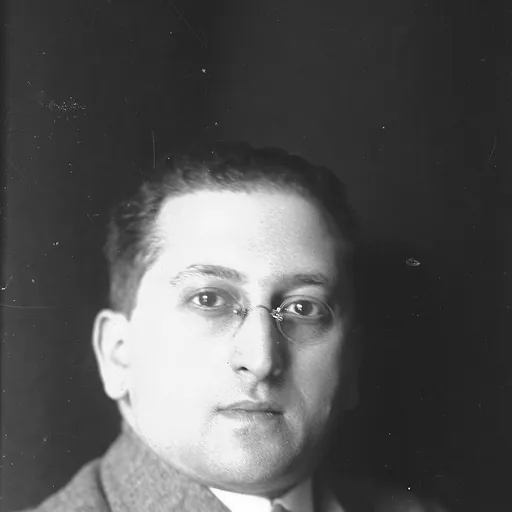
About Ferdynand Zweig
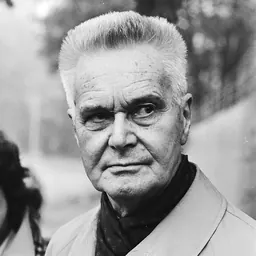
Lived 1896 – 1988 (aged 91). Ferdynand Zweig was a Polish economist, university teacher and sociologist.
Ferdynand Zweig (23 June 1896 – 9 June 1988) was a Polish sociologist and economist noted for his studies of the British working classes.
Life in Poland Zweig was born in 1896 in the Polish city of Krakow into a middle-class Jewish family. He studied at the Universities of Krakow and Vienna, took a Doctor of Law degree, and taught economics in Poland in the 1930s, eventually being appointed to the Chair of Political Economy at the University of Krakow. He and his family escaped the country during the German occupation in 1939, fleeing through Romania, France and the Soviet Union, but one daughter was captured in France and transported to the Nazi death camps.
Sociological career and later life Zweig arrived in the United Kingdom and became the economic adviser to the Polish government-in-exile headed by General Władysław Sikorski, while also authoring Poland Between Two Wars and The Planning of Free Societies. it closed down in 1947, and he was later a Simon Research Fellow at the University of Manchester. This became known as the embourgeoisement thesis and would later be refuted by the University of Cambridge's Affluent Worker study. Zweig also wrote The Student in the Age of Anxiety in 1963, and The Quest for Fellowship two years later. McCarthy argues that Zweig was one of a number of researchers in the 1950s (such as Viola Klein, Pearl Jephcott, Judith Hubback, Nancy Seear and Hannah Gavron) who "helped to entrench new understandings of married women's employment as a fundamental feature of advanced industrial societies, and one that solved the dilemmas of 'modern' woman across social classes."
Zweig had been naturalised as a British subject in 1948; he was married twice, firstly to Dora, who predeceased him, and secondly to Ruth who survived him, along with his daughter Eve, who married the pianist Peter Katin. Zweig died on 9 June 1988.
Don’t just read it —
keep it.
Full-length biographies made to live with: read them, listen on the way to work, watch them tonight.
- E-book
- Audio
- Video
Instant download · yours to keep · every purchase keeps this site free
Important facts
People in Ferdynand Zweig's life
Named in this biography and alive at the same time





Related people
Same field, nearest in time



Contemporaries
People whose lives overlapped Ferdynand Zweig's



Frequently asked questions
Who was Ferdynand Zweig?
Polish economist (1896-1988)
When was Ferdynand Zweig born?
Ferdynand Zweig was born on 23 June 1896 in Kraków.
When did Ferdynand Zweig die?
Ferdynand Zweig died on 9 June 1988 in London.
What was Ferdynand Zweig's occupation?
Ferdynand Zweig was an economist, university teacher and sociologist.
What nationality was Ferdynand Zweig?
Ferdynand Zweig was Polish.
Sources & further reading
Cite this page
APA: Biography.guide. (2026). Ferdynand Zweig. https://biography.guide/ferdynand-zweig/
MLA: "Ferdynand Zweig." Biography.guide, https://biography.guide/ferdynand-zweig/.
Chicago: "Ferdynand Zweig." Biography.guide. https://biography.guide/ferdynand-zweig/.
Data last updated: 2026-09-23 · Spot an error? Report a correction.
Portrait: Wikimedia Commons · author & licence
Page generated 2026-09-27 05:06 UTC