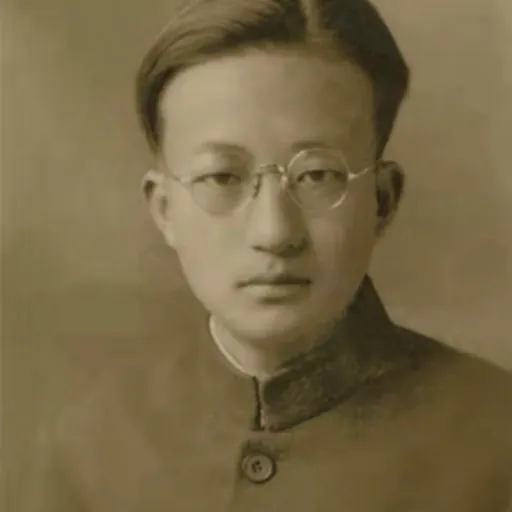
About Feng Kang
Lived 1920 – 1993 (aged 72). Feng Kang was a Chinese mathematician.
Feng Kang (; September 9, 1920 – August 17, 1993) was a Chinese mathematician. He was elected an academician of the Chinese Academy of Sciences in 1980. After his death, the Chinese Academy of Sciences established the Feng Kang Prize in 1994 to reward young Chinese researchers who made outstanding contributions to computational mathematics.
Early life and education Feng was born in Nanjing, China and spent his childhood in Suzhou, Jiangsu. He studied at Suzhou High School. In 1939 he was admitted to Department of Electrical Engineering of the National Central University (Nanjing University). Two years later he transferred to the Department of Physics where he studied until his graduation in 1944. He became interested in mathematics and studied it at the university.
Career After graduation, he contracted spinal tuberculosis and continued to learn mathematics by himself at home. Later in 1946 he went to teach mathematics at Tsinghua University. In 1951 he was appointed as assistant professor at Institute of Mathematics of the Chinese Academy of Sciences. From 1951 to 1953 he worked at Steklov Mathematical Institute in Moscow, under the supervision of Professor Lev Pontryagin. In 1957 he was elected as an associate professor at Institute of Computer Technology of the Chinese Academy of Sciences, where he began his work on computational mathematics and became the founder and leader of computational mathematics and scientific computing in China. In 1978 he was appointed as the first Director of the newly founded Computing Center of the Chinese Academy of Sciences until 1987 when he became the Honorary Director.
Contributions
Feng contributed to several fields in mathematics. Before 1957 he mainly worked on pure mathematics, specially on topological groups, Lie groups and generalized function theory. From 1957 he began studying applied mathematics and computational mathematics. He made a series of discoveries in computational mathematics.
In the later 1950s and early 1960s, based on the computations of dam constructions, Feng proposed a systematic numerical technique for solving partial differential equations. The method was called the Finite difference method based on variation principles . This method was also independently invented in the West, and is more widely known as the finite element method. It is now considered that the invention of the finite element method is a milestone of computational mathematics.
In the 1970s Feng developed embedding theories in discontinuous finite element space, and generalized classical theory on elliptic partial differential equations to various dimensional combinations, which provided a mathematical foundation for elastic composite structures. He also worked on reducing elliptic PDEs to boundary integral equations, which led to the development of the natural boundary element method, now regarded as one of three main boundary element methods. Since 1978 he had given lectures and seminars on finite elements and natural boundary elements in more than ten universities and institutes in France, Italy, Japan and United States.
From 1984 Feng changed his research field from elliptic PDEs to dynamical systems such as Hamiltonian systems and wave equations. He proposed symplectic algorithms for Hamiltonian systems. Such algorithms preserve the symplectic geometric structure of Hamiltonian systems. He led a research group which worked on symplectic algorithms for solving Hamiltonian systems with finite and infinite dimensions, and also on dynamical systems with Lie algebraic structures, such as contact systems and source-free systems. Since these algorithms make use of the corresponding geometry and the underlying Lie algebras and Lie groups, they are superior to conventional algorithms in long term tracking and qualitative simulation in many practical applications, such as celestial mechanics and molecular dynamics.
Don’t just read it —
keep it.
Full-length biographies made to live with: read them, listen on the way to work, watch them tonight.
- E-book
- Audio
- Video
Instant download · yours to keep · every purchase keeps this site free
Important facts
People in Feng Kang's life
Named in this biography and alive at the same time
Related people
Same field, nearest in time


Contemporaries
People whose lives overlapped Feng Kang's





Frequently asked questions
Who was Feng Kang?
Chinese mathematician (1920-1993)
When was Feng Kang born?
Feng Kang was born on 9 September 1920 in Suzhou.
When did Feng Kang die?
Feng Kang died on 17 August 1993 in Beijing.
What was Feng Kang's occupation?
Feng Kang was a mathematician.
What nationality was Feng Kang?
Feng Kang was Chinese.
Sources & further reading
Cite this page
APA: Biography.guide. (2026). Feng Kang. https://biography.guide/feng-kang/
MLA: "Feng Kang." Biography.guide, https://biography.guide/feng-kang/.
Chicago: "Feng Kang." Biography.guide. https://biography.guide/feng-kang/.
Data last updated: 2026-09-20 · Spot an error? Report a correction.
Portrait: Wikimedia Commons · author & licence
Page generated 2026-09-27 04:57 UTC