
Felix Weltsch
German-speaking Jewish librarian, philosopher, author, editor, publisher and journalist
About Felix Weltsch
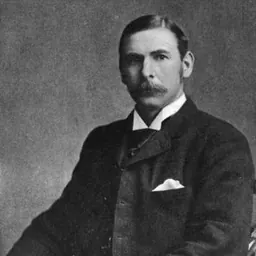
Lived 1884 – 1964 (aged 79–80). Felix Weltsch was an Austrian and Israeli librarian, journalist, law librarian, philosopher and writer.
Felix Weltsch (; 6 October 1884 – 9 November 1964) was a German-speaking Jewish librarian, philosopher, author, editor, publisher and journalist. A close friend of Max Brod, Ludwig Winder and Franz Kafka, he was one of the most important Zionists in Bohemia.
Biography Born in Prague (then in Austria-Hungary), Weltsch studied Law and Philosophy at the Charles University. He lived and worked in Prague until 15 March 1939, and left the city with Max Brod and his family on the last train out of Czechoslovakia. He worked as a librarian in Jerusalem until his death in 1964.
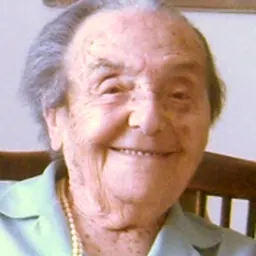
He had one daughter, Ruth Weltsch (1920–1991), with his wife Irma Herz (1892–1969). They married in August 1914. The publisher, journalist and Zionist Robert Weltsch was Felix Weltsch's cousin, and the Prague-born concert pianist Alice Herz-Sommer, who performed in and survived Theresienstadt at her death the world's oldest Holocaust survivor, was his sister-in-law. His grandson, Eli Gorenstein is an actor, cellist and among Israel's leading voice dubbers.
Influence Weltsch's works deal with the subjects of Ethics, Politics and Philosophy. For his ethical and political publications he received the Ruppin-Prize from the city of Haifa in 1952. His most important work was the Jewish-Zionist weekly paper Selbstwehr (self-defense), which he led from 1919 until 1938. With this work and hundreds of articles he became one of the most important personalities in Jewish life next to Martin Buber, Chaim Weizmann and Hugo Bergmann, his early school friend.
Works Anschauung und Begriff, 1913 (Co-author, Max Brod) Organische Demokratie, 1918 Gnade und Freiheit. Untersuchungen zum Problem des schöpferischen Willens in Religion und Ethik, Munich 1920 Nationalismus und Judentum, Berlin 1920 Zionismus als Weltanschauung, Jerusalem 1925 (Co-author, Max Brod) Judenfrage und Zionismus, 1929 Antisemitismus als Völkerhysterie, 1931 Thesen des Nationalhumanismus, 1934 Das Rätsel des Lachens, 1935 Das Wagnis der Mitte, 1937 Die Dialektik des Leidens (Ha-Di’alektikah shel ha-Sevel), 1944 Natur, Moral und Politik (Teva, Musar u-Mediniyyut), 1950 Religion und Humor im Leben und Werk Franz Kafkas, 1957
Articles The rise and fall of the Jewish-German symbiosis : the case of Franz Kafka / by Felix Weltsch. Year book I of the Leo Baeck institute of Jews from Germany, London, 1956.
Don’t just read it —
keep it.
Full-length biographies made to live with: read them, listen on the way to work, watch them tonight.
- E-book
- Audio
- Video
Instant download · yours to keep · every purchase keeps this site free
Important facts
People in Felix Weltsch's life
Named in this biography and alive at the same time
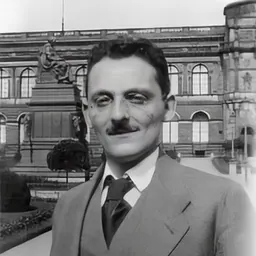
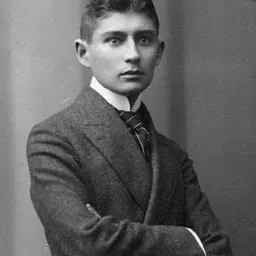
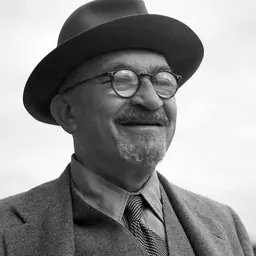

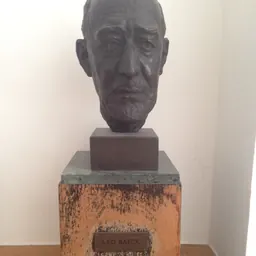


Related people
Same field, nearest in time



Contemporaries
People whose lives overlapped Felix Weltsch's

Frequently asked questions
Who was Felix Weltsch?
German-speaking Jewish librarian, philosopher, author, editor, publisher and journalist
When was Felix Weltsch born?
Felix Weltsch was born in 1884 in Prague.
When did Felix Weltsch die?
Felix Weltsch died in 1964 in Jerusalem.
What was Felix Weltsch's occupation?
Felix Weltsch was a librarian, journalist, law librarian, philosopher and writer.
What nationality was Felix Weltsch?
Felix Weltsch was Austrian and Israeli.
Sources & further reading
Cite this page
APA: Biography.guide. (2026). Felix Weltsch. https://biography.guide/felix-weltsch/
MLA: "Felix Weltsch." Biography.guide, https://biography.guide/felix-weltsch/.
Chicago: "Felix Weltsch." Biography.guide. https://biography.guide/felix-weltsch/.
Data last updated: 2026-09-20 · Spot an error? Report a correction.
Page generated 2026-09-27 05:17 UTC