
About Archibald MacLeish
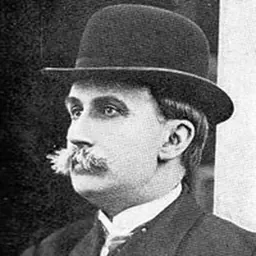
Lived 1892 – 1982 (aged 89). Archibald MacLeish was an American librarian, poet, playwright, writer, university teacher and poet lawyer.
Archibald MacLeish (May 7, 1892 – April 20, 1982) was an American poet and writer, who was associated with the modernist school of poetry. MacLeish studied English at Yale University and law at Harvard University. He enlisted in and saw action during the First World War and lived in Paris in the 1920s. On returning to the United States, he contributed to Henry Luce's magazine Fortune from 1929 to 1938. For five years, MacLeish was the ninth Librarian of Congress, a post he accepted at the urging of President Franklin D. Roosevelt. From 1949 to 1962, he was Boylston Professor of Rhetoric and Oratory at Harvard. He was awarded three Pulitzer Prizes for his work.
Early years MacLeish was born on May 7, 1892, in Glencoe, Illinois. His father, Scottish-born Andrew MacLeish, worked as a dry-goods merchant and was a founder of the Chicago department store Carson Pirie Scott. His mother, Martha (née Hillard), was a college professor and had served as president of Rockford College. He grew up on an estate bordering Lake Michigan. He attended the Hotchkiss School from 1907 to 1911. For his college education, MacLeish went to Yale University, where he majored in English, was elected to Phi Beta Kappa, and was selected for the Skull and Bones society. He then enrolled in Harvard Law School, where he served as an editor of the Harvard Law Review.
His studies were interrupted by World War I, in which he served first as an ambulance driver and later as an artillery officer. He fought at the Second Battle of the Marne. His brother, Kenneth MacLeish, was killed in action during the war. He graduated from law school in 1919, taught law for a semester for the government department at Harvard, then worked briefly as an editor for The New Republic. He next spent three years practicing law with the Boston firm Choate, Hall & Stewart. MacLeish expressed his disillusion with war in his poem Memorial Rain, published in 1926. In 1932, MacLeish published his long poem "Conquistador", which presents Cortés's conquest of the Aztecs as symbolic of the American experience. In 1933, "Conquistador" was awarded a Pulitzer Prize, the first of three awarded to MacLeish.
In 1934, he wrote a libretto for , a ballet by Nicolas Nabokov and Léonide Massine (Ballet Russe de Monte-Carlo); it premiered in Philadelphia with great success.
In 1938, MacLeish published as a book a long poem "Land of the Free", built around a series of 88 photographs of the rural depression by Dorothea Lange, Walker Evans, Arthur Rothstein, Ben Shahn, and the Farm Security Administration and other agencies. The book influenced Steinbeck's The Grapes of Wrath.
Librarian of Congress American Libraries has called MacLeish "one of the 100 most influential figures in librarianship during the 20th century" in the United States. MacLeish's career in libraries and public service began, not with an internal desire, but from a combination of the urging of a close friend, Felix Frankfurter, and as MacLeish put it, "The President decided I wanted to be Librarian of Congress." Franklin D. Roosevelt's nomination of MacLeish was a controversial and highly political maneuver fraught with several challenges.
MacLeish sought support from expected places such as the president of Harvard, MacLeish's current place of work, but found none. Support from unexpected places, such as M. Llewellyn Raney of the University of Chicago libraries, alleviated the ALA letter-writing campaign against MacLeish's nomination."
A question from MacLeish's daughter, Mimi, led him to realize, "Nothing is more difficult for the beginning librarian than to discover [in] what profession he was engaged."
Last, but not least, MacLeish promoted the Library of Congress through various forms of public advocacy. Perhaps his greatest display of public advocacy was requesting a budget increase of over a million dollars in his March 1940 budget proposal to Congress. While the library did not receive the full increase, it received an increase of $367,591, the largest one-year increase to date.
During World War II, MacLeish also served as director of the War Department's Office of Facts and Figures, and as the assistant director of the Office of War Information. These jobs were heavily involved with propaganda, which was well-suited to MacLeish's talents; he had written quite a bit of politically motivated work in the previous decade. He spent a year as the Assistant Secretary of State for Public Affairs and a further year representing the U.S. at the creation of UNESCO, where he contributed to the preamble of its 1945 Constitution ("Since wars begin in the minds of men, it is in the minds of men that the defenses of peace must be constructed." ). After this, he retired from public service and returned to academia.
Return to writing Despite a long history of debate over the merits of Marxism, MacLeish came under fire from anticommunists in the 1940s and 1950s, including J. Edgar Hoover and Joseph McCarthy. Much of this was due to his involvement with left-wing organizations such as the League of American Writers, and to his friendships with prominent left-wing writers. Time magazine's Whittaker Chambers cited him as a fellow traveler in a 1941 article: "By 1938, U. S. Communists could count among their allies such names as Granville Hicks, Newton Arvin, Waldo Frank, Lewis Mumford, Matthew Josephson, Kyle Crichton (Robert Forsythe), Malcolm Cowley, Donald Ogden Stewart, Erskine Caldwell, Dorothy Parker, Archibald MacLeish, Lillian Hellman, Dashiell Hammett, John Steinbeck, George Soule, many another."
In 1949, MacLeish became the Boylston Professor of Rhetoric and Oratory at Harvard University. He held this position until his retirement in 1962. In 1959, his play J.B. won the Pulitzer Prize for Drama. From 1963 to 1967, he was the John Woodruff Simpson Lecturer at Amherst College. In 1969, MacLeish met Bob Dylan, and asked him to contribute songs to Scratch, a musical MacLeish was writing, based on the story "The Devil and Daniel Webster" by Stephen Vincent Benét. The collaboration was a failure and Scratch opened without any music; Dylan describes their collaboration in the third chapter of his autobiography Chronicles, Vol. 1.
MacLeish greatly admired T. S. Eliot and Ezra Pound, and his work shows quite a bit of their influence. He was the literary figure who played the most important role in Ezra Pound’s release from St. Elizabeths Hospital in Washington, D.C., where he was held between 1946 and 1958, after being found unfit to stand trial for high treason. MacLeish's early work was very traditionally modernist and accepted the contemporary modernist position holding that a poet was isolated from society. His most well-known poem, "Ars Poetica," contains a classic statement of the modernist aesthetic: "A poem should not mean / But be." He later broke with modernism's pure aesthetic. MacLeish himself was greatly involved in public life and came to believe that this was not only an appropriate, but also an inevitable role for a poet.
In 1969, MacLeish was commissioned by The New York Times to write a poem to celebrate the Apollo 11 Moon landing, which he entitled "Voyage to the Moon." The poem appeared on the front page of the July 21, 1969 edition of Time magazine. A. M. Rosenthal, then-editor of Time, later recounted: "We decided what the front page of Time would need when the men landed was a poem. What the poet wrote would count most, but we also wanted to say to our readers, look, this paper does not know how to express how it feels this day and perhaps you don't either, so here is a fellow, a poet, who will try for all of us. We called one poet who just did not think much of moons or us, and then decided to reach higher for somebody with more zest in his soul – for Archibald MacLeish, winner of three Pulitzer Prizes. He turned in his poem on time and entitled it 'Voyage to the Moon.'"
Legacy MacLeish worked to promote the arts, culture, and libraries. Among other impacts, MacLeish was the first Librarian of Congress to begin the process of naming what would become the United States Poet Laureate. The Poet Laureate Consultant in Poetry to the Library of Congress came from a donation in 1937 from Archer M. Huntington, a wealthy ship builder. Like many donations, it came with strings attached. In this case, Huntington wanted poet Joseph Auslander to be named to the position. MacLeish found little value in Auslander's writing. However, MacLeish was happy that having Auslander in the post attracted many other poets, such as Robinson Jeffers and Robert Frost, to hold readings at the library. He set about establishing the consultantship as a revolving post rather than a lifetime position.
In the June 5, 1972, issue of The American Scholar, MacLeish laid out in an essay his philosophy on libraries and librarianship, further shaping modern thought on the subject:
No true book [...] was ever anything else than a report. [...] A true book is a report upon the mystery of existence [...] it speaks of the world, of our life in the world. Everything we have in the books on which our libraries are founded—Euclid's figures, Leonardo's notes, Newton's explanations, Cervantes' myth, Sappho's broken songs, the vast surge of Homer—everything is a report of one kind or another and the sum of all of them together is our little knowledge of our world and of ourselves. Call a book or The Voyage of the Beagle or Theory of Relativity or Alice in Wonderland or Moby Dick, it is still [...] a "report" upon the "mystery of things."
But if this is what a book is [...], then a library [...] is an extraordinary thing. [...] The existence of a library is, in itself, an assertion. [...] It asserts that [...] all these different and dissimilar reports, these bits and pieces of experience, manuscripts in bottles, messages from long before, from deep within, from miles beyond, belonged together and might, if understood together, spell out the meaning which the mystery implies. [...] The library, almost alone of the great monuments of civilization, stands taller now than it ever did before. The city [...] decays. The nation loses its grandeur [...]. The university is not always certain what it is. But the library remains: a silent and enduring affirmation that the great Reports still speak, and not alone but somehow all together [...] and the Archibald MacLeish Collection Addition. Additionally, more than 13,500 items from his papers and his personal library are held in the Archibald MacLeish Collection at Greenfield Community College in Greenfield, Massachusetts. Smith College's MacLeish Field Station is named after MacLeish and his wife Ada, who were close friends of former Smith president Jill Ker Conway and introduced her to the natural environment around Northampton, Massachusetts.
Personal life In 1916, he married Ada Hitchcock, a musician. MacLeish had three children: Kenneth, Mary Hillard, and William, the author of a memoir of his father, Uphill with Archie (2001). He died in 1982, at the age of 89.
Awards and honors
1933: Pulitzer Prize for Poetry (Conquistador ) 1946: Commandeur de la Legion d'honneur 1950: elected to the American Academy of Arts and Sciences 1953: Pulitzer Prize for Poetry (Collected Poems 1917–1952) 1953: National Book Award for Poetry (Collected Poems, 1917–1952) 1953: Bollingen Prize in Poetry 1959: Pulitzer Prize for Drama (J.B.) 1959: Tony Award for Best Play (J.B.) 1976: elected to the American Philosophical Society 1977: Presidential Medal of Freedom
Works
Poetry collections
Class Poem (1915) Songs for a Summer's Day (1915) Tower of Ivory (1917) The Happy Marriage (1924) The Pot of Earth (1925) Nobodaddy (1926) Streets in the Moon (1926) The Hamlet of A. Macleish (1928) Einstein (1929) New Found Land (1930) Conquistador (1932) Elpenor (1933) Frescoes for Mr. Rockefeller's City (1933) Poems, 1924–1933 (1935) Public Speech (1936) The Land of the Free (1938) Actfive and Other Poems (1948) Collected Poems (1952) Songs for Eve (1954) The Collected Poems of Archibald MacLeish (1962) The Wild Old Wicked Man and Other Poems (1968) The Human Season, Selected Poems 1926–1972 (1972) New and Collected Poems, 1917–1976 (1976)
Prose
Jews in America (1936) America Was Promises (1939) The Irresponsibles: A Declaration (1940) The American Cause (1941) A Time to Speak (1941) American Opinion and the War: the Rede Lecture (1942) A Time to Act: Selected Addresses (1943) Freedom Is the Right to Choose (1951) Art Education and the Creative Process (1954) Poetry and Experience (1961) The Dialogues of Archibald MacLeish and Mark Van Doren (1964) The Eleanor Roosevelt Story (1965) A Continuing Journey (1968) Champion of a Cause: Essays and Addresses on Librarianship (1971) Poetry and Opinion: the Pisan Cantos of Ezra Pound (1974) Riders on the Earth: Essays & Recollections (Houghton Mifflin, 1978) Letters of Archibald MacLeish, 1907–1982 (Houghton Mifflin, 1983)
Drama
Union Pacific (ballet) (1934) Panic (1935) The Fall of the City (1937) Air Raid: A Verse Play for Radio (1938) Colloquy for the States (1943) The American Story: Ten Broadcasts (1944) The Trojan Horse (1952) This Music Crept By Me on the Waters (1953) J.B. (1958) Three Short Plays: The Secret of Freedom. Air Raid. The Fall of the City. (1961) An Evening's Journey to Conway (1967) Herakles (1967) Scratch (1971) Magic Prison: the Poetry of Emily Dickinson (1975) The Great American Fourth of July Parade (University of Pittsburgh Press, 1975) Six Plays (1980)
Don’t just read it —
keep it.
Full-length biographies made to live with: read them, listen on the way to work, watch them tonight.
- E-book
- Audio
- Video
Instant download · yours to keep · every purchase keeps this site free
Important facts
People in Archibald MacLeish's life
Named in this biography and alive at the same time



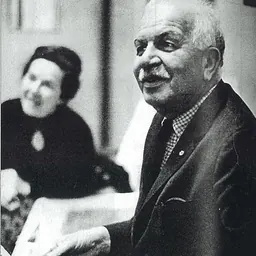

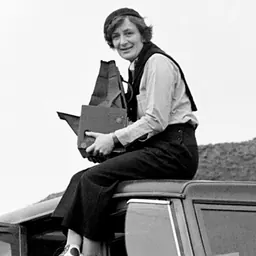

Related people
Same field, nearest in time

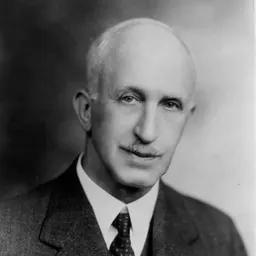
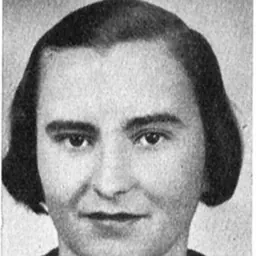

Contemporaries
People whose lives overlapped Archibald MacLeish's

Frequently asked questions
Who was Archibald MacLeish?
American poet and Librarian of Congress (1892-1982)
When was Archibald MacLeish born?
Archibald MacLeish was born on 7 May 1892 in Glencoe.
When did Archibald MacLeish die?
Archibald MacLeish died on 20 April 1982 in Boston.
What was Archibald MacLeish's occupation?
Archibald MacLeish was a librarian, poet, playwright, writer, university teacher and poet lawyer.
What nationality was Archibald MacLeish?
Archibald MacLeish was American.
Sources & further reading
· Wikipedia: Archibald MacLeish
Cite this page
APA: Biography.guide. (2026). Archibald MacLeish. https://biography.guide/archibald-macleish/
MLA: "Archibald MacLeish." Biography.guide, https://biography.guide/archibald-macleish/.
Chicago: "Archibald MacLeish." Biography.guide. https://biography.guide/archibald-macleish/.
Data last updated: 2026-09-25 · Spot an error? Report a correction.
Page generated 2026-09-27 05:11 UTC