
About Fannie Lou Hamer
Lived 1917 – 1977 (aged 59). Fannie Lou Hamer was an American politician, autobiographer, sharecropper and political activist.
Fannie Lou Hamer (; Townsend; October 6, 1917 – March 14, 1977) was an American voting and women's rights activist, community organizer, and leader of the civil rights movement. She was the vice-chair of the Freedom Democratic Party, which she represented at the 1964 Democratic National Convention. Hamer also organized Mississippi's Freedom Summer along with the Student Nonviolent Coordinating Committee (SNCC). She was a co-founder of the National Women's Political Caucus, an organization created to recruit, train, and support women of all races who sought election to government offices.
Hamer began her civil rights activism in 1962, continuing it until her health declined nine years later. She was known for her use of spiritual hymns and biblical quotes, and for her resilience in leading the civil rights movement for black women in Mississippi. She was threatened, harassed, shot at, and assaulted by racists, including members of the police, while she was trying to register to vote. She later helped and encouraged thousands of Black people in Mississippi to become registered voters, and assisted hundreds of disenfranchised people in her area through her work in programs such as the Freedom Farm Cooperative. She ran for the U.S. House in 1964, losing to Jamie Whitten, and she ran for the Mississippi State Senate in 1971. In 1970, she led legal action against the government of Sunflower County, Mississippi, for continued illegal segregation. She was inducted into the National Women's Hall of Fame in 1993. On January 4, 2025, President Joe Biden posthumously awarded Hamer the Presidential Medal of Freedom.
Early life, family, and education Hamer was born as Fannie Lou Townsend on October 6, 1917, in Montgomery County, Mississippi. She was the last of the 20 children of Lou Ella and James Lee Townsend. By age 13, she would pick 200–300 pounds (90 to 140 kg) of cotton daily while living with polio.
Hamer continued to develop her reading and interpretation skills in Bible study at her church; in later years Lawrence Guyot admired her ability to connect "the biblical exhortations for liberation and [the struggle for civil rights] any time that she wanted to and move in and out to any frames of reference". In 1944, after the plantation owner discovered her literacy, she was selected as its time and record keeper. The following year she married Perry "Pap" Hamer, a tractor driver on the Marlow plantation, and they remained there for the next 18 years.
1=We had a little money so we took care of her and raised her. She was sickly too when I got her; suffered from malnutrition. Then she got run over by a car and her leg was broken. So she's only in fourth grade now. source= Fannie Lou Hamer Forced sterilization was a common method of population control in Mississippi that targeted poor, African-American women. Members of the Black community called the procedure a "Mississippi appendectomy". One, Dorothy Jean, died at age 22 of internal hemorrhaging after she was denied admission to the local hospital because of her mother's activism. She heard leaders of the local movement speak at annual Regional Council of Negro Leadership (RCNL) conferences, held in Mound Bayou, Mississippi.
Civil rights activism
Registering to vote
On August 31, 1962, Hamer and 17 others attempted to vote but failed a literacy test, which meant that they could not vote. On December 4, just after she returned to her hometown, Hamer went to the courthouse in Indianola, where she took the test again, but she failed it again and she was turned away as a result. These laws, along with the literacy tests and local government acts of coercion, were used against black people and Native Americans. Hamer later paid for and acquired the requisite poll tax receipts.
After she attempted to vote, Hamer was fired by her boss, but her husband was required to stay on the land until the end of the harvest. Hamer moved between homes over the next several days for protection. On September 10, 1962, while staying with friend Mary Tucker, Hamer was shot at 15 times in a drive-by shooting by racists. No one was injured in the event. Once in county jail, Hamer's colleagues were beaten by the police in the booking room (including 15-year-old June Johnson, for not addressing officers as "sir"). Hamer was then taken to a cell where two inmates were ordered, by the state trooper, to beat her using a baton. Another in her group was beaten until she was unable to talk; a third, a teenager, was beaten, stomped on, and stripped. An activist from SNCC came the next day to see if he could help but was beaten until his eyes were swollen shut when he did not address an officer in the expected deferential manner.
Hamer was released on June 12, 1963. She needed more than a month to recuperate from the beatings and never fully recovered. Younge and Paris grew to become profound activists and organizers under Hamer's tutelage.
Freedom Democratic Party and Congressional run
In 1964, Hamer co-founded the Mississippi Freedom Democratic Party (MFDP), which sought to prevent the region's all-white Democratic Party from stifling African-American voices and to ensure there was a party for everyone that did not tolerate exploitation or discrimination (especially toward minorities). But later that evening, most major news networks broadcast Hamer's testimony in its entirety, giving her and the MFDP much exposure:
All of this is on account we want to register, to become first-class citizens, and if the Freedom Democratic Party is not seated now, I question America. Is this America, the land of the free and the home of the brave, where we have to sleep with our telephones off the hooks because our lives are threatened daily because we want to live as decent human beings in America?|Fannie Lou Hamer Afterward, the white members from the Mississippi delegation walked out. In 1972, Hamer was elected as a national party delegate.
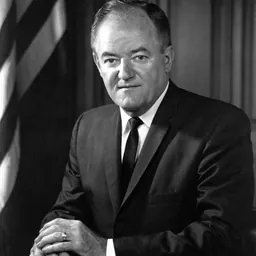
Also in 1964, Hamer embarked on a plan to run in the Democratic primary in her Mississippi U.S. House district. Again, the bid was unsuccessful, but in the aftermath of the general election, she and her team amassed 10,000 pages of witness testimony from more than 400 people about systematic disenfranchisement and intimidation of black voters (at the time, black citizens comprised 52.4% of her congressional district's population but less than 3% of its registered voters). She was not rich, as confirmed by her clothing and vernacular. Although she was an in-demand speaker, she was often patronized by both blacks and whites because she lacked formal education. For instance, NAACP leader Roy Wilkins said Hamer was "ignorant", and President Lyndon Johnson looked down on her. When she was being considered to speak as a delegate at the 1964 Democratic National Convention, Hubert Humphrey said: "The President will not allow that illiterate woman to speak from the floor of the convention." she chronicled the violence and injustices she experienced while trying to register to vote. While highlighting the various acts of brutality she witnessed in the South, she was careful to tie in the fact that blacks in the North and all over the country were suffering the same oppression. The audience was one-third white and gave Hamer a warm reception. She said she was "tired of all this beating" and "there's so much hate. Only God has kept the Negro sane".
Hamer adamantly opposed abortion, calling it "legalized murder" in a 1969 speech at the White House and describing her position in terms of her Christian faith. In Until I Am Free, historian Keisha N. Blain writes, "Hamer viewed birth control and abortion as social justice issues. She feared that both were simply white supremacist tools to regulate the lives of impoverished Black people and even prevent the growth of the Black population."
James Eastland, a white senator, was one of the people who sought to keep African Americans disenfranchised and segregated from society. His influence on the overarching agricultural industry often suppressed minority groups to keep whites as the only power force in America. In the same vein as the Freedom Farm Collective, Hamer partnered with the National Council of Negro Women (NCNW) to establish an interracial and interregional support program called The Pig Project to provide protein for people who previously could not afford meat.
Hamer made it her mission to make land more accessible to African Americans. Through the pig bank, a family could care for a pregnant female pig until it bore its offspring; subsequently, they would raise the piglets and use them for food and financial gain.
Later life and death In 1961, while undergoing surgery to remove a tumor, Hamer was also forced to undergo a hysterectomy by a doctor without her consent; this medical procedure was frequently performed in accordance with Mississippi's compulsory sterilization plan to reduce the number of poor blacks in the state. Hamer is credited with coining the phrase "Mississippi appendectomy", a euphemism for involuntary or uninformed sterilization of black women, a common practice in the South during the 1960s. In January 1972, she was hospitalized for an extended period because she was suffering from nervous exhaustion, and after she suffered a nervous breakdown in January 1974, she was hospitalized again. By June 1974, Hamer was said to be in extremely poor health. She was buried in her hometown of Ruleville, Mississippi. Her tombstone is engraved with one of her famous quotes, "I am sick and tired of being sick and tired."
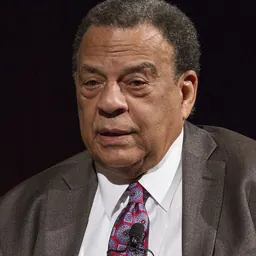
Her primary memorial service, held at a church, was completely full. An overflow service was held at Ruleville Central High School (RCHS), with over 1,500 people in attendance. Andrew Young, United States Ambassador to the United Nations, spoke at the RCHS service, saying "None of us would be where we are now had she not been there then".
Honors and awards
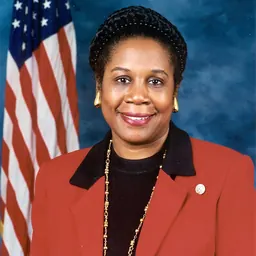
Hamer received many awards both in her lifetime and posthumously. She received a Doctor of Law from Shaw University, and honorary degrees from Columbia College Chicago in 1970 and Howard University in 1972. She was inducted into the National Women's Hall of Fame in 1993. the Mary Church Terrell Award from Delta Sigma Theta sorority, the National Sojourner Truth Meritorious Service Award. She is an honorary member of Delta Sigma Theta. A remembrance for her life was given in the U.S. House of Representatives on the 100th anniversary of her birth, October 6, 2017, by Texas Congresswoman Sheila Jackson Lee.
In 1970, Ruleville Central High School held a "Fannie Lou Hamer Day". Six years later, the City of Ruleville itself celebrated a "Fannie Lou Hamer Day". In 1977, Gil Scott-Heron and Brian Jackson wrote "95 South (All of the Places We've Been)", in Hamer's honor. Ta-Nehisi Coates described a 1994 live solo version of the song as "a haunting and somber ode".
In 1994, the Ruleville post office was named the Fannie Lou Hamer Post Office by an act of Congress. Additionally, The Fannie Lou Hamer National Institute on Citizenship and Democracy was founded in 1997 as a summer seminar and K–12 workshop program. There is also a Fannie Lou Hamer Public Library in Jackson.
In 1994, Fannie Lou Hamer Freedom High School opened in the Bronx, New York, with a focus on humanities and social justice.
Ten Freedom Summers, a 2012 collection of suites by trumpeter and composer Wadada Leo Smith, who grew up in segregated Mississippi, includes "Fannie Lou Hamer and the Mississippi Freedom Democratic Party, 1964" as one of its 19 suites. Carole Boston Weatherford wrote a picture book about Hamer's life, Voice of Freedom: Fannie Lou Hamer, Spirit of the Civil Rights Movement; it won a Coretta Scott King Award. Hamer is also one of 28 civil rights icons depicted on the Buffalo, New York Freedom Wall. A quotation from her speech at the 1964 Democratic National Convention is carved on one of the eleven granite columns at the Civil Rights Garden in Atlantic City, where the convention was held.
In 2017, the Fannie Lou Hamer Black Resource Center opened at the University of California at Berkeley.
In 2018, the Mississippi Democratic Party's Jefferson-Jackson Dinner fundraiser was renamed the Hamer-Winter Dinner in honor of Hamer and former governor William Winter.
The third annual Women's March, held in Atlantic City, New Jersey, on January 19, 2019, was dedicated to Hamer's life and legacy. Several hundred people attended, representing many organizations. Several students from Fannie Lou Hamer Freedom High School attended despite a state of emergency declared by New Jersey Governor Phil Murphy due to an impending snowstorm.
Cheryl L. West wrote the play Fannie: The Music and Life of Fannie Lou Hamer, which premiered at the Actors Theatre of Louisville in 2022 as part of a co-production shared among Kenny Leon's True Colors Theatre Company, the August Wilson African American Cultural Center, City Theatre Company, and DEMASKUS Theater Collective.
The band Chairman Dances' song "Fannie Lou Hamer" describes Hamer's bus journey to Indianola, Mississippi, to register voters.
The gardener and podcaster Colah B. Tawkin cites Hamer as inspiration.
On August 20, 2024, Mississippi Governor Tate Reeves unveiled a historic marker for the Mississippi Freedom Trail at the Atlantic City site of the 1964 Democratic National Convention, honoring Hamer's work advocating for an integrated delegation at the convention.
Works Fannie Lou Hamer, Julius Lester, and Mary Varela, Praise Our Bridges: An Autobiography, 1967. Maegan Parker Brooks; Davis W. Houck, eds. The Speeches of Fannie Lou Hamer: To Tell It Like It Is, 2010.
Don’t just read it —
keep it.
Full-length biographies made to live with: read them, listen on the way to work, watch them tonight.
- E-book
- Audio
- Video
Instant download · yours to keep · every purchase keeps this site free
Important facts
People in Fannie Lou Hamer's life
Named in this biography and alive at the same time




Related people
Same field, nearest in time





Contemporaries
People whose lives overlapped Fannie Lou Hamer's



Frequently asked questions
Who was Fannie Lou Hamer?
American civil rights activist (1917–1977)
When was Fannie Lou Hamer born?
Fannie Lou Hamer was born on 6 October 1917 in Montgomery County.
When did Fannie Lou Hamer die?
Fannie Lou Hamer died on 14 March 1977 in Mound Bayou.
What was Fannie Lou Hamer's occupation?
Fannie Lou Hamer was a politician, autobiographer, sharecropper and political activist.
What nationality was Fannie Lou Hamer?
Fannie Lou Hamer was American.
Sources & further reading
Cite this page
APA: Biography.guide. (2026). Fannie Lou Hamer. https://biography.guide/fannie-lou-hamer/
MLA: "Fannie Lou Hamer." Biography.guide, https://biography.guide/fannie-lou-hamer/.
Chicago: "Fannie Lou Hamer." Biography.guide. https://biography.guide/fannie-lou-hamer/.
Data last updated: 2026-09-26 · Spot an error? Report a correction.
Page generated 2026-09-27 05:13 UTC