
About F. H. Pownall
Lived 1831 – 1907 (aged 75–76). F. H. Pownall was a British architect.
Frederick Hyde Pownall (22 August 1831 – 1907) was a British architect. He was County Surveyor for Middlesex for about 45 years, and designed both Anglican and Roman Catholic churches.
Life
He was the son of John George Henry Pownall (1792–1880), a magistrate, landed proprietor and philanthropist, and his wife Amelia Sophia Pownall (née Waterhouse). He was educated at Stanmore and Rugby, before being articled to the architect Samuel Daukes. This was later demolished to make way for the present building of 1912–13 by J. S. Gibson, now housing the Supreme Court.
Pownall was also responsible for alterations to the Sessions House, Clerkenwell, the rebuilding of Coldbath Fields Prison, and the erection of Banstead Lunatic Asylum. Amongst the churches he designed were St Peter's, London Docks, Corpus Christi, Maiden Lane, Covent Garden and Sacred Heart Church and School, Holloway, all in London, and St Dunstan's at Cheam.
He exhibited six works the Royal Academy between 1852 and 1867.
Family He married Jane Todd in 1856, by whom he had six sons and three daughters. Jane Pownall died in 1883 and F. H. Pownall had a son and two daughters by his second wife. His eldest son was the Very Rev. Canon Arthur Hyde Pownall (1857–1935) and a younger son, Gilbert Pownall, designed much of the mosaic work in Westminster Cathedral. His youngest son, Hubert Joseph Pownall (b. 1891), was killed in France in 1916
Works St Mary, Carleton-in-Craven, Yorkshire (Anglican), 1858–59. Alterations to the Sessions House, Clerkenwell, St Philip and St James, Whitton, Twickenham (Anglican), 1862. Expansion of Coldbath Fields Prison, in two phases between 1863 and 1870. Closed in 1885 and demolished. St John Evangelist, Cononley, Yorkshire (Anglican) 1864. St Peter's, London Docks (Anglican), consecrated 1866. Sacred Heart Convent, Hove, 1870–72; now Cardinal Newman Catholic School. Sacred Heart Church and School, Holloway, London (Roman Catholic) 1870. Corpus Christi Church, Maiden Lane, Covent Garden (Roman Catholic), 1873–74. Most Holy Trinity Monastery, Notting Hill, St. Charles Square (carmelite monastery), 1877–1878. Church and school of St Thomas of Canterbury at Grays, Essex (Roman Catholic), 1886. Middlesex Guildhall, Parliament Square, London, 1893; demolished. Banstead Lunatic Asylum, 1877; demolished.
Don’t just read it —
keep it.
Full-length biographies made to live with: read them, listen on the way to work, watch them tonight.
- E-book
- Audio
- Video
Instant download · yours to keep · every purchase keeps this site free
Important facts
People in F. H. Pownall's life
Named in this biography and alive at the same time

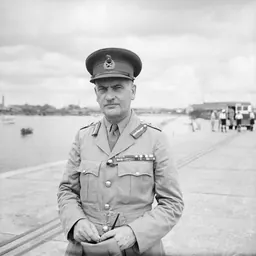
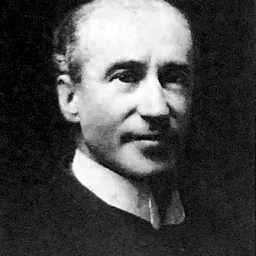


Related people
Same field, nearest in time
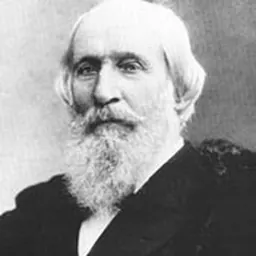
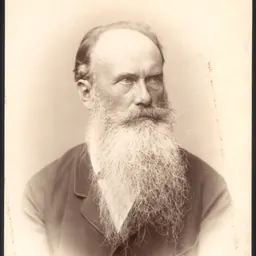


Contemporaries
People whose lives overlapped F. H. Pownall's


Frequently asked questions
Who was F. H. Pownall?
English architect
When was F. H. Pownall born?
F. H. Pownall was born on 22 August 1831.
When did F. H. Pownall die?
F. H. Pownall died in 1907.
What was F. H. Pownall's occupation?
F. H. Pownall was an architect.
What nationality was F. H. Pownall?
F. H. Pownall was British.
Sources & further reading
Cite this page
APA: Biography.guide. (2026). F. H. Pownall. https://biography.guide/f-h-pownall/
MLA: "F. H. Pownall." Biography.guide, https://biography.guide/f-h-pownall/.
Chicago: "F. H. Pownall." Biography.guide. https://biography.guide/f-h-pownall/.
Data last updated: 2026-09-20 · Spot an error? Report a correction.
Page generated 2026-09-27 05:07 UTC