
About Eusebio Valli
Lived 1755 – 1816 (aged 60). Eusebio Valli was a physician and scientist.
Eusebio Giacinto Valli (Casciana Alta, Casciana Terme Lari, Pisa, 13 December 1755 – Havana, 24 September 1816) was an Italian physician and scientist.
When he was five years old he was taken by his family to Monterchi, where his father worked as a local doctor and where he was educated by a local teacher, Ignazio Chiaverini, who taught him Italian and Latin until the age of 16, in order to prepare him for academic studies. The economic situation of his family didn't allow him to apply to the University of Pisa, where Jacopo-Filippo, one of Eusebio's siblings, was already studying. For this reason, in 1771 his father found himself forced to send to Leopold II, Holy Roman Emperor, Grand Duke of Tuscany, a letter in which he asked him to admit his son freely to the Collegio della Sapienza di Pisa (which later became today's Scuola Normale di Pisa):
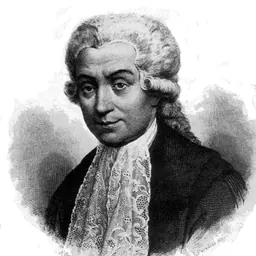
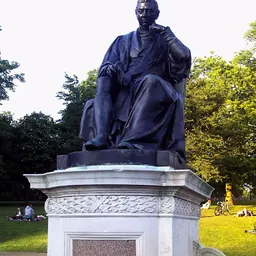
In 1783 he graduated in Medicine and Philosophy at the Collegio della Sapienza and in the following years he was called to work as a surgeon in various places. In Turkey, Greece and Egypt he studied the epidemiology of plague, smallpox and of a "certain malignant putrid fever" (probably malaria). Valli subsequently travelled to Dalmatia as a military doctor with the Franco-Italian army. Eusebio followed in the footsteps of great masters such as Luigi Galvani from whom he learned the art of physiology, of which the latter was the spokesperson, and Alessandro Volta, whose influence led Valli to study phenomena like “animal electricity” or “bioelectricity”. Eusebio Valli is considered the forerunner of vaccination, in fact through his numerous studies he heralded one of the medical techniques still used today, and was the first vaccinator to operate in several countries in the world.
In his Discorso sopra il sangue considerato in stato di sanità e di malattia (Discourse on blood in the state of health and of disease), Valli claimed that alterations in haematological parameters were not due to the influence of humoral agents, but of solid agents.
Great attention was paid to "animal electricity". Luigi Galvani, one of Eusebio's leading figures, published some applications of various metals to frogs, and this prompted a large number of other Italian scientists to share and discuss these researches. Eusebio Valli was the first of these to divulge these discoveries, and furthermore, he wrote that his study had "prevented him from sleeping for many nights". Valli became a respected exponent in this field throughout Europe; he gave public lectures on Galvani's experiments and published articles on this topic in various Italian and foreign cities, including Lausanne, Paris, London. In 1793 he published a volume of 300 pages entitled Esperimenti sull'elettricità animale (Experiments on animal electricity), which at the time constituted one of the most organic analyses of all the problems of galvanism.
Accompanied by Dr. Antonio Mendoza, in 1816 he visited San Juan de Dios' Hospital, where he studied the epidemiology of yellow fever.
Most of Valli's discoveries were eclipsed for many years, until Edward Jenner carried out his studies on vaccination. At that point, Casciana Alta's inhabitants put across how their countryman, Eusebio, mostly devoted his life to that field of studies, in this way making his fame grow exponentially.
Don’t just read it —
keep it.
Full-length biographies made to live with: read them, listen on the way to work, watch them tonight.
- E-book
- Audio
- Video
Instant download · yours to keep · every purchase keeps this site free
Important facts
People in Eusebio Valli's life
Named in this biography and alive at the same time

Related people
Same field, nearest in time




Contemporaries
People whose lives overlapped Eusebio Valli's




Frequently asked questions
Who was Eusebio Valli?
Italian physician and scientist
When was Eusebio Valli born?
Eusebio Valli was born on 2 December 1755 in Casciana Alta, Ponsacco.
When did Eusebio Valli die?
Eusebio Valli died on 24 September 1816 in Havana.
What was Eusebio Valli's occupation?
Eusebio Valli was a physician and scientist.
Sources & further reading
Cite this page
APA: Biography.guide. (2026). Eusebio Valli. https://biography.guide/eusebio-valli/
MLA: "Eusebio Valli." Biography.guide, https://biography.guide/eusebio-valli/.
Chicago: "Eusebio Valli." Biography.guide. https://biography.guide/eusebio-valli/.
Data last updated: 2026-09-20 · Spot an error? Report a correction.
Page generated 2026-09-27 05:23 UTC