
About Eugène Tisserant
Lived 1884 – 1972 (aged 87). Eugène Tisserant was a French librarian, diplomat, theologian, archivist, catholic priest and orientalist.
Eugène-Gabriel-Gervais-Laurent Tisserant (; 24 March 1884 – 21 February 1972) was a French prelate and cardinal of the Catholic Church. Elevated to the cardinalate in 1936, Tisserant was a prominent and long-time member of the Roman Curia.
Early life and ordination Tisserant was born in Nancy to Hippolyte and Octavée (née Connard) Tisserant. From 1900 to 1904, he studied theology, Sacred Scripture, Hebrew, Syriac, Old Testament, and Oriental Patrology at the seminary in Nancy. He then studied in Jerusalem under Marie-Joseph Lagrange, O.P., but returned to France in 1905 for military service. On 4 August 1907, Tisserant was ordained a priest by Charles-François Turinaz, Bishop of Nancy.
Professor and prelate Tisserant served as a professor at the Pontifical Roman Athenaeum S. Apollinare and curator at the Vatican Library from 1908 to 1914, at which time he became an intelligence officer in the French Army during World War I. He was reportedly fluent in thirteen languages: Amharic, Arabic, Akkadian, English, French (native language), German, Greek, Hebrew, Italian, Latin, Persian, Russian and Syriac.
In 1939, Tisserant urged Pius XII to promulgate an encyclical "on the duty of Catholics to resist the unjust orders of an authoritarian state." After the outbreak of World War II, Pius XII refused to release Tisserant as the head of the Vatican Library, preventing him from returning to France to serve in the army. As Dean of the Sacred College, he was the first person after Pope Paul VI to sign each of the acts of the Second Vatican Council.
In 1962, Tisserant became Grand Master of the Order of the Holy Sepulchre, a position that he held until his death. In 1969, he demanded a retraction from Cardinal Leo Joseph Suenens, Archbishop of Brussels-Mechelen, for the "defamatory and slanderous" statements that he allegedly made against the bureaucracy of the Roman Curia. In 1970, when Paul VI's new retirement rules restricted the right to vote in papal conclaves to cardinals under age 80, Tisserant, then 86, objected on the basis that each cardinal's health should determine his fitness and suggested that 73-year-old Paul VI seemed frail. Tisserant regarded this change as being directed personally at him and had strained relations with Paul VI. He had become more conservative in his later years and "often expressed concern over liberal trends in the Church." He is buried in the Basilica of Porto e Santa Rufina in Rome. There was some controversy after the death of Cardinal Tisserant in regards to his estate. His niece, Paule Hennequin, accused the Vatican of keeping many personal diaries and letters belonging to the late Cardinal, including 12 suitcases worth of documents.
Don’t just read it —
keep it.
Full-length biographies made to live with: read them, listen on the way to work, watch them tonight.
- E-book
- Audio
- Video
Instant download · yours to keep · every purchase keeps this site free
Important facts
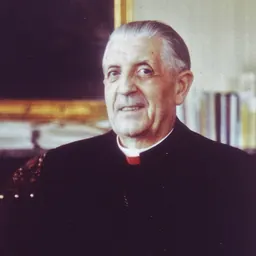
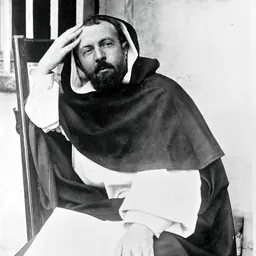
People in Eugène Tisserant's life
Named in this biography and alive at the same time

Related people
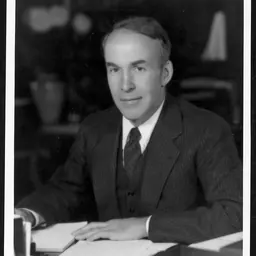
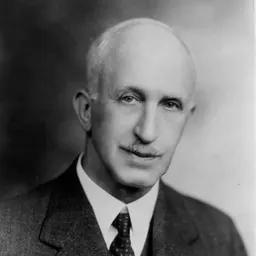
Same field, nearest in time



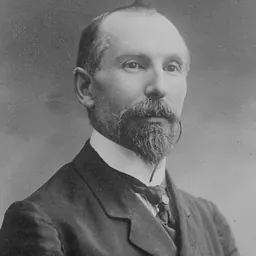
Contemporaries
People whose lives overlapped Eugène Tisserant's
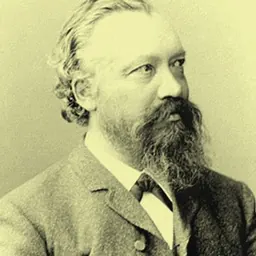
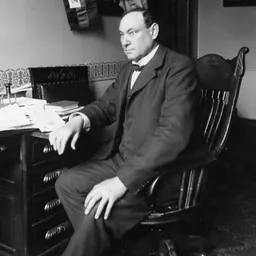
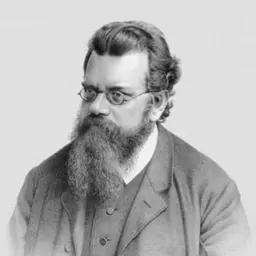

Frequently asked questions
Who was Eugène Tisserant?
French cardinal (1884–1972)
When was Eugène Tisserant born?
Eugène Tisserant was born on 24 March 1884 in Nancy.
When did Eugène Tisserant die?
Eugène Tisserant died on 21 February 1972 in Albano Laziale, Rome.
What was Eugène Tisserant's occupation?
Eugène Tisserant was a librarian, diplomat, theologian, archivist, catholic priest and orientalist.
What nationality was Eugène Tisserant?
Eugène Tisserant was French.
Sources & further reading
Cite this page
APA: Biography.guide. (2026). Eugène Tisserant. https://biography.guide/eugene-tisserant/
MLA: "Eugène Tisserant." Biography.guide, https://biography.guide/eugene-tisserant/.
Chicago: "Eugène Tisserant." Biography.guide. https://biography.guide/eugene-tisserant/.
Data last updated: 2026-09-20 · Spot an error? Report a correction.
Page generated 2026-09-27 05:21 UTC