
About Eugen Varga
Lived 1879 – 1964 (aged 84). Eugen Varga was a Hungarian, Russian and German economist, politician and political economist.
Eugen Samuilovich Varga (né Weiß; 6 November 1879 – 7 October 1964) was a Hungarian communist revolutionary and Soviet economist who served as People's Commissar of Finance during the Hungarian Soviet Republic. After the overthrow of the Soviet Republic, he fled to the Soviet Union, where he served as an advisor to Soviet leader Joseph Stalin on economic matters.
Early years Varga was born Eugen Weiß to a poor Jewish family, as a son of Samuel Weiß—a teacher in the primary school of Nagytétény—and Julianna Singer. Eugen "Jenő" Varga studied philosophy and economic geography at the University of Budapest, completing a PhD in 1909. He also studied in Berlin and Paris.
Soviet emigration In 1920, he went to the Soviet Union with Arthur Holitscher. Here, he started working for the Comintern, specializing in international economic problems and agrarian questions. During 1922–1927, he was working at the department of trade in the Soviet embassy in Berlin. From 1927 to 1947, he was the director of the Institute of World Economy and World Politics.
Another Soviet defector Abdurakhman Avtorkhanov, writing under the pseudonym Alexander Uralov, left a humorous description of Varga, whom he described as having "the pedantry of a German official, the obstinacy of a Russian accountant, and the suppleness of an Oriental fakir", and of his institute, where "share fluctuations were followed more attentively than in any London or New York bank. The most brilliant member of the Stock Exchange would have envied the way in which Varga was kept informed."
Post-war controversy In 1946, Varga published The Economic Transformation of Capitalism at the End of the Second World War, in which he argued that during the war, Western governments had accumulated great power over the management of capitalist economies, which brought them closer to socialist economies and made them more likely to last. He was praised by Kremlin watchers in the West as a "person with a Western orientation" and a "defender" of the Marshall Plan, but "these implications were highly distasteful to Soviet conservatives" who believed that capitalism was heading for an extreme and possibly terminal crisis. During a closed meeting of economists called by the USSR Academy of Sciences and Moscow University, in May 1947, "Varga was attacked for his writings by most, if not all, of the participants."
He was also attacked by Nikolai Voznesensky, then an influential figure as chairman of Gosplan and a member of the Politburo of the Communist Party of the Soviet Union, who wrote a book in which he accused "certain theoreticians" of having "empty opinions which deserve no consideration". Varga's book was condemned at a meeting of economists and political experts in May 1947, and the institute he headed was closed and subsumed into Gosplan. Although he remained a leading academic economist, his prestige had diminished—in the second edition of the Great Soviet Encyclopedia he was qualified as a "bourgeois economist"—but the fact that he was not dismissed or arrested implies that he had powerful protectors. In March 1949, Voznesensky was arrested, and two days later, on 15 March, Varga published a self-critical letter in Pravda.
Post-Stalin years After Stalin's death in 1953, Varga reappeared on the scene. In February 1956, he wrote an article in Pravda that rehabilitated Béla Kun. The new leaders in the Kremlin, believing in the virtues of peaceful co-existence, were not interested in Varga's predictions of the outbreak of a "necessary" economic crisis in the United States. After his death, his selected works in three volumes were published in the Soviet Union, Hungary and East Germany.
Varga never returned to living in his native Hungary. Because he was very close to Mátyás Rákosi, he was invited as an economic advisor to Hungary several times. In this period (1945–1950), he had specialized in economic planning, pricing, and monetary reforms (i.e., reforms that the Hungarian communists, now in power, were carrying out). After the fall of Rákosi caused by the Hungarian revolution of 1956 and the takeover by János Kádár, Varga's advisory work was no longer fashionable.
Awards Three Orders of Lenin (1944, 1953, 1959) Order of the Red Banner of Labour (1945) Medal "For Valiant Labour in the Great Patriotic War 1941–1945" (1945) Lenin Prize (1963)
Don’t just read it —
keep it.
Full-length biographies made to live with: read them, listen on the way to work, watch them tonight.
- E-book
- Audio
- Video
Instant download · yours to keep · every purchase keeps this site free
Important facts
People in Eugen Varga's life
Named in this biography and alive at the same time

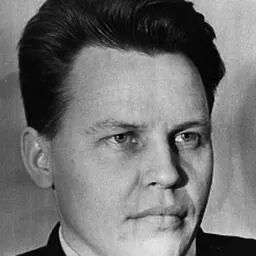

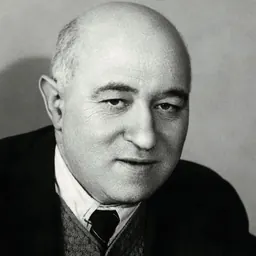

Related people
Same field, nearest in time
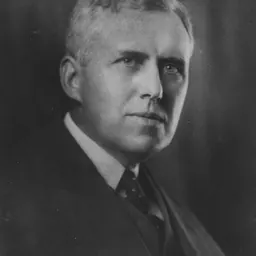

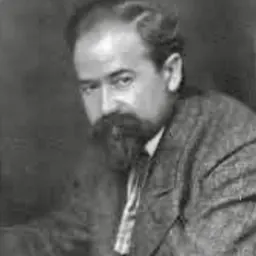
Contemporaries
People whose lives overlapped Eugen Varga's




Frequently asked questions
Who was Eugen Varga?
Hungarian economist (1879-1964)
When was Eugen Varga born?
Eugen Varga was born on 6 November 1879 in Nagytétény, Budapest.
When did Eugen Varga die?
Eugen Varga died on 7 October 1964 in Moscow.
What was Eugen Varga's occupation?
Eugen Varga was an economist, politician and political economist.
What nationality was Eugen Varga?
Eugen Varga was Hungarian, Russian and German.
Sources & further reading
Cite this page
APA: Biography.guide. (2026). Eugen Varga. https://biography.guide/eugen-varga/
MLA: "Eugen Varga." Biography.guide, https://biography.guide/eugen-varga/.
Chicago: "Eugen Varga." Biography.guide. https://biography.guide/eugen-varga/.
Data last updated: 2026-09-25 · Spot an error? Report a correction.
Page generated 2026-09-27 05:13 UTC