
About Abdurakhman Avtorkhanov
Lived 1908 – 1997 (aged 88). Abdurakhman Avtorkhanov was a Russian and American historian, political scientist, history and writer.
Abdurakhman Genazovich Avtorkhanov (; , 23 October 1908 – 24 April 1997) was a Soviet historian and Kremlinologist of Chechen origin who during the Cold War authored popular books on the Soviet Union and its ruling system. As an anti-Soviet historian after World War II, Avtorkhanov wrote under several pseudonyms, the best-known of which was "Alexander Uralov."
Initially an elite-educated and devoted Communist Party functionary, Avtorkhanov was twice arrested by the Soviet secret police as a suspected nationalist organizer and foreign spy. After twice winning his release, he returned to the Northern Caucasus in 1942 on assignment for the NKVD, only to cross lines to the Germans and be arrested by the Gestapo as a suspected Communist spy. Avtorkhanov managed to avoid execution for a third time by turning coat and working in Berlin as a collaborator with the Nazi invaders, editing two of their propaganda papers targeted to the non-Russian peoples of the Caucasus.
After the war, he remained in West Germany, where he worked as a professor at the U.S. Army Russian Area School and helped to establish Radio Free Europe/Radio Liberty. Some of his anti-Communist writings were smuggled into the Soviet Union, where they circulated as samizdat.
Biography Early years
Abdurakhman Avtorkhanov was born October 23, 1908, in the small Chechen village of Lakha-Nevri, an enclave destroyed by Soviet troops during the deportation of the Chechen and Ingush population in 1944.
Avtorkhanov indicates that he "joined the Communist Youth in 1922, when I was fourteen." He joined the All-Union Communist Party in 1926. Therefore, unverified self-representations made by Avtorkhanov should be accepted only with extreme caution.
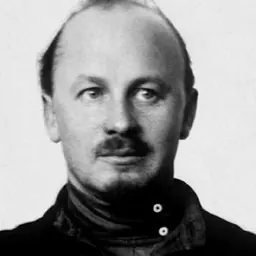
According to his own telling, long accepted by the scholarly community, from 1928 to 1930, Avtorkhanov attended the elite Institute of Red Professors (IKP), a top-tier training school of the Communist Party designed to develop Marxist professors in the social sciences, presumably completing the equivalent of his undergraduate college education at that time. According to his own account he became an advocate of the comparatively moderate agricultural policies of Nikolai Bukharin during his time at the IKP, a political position which would bring him into conflict with the party line during the collectivization campaign of 1929–30.
Avtorkhanov sensationally claimed to have been in the third row of the audience the speech at the IKP on May 28, 1928, by a visiting Joseph Stalin — a two hour address later published as "On the Grain Front." This speech is regarded as a watershed of Soviet history, marking Stalin's intention to end the New Economic Policy in favor of an aggressive policy establishing collective farms and state farms, intended to increase grain production and the percentage of grain produced marketed to the state instead of sold through parallel privately-owned channels.
This basic account was contradicted by Avtorkhanov himself in his published 1983 Memuary [Memoirs], in which he indicates he spent one year in Moscow in the IKP's preparatory section, before deciding to return to Grozny to finish his preparatory studies at a workers' faculty (rabfak).
The factuality of both of these autobiographical narratives are cast into doubt by a biographical document compiled at the time of his admission in 1934 as a candidate for advanced study at the Institute of History of the IKP, however. This alternative chronology indicates Avtorkhanov spent both of the academic years 1927–28 and 1928–29 not at as a student at the IKP in Moscow (where he would have been in a place to see Stalin in person and tell the tale), but rather enrolled in the Grozny rabfak, more than 1800 kilometers (1100 miles) away.
According to this more-reliable, third-party account of Avtorkhanov's early life, from 1924 to 1926 he had been a student at a Chechen party school, before moving to the Grosny rabfak from 1927 to 1929. After completing the course of study at the rabfak, Avtorkhanov was then appointed as an assistant in the organization department of the oblast committee of the Chechen Communist Party, a post which he held for the rest of 1930 and in 1931. Avtorkhanov later represented this article, "For Fulfillment of the Party's Directives on the National Question," as a muted and somewhat veiled criticism of the policy being followed by the party with respect to national minorities in the USSR, stating "I maintained that the promises and declarations poured out up to that time by the Bolsheviks had remained a dead letter." Avtorkhanov was called upon to recant his heretical exposition of views of the so-called "Bukharin right-wingers," which he did with a letter published in the July 4, 1930, edition of Pravda, dutifully renouncing his previous arguments.
Avtorkhanov indicates that two or three weeks later he was notified that the Central Committee had decided to remove him from the Institute of Red Professors and to be placed at the disposal of the Chechen section of the Communist Party. with this stint at the IKP concluding in 1937. Another arrest followed in December and a new round of interrogation began, again charging that Avtorkhanov was involved in nationalist organizing activities. On April 21, 1942, he indicates he was released for a second time, "following representations made by the Court of Appeal to the Supreme Tribunal of the USSR."
With World War II raging, Avtorkhanov departed Moscow for the Checheno-Ingush Autonomous Soviet Socialist Republic, ostensibly to carry out his mission for Soviet authorities.
Arrest by the Gestapo
Instead of conducting the task assigned him by the NKVD, Avtorkhanov chose to roll the dice on the alternative, crossing the front line to the Germans. This committee was the external political center associated with pro-Nazi North Caucasus legions, paramilitaries which ultimately came to count about 28,000 men under arms.
His book Stalin and the Soviet Communist Party is regarded as an important source for the political background of Stalin's rise to power. He was one of the first authors to claim, in his 1976 book on Stalin's death, that Stalin had been murdered by the head of NKVD Lavrentiy Beria. Pyotr Grigorenko produced samizdat copies of the book in the Soviet Union by photographing and typewriting.
Death and legacy
Abdurakhman Avtorkhanov died in Munich, Germany, on April 24, 1997, shortly after the end of the Russian–Chechen war.
Historian Alex Marshall believes that throughout the course of his career Avtorkhanov played too loosely with facts, intimating personal participation in historical events which he actually viewed from afar, and intimating that he made use of "the worse, the better" type estimates to curry political favor. He wrote:
"Avtorkhanov was a fascist collaborator, one who spent his later years selling his services to the highest bidder, latterly usually the United States, for Cold War propaganda purposes. His writings should therefore be treated with considerably greater caution than they have been to date, and in fact probably disregarded altogether by all future serious historians of the interwar North Caucasus."
Historian Michael David–Fox, having investigated the specifics of several of Avtorkhanov's claims, intimates that the later provided fictional accounts to support his analysis of Soviet politics. David-Fox cites one "especially dramatic moment" in 1928 claimed to have been witnessed by Avtorkhanov in which the secretary of the party cell at the IKP was dramatically exposed as a former aide-de-camp of White general Ivan Erdeli, to be replaced by Pavel Yudin, later a famous Soviet philosopher. According to archival records, the actual cell secretary was K.P. Soms, David-Fox notes.
Historian Catherine Merridale, who extensively studied the activity of the Communist Party in Moscow in the late 1920s, is more explicit. She notes of a "particularly vivid account" of an exchange at a Moscow Committee plenum between Nikolai Uglanov and Lazar Kaganovich for which Avtorkhanov provides direct quotations, "like all Avtorkahanov's reports of the dealings of the [Moscow Committee], however, it cannot be trusted without corroboration," adding that the purported source of the information cited by Avtorkhanov "does not appear on any list of [Moscow Committee] or [Moscow Control Commission] members I have seen."
Despite such sharp criticism from historians in the West, in Russia and the countries of the former USSR, Avtorkhanov's work, particularly his seminal 1959 book, The Technology of Power, enjoyed a warm reception. In 1991, a reprint edition of the formerly banned Technology of Power appeared in Russia, produced by the publishing house Slovo, with the full text serialized in the country's most prestigious historical journal, Voprosy istorii [Problems of History] in 22 installments from 1991 to 1993.
Among many in the Northern Cacasus region, Avtorkhanov remains a figure of high esteem for preserving the historical memory of oppressed nationalities. One of his books, Murder of Chechen-Ingush Nation, remains very popular among Chechens and Ingush today. A few months before the dissolution of the Soviet Union in 1991, Avtorkhanov was granted honorary citizenship by the Chechen-Ingush ASSR.
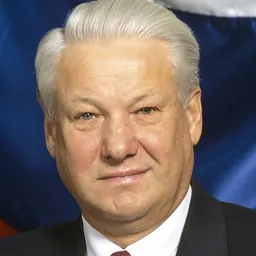
At the time of the First Chechen War he maintained a correspondence with the Chechen president Dzhokhar Dudayev. He also urged peace negotiations on Russian president Boris Yeltsin.
Works Books
К основным вопросам истории Чечни: к десятилетию Советской Чечни. [On Fundamental Issues of the History of Chechnya: On the Occasion of the Tenth Anniversary of Soviet Chechnya] Grozny, 1930. Alexander Uralov (pseud.), The Reign of Stalin. L.J. Smith, trans. London: The Bodley Head, 1953.
The Communist Party Apparatus, Chicago: Henry Regnery, 1966. Загадка смерти Сталина: заговор Берия.[The Mystery of Stalin's Death: Beria's Plot] Frankfurt/Main: Possev-Verlag, 1976. Сила и бессилие Брежнева. [The Power and Powerlessness of Brezhnev] Frankfurt/Main: Possev-Verlag, 1979. Мемуары. [Memoirs] Frankfurt/Main: Possev-Verlag, 1983. От Андропова к Горбачёву: Дела и дни Кремля. [From Andropov to Gorbachev: Deeds and Days of the Kremlin] Paris: YMCA–Press, 1986. Ленин в судьбах России: Размышления историка. [Lenin in the Destinies of Russia: Reflections of a Historian] Garmisch-Partenkirchen: Prometheus, 1990. The North Caucasus Barrier: The Russian Advance Towards the Muslim World. New York: St. Martin's, 1992.
Articles
"Za vypolnenie direktiv partii po natsional'nomu voprosu" [For Completion of the Party's Directives on the National Question]. Pravda, No. 170 (June 22, 1930), p. 4. "Denationalization of the Soviet ethnic minorities," Studies on the Soviet Union, vol. 4, no. 1 (1964), pp. 74–99. "Question of a September 1936 Plenum of the CPSU Central Committee," With John Armstrong, Robert Slusser, and George Kennan. Slavic Review, vol. 26, no. 4 (Dec. 1967), pp. 665–677. "From Khrushchev to Brezhnev: The Problems of Collective Leadership," Institute for the Study of the USSR. Bulletin, vol. 15, no. 9 (Sept. 1968), pp. 14–15.
Don’t just read it —
keep it.
Full-length biographies made to live with: read them, listen on the way to work, watch them tonight.
- E-book
- Audio
- Video
Instant download · yours to keep · every purchase keeps this site free
Important facts
People in Abdurakhman Avtorkhanov's life
Named in this biography and alive at the same time






Related people
Same field, nearest in time


Contemporaries
People whose lives overlapped Abdurakhman Avtorkhanov's


Frequently asked questions
Who was Abdurakhman Avtorkhanov?
Chechen writer (1908–1997)
When was Abdurakhman Avtorkhanov born?
Abdurakhman Avtorkhanov was born on 25 October 1908 in Chechnya.
When did Abdurakhman Avtorkhanov die?
Abdurakhman Avtorkhanov died on 24 April 1997 in Munich.
What was Abdurakhman Avtorkhanov's occupation?
Abdurakhman Avtorkhanov was a historian, political scientist, history and writer.
What nationality was Abdurakhman Avtorkhanov?
Abdurakhman Avtorkhanov was Russian and American.
Sources & further reading
· Wikipedia: Abdurakhman Avtorkhanov
· DBpedia: Abdurakhman Avtorkhanov
Cite this page
APA: Biography.guide. (2026). Abdurakhman Avtorkhanov. https://biography.guide/abdurakhman-avtorkhanov/
MLA: "Abdurakhman Avtorkhanov." Biography.guide, https://biography.guide/abdurakhman-avtorkhanov/.
Chicago: "Abdurakhman Avtorkhanov." Biography.guide. https://biography.guide/abdurakhman-avtorkhanov/.
Data last updated: 2026-09-20 · Spot an error? Report a correction.
Page generated 2026-09-27 05:19 UTC