
About Eugen Rozvan
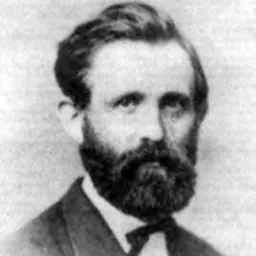
Lived 1878 – 1938 (aged 59). Eugen Rozvan was a Hungarian, Romanian and Russian journalist, historian, lawyer and politician.
Eugen Rozvan (; Russian: Евгений Георгиевич Розвань, Evgeny Georgiyevich Rozvan; 28 December 1878 — 16 June 1938) was a Hungarian-born Romanian communist activist, lawyer, and Marxist historian, who settled in the Soviet Union late in his life and was executed during the Great Purge.
Biography Early activism He was born in Nagyszalonta (Salonta), Transylvania (part of Austria-Hungary at the time), in a family of Aromanian origins. His father, , was a lawyer and a historian, having fought as an officer during the Hungarian Revolution of 1848. He continued his studies in law at the University of Berlin, and, after receiving his doctorate, returned to his homeland and enrolled in the Social Democratic Party (SZDP). as well as for the national minorities, seeking to attract Romanian rural intellectuals to the socialist movement. To this end, he joined the Romanian section of the SZDP and initiated contacts with the Romanian National Party. In 1907, Rozvan was a delegate to the Stuttgart Congress of the Second International, After the end of the war, the Romanian government pressed him to emigrate to Hungary, while the revolutionary Labour Council proclaimed in Oradea called on him to join their cause. Ultimately deciding on returning to his home region, he was unable to do that until August 1919, at a time the Romanian authorities had already suppressed the local workers' movement. Nevertheless, soon after his return he succeeded in regrouping the workers' and sympathetic peasants in the region of Oradea, organizing a major demonstration in spite of the officially proclaimed martial law. Instead, his brother Ștefan became a National Party local leader, and his politics clashed with those of Eugen Rozvan to the point where, as prefect of Hunedoara County, he organized the repression of the Lupeni Strike of 1929. In opposition to the right wing of the party, led by Iosif Jumanca and Ioan Flueraș, he was elected as one of the presidents of the August 1920 Cluj Congress of the party, supporting its merger into a national organization, as well as the affiliation of the resulting party to the Third International. Furthermore, he was elected to the party's executive committee and designated, along with Flueraș, to serve on the party's delegation to Bolshevist Russia, in order to discuss the conditions of such affiliation. The other delegates were Gheorghe Cristescu, David Fabian, Constantin Popovici, and Alexandru Dobrogeanu-Gherea. With Rozvan's agreement and the consent of other delegates, Flueraș and Iosif Jumanca were expelled following pressures from Grigory Zinoviev and Christian Rakovsky, due to their wartime support for nationalism and objections raised to Comintern guidelines.
After the right wing of the party defected in early 1921, Rozvan, appointed a member of the PSR's executive committee, took steps towards maintaining the party's influence among the workers of Transylvania. On May 6, 1921, he was elected president of the last regional socialist Congress for Tranyslvania and Banat, which he had helped organize, and presented the party's report on the relation with the trade union. For the latter congress he collaborated with Tiron Albani on preparing the report on nationalities. Furthermore, during the debates on the agrarian question, he supported an alliance between peasants and workers in order to finalize the "bourgeois-democratic" phase of the revolution, against the opinion of Cristescu and Elek Köblös, who considered the primary target of the party should be the dictatorship of the proletariat. At the Second Congress (Ploiești, October 1922) he drafted the reports on the national and the agrarian question. The latter reignited the debates of the founding congress, Rozvan's support of the 1921 land reform being condemned by Boris Stefanov, who considered land should be nationalized. Rozvan warned that the promotion of such ideas would alienate the peasants, however he remained a minority in the agrarian committee, and the finalization of the report was postponed for a later date.
During the following period he helped organize the party's umbrella group, the Peasant Workers' Bloc, in the region around Oradea (1926–1931). however the mandates were nullified on government's request. In 1929, he was expelled from the party, without being notified of it, and his status remained uncertain for the following years.
Later life Rozvan decided to clarify matters by presenting his cause to Soviet authorities, and fled to Moscow by illegally crossing the Soviet-Romanian border in Bessarabia. Readmitted to the PCdR in 1934, he was employed by Eugen Varga at the Lomonosov University Institute of the World Economy and the World Politics, becoming noted as a scholar of Italian fascism (the subject of his 1937 Ph.D. thesis, which was used as a textbook). In the opinion of Vladimir Tismăneanu, Rozvan's critique of fascism also alluded to the consequences of Stalinism inside the communist movement.
For the following years, Rozvan's fate was the topic of investigations by Comintern leader Georgi Dimitrov, who called on the NKVD to account for his whereabouts. In 1971, a biography of Rozvan was published in Communist Romania.
Don’t just read it —
keep it.
Full-length biographies made to live with: read them, listen on the way to work, watch them tonight.
- E-book
- Audio
- Video
Instant download · yours to keep · every purchase keeps this site free
Important facts
People in Eugen Rozvan's life
Named in this biography and alive at the same time

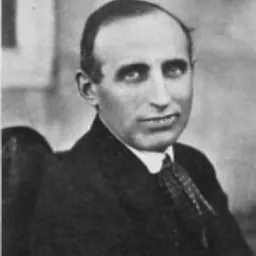
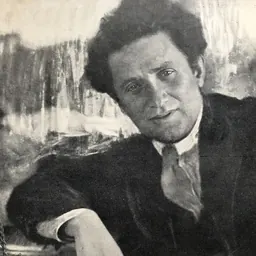

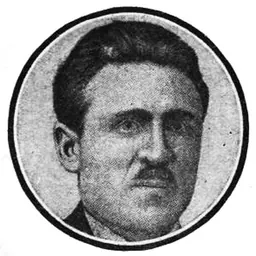
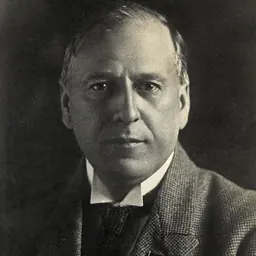

Related people
Same field, nearest in time

Contemporaries
People whose lives overlapped Eugen Rozvan's



Frequently asked questions
Who was Eugen Rozvan?
Romanian activist (1878–1938)
When was Eugen Rozvan born?
Eugen Rozvan was born on 28 December 1878 in Salonta.
When did Eugen Rozvan die?
Eugen Rozvan died on 16 June 1938 in Moscow.
What was Eugen Rozvan's occupation?
Eugen Rozvan was a journalist, historian, lawyer and politician.
What nationality was Eugen Rozvan?
Eugen Rozvan was Hungarian, Romanian and Russian.
Sources & further reading
Cite this page
APA: Biography.guide. (2026). Eugen Rozvan. https://biography.guide/eugen-rozvan/
MLA: "Eugen Rozvan." Biography.guide, https://biography.guide/eugen-rozvan/.
Chicago: "Eugen Rozvan." Biography.guide. https://biography.guide/eugen-rozvan/.
Data last updated: 2026-09-20 · Spot an error? Report a correction.
Page generated 2026-09-27 05:26 UTC