
About Boris Stefanov
Lived 1883 – 1969 (aged 86). Boris Stefanov was a journalist and politician.
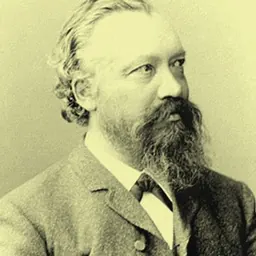
Boris Stefanov Mateev (also known as Boris Ștefanov, Ivan Draganov or Dragu; , Boris Stefanov Mateev; 8 October 1883 – 11 October 1969) was a Romanian and Bulgarian communist politician, who served as general secretary of the Romanian Communist Party (PCR or PCdR) from December 1934 to December 1940.
Biography
Early life and activism Stefanov was born into a wealthy landowning family in Kotel, Bulgaria. After the fire of Kotel of 1894, his family moved to Tsar Boris, Southern Dobrudja. After finishing high school in Varna he worked as a teacher, and between 1903 and 1905 he was drafted, serving in the Sofia Fortress Battalion, rising to the rank of lieutenant. In 1904 he made an application for membership in the "Narrow Socialists", the radical wing that emerged from the BRSDP split in the previous year. he joined the Social Democratic Party of Romania (PSD) in September 1913, taking part in its activities and collaborating with its press. During this period, his views were strongly influenced by the theory of "Neo-serfdom" developed by Romanian socialist patriarch Constantin Dobrogeanu-Gherea. Stefanov also continued to collaborate with the various socialist groups across the border (the "Narrows", the "Broad Socialists" and the Bulgarian Agrarian National Union). After the First World War erupted, he supported the pacifist stance of PSD; nevertheless, he was mobilized as infantry lieutenant in the Romanian Army once Romania joined the war in 1916. Due to his continued socialist propaganda among the soldiers, he was moved around several units, and ultimately interned.
Despite his Bulgarian origin, he spoke fluent Romanian. Stefanov allegedly engaged in activities for regional self-determination (see Dobrujan Revolutionary Organisation). He reportedly went into bankruptcy, and had to renounce much of his inheritance.
Having also joined the Socialist Party of Romania (PS), Stefanov became a successful candidate for Parliament, but, together with Gheorghe Cristescu and Alexandru Dobrogeanu-Gherea, he was not validated into office. As a member in the General Council of the PS, Stefanov took part in the drafting of the manifesto that initiated the general strike of 1920. As a result, he was imprisoned in Jilava under the accusation of communism. While the arrest prevented him from participating at the PCR's founding Congress, he fully endorsed its decisions. Stefanov was elected to the General Council of the Party at its second Congress of 1922, also leading the Congress' agrarian commission.
Stefanov and Romanian Communism
Although, like Cristescu, he was criticized by the Comintern for his allegedly minimalist outlook, he rose to the leadership of the PCR soon after the party was outlawed in 1924, and was known at the time under various pseudonyms (including Popescu, Draganov, and Dragu). In the third party Congress he was elected into the Political Bureau of the Central Committee. Sentenced in absentia to 10 years of prison in 1925, he was only apprehended in August 1926, after a Siguranța Statului crackdown, Supported by the International Red Aid with interventions from Marcel Pauker (the French lawyer, Maurice Juncker, solicited, was forbidden to appear before the court by the Romanian authorities and expelled from Romania, he was nonetheless sentenced to 8 years for treason during a trial he faced in Cluj (the other person indicted, Vasile Luca, was acquitted) Stefanov served his sentence in Jilava, Văcărești, Doftana, Brașov and Aiud, and was set free in August 1933. Subsequently, Stefanov engaged in a campaign against alleged Trotskyists, mirroring Soviet measures that led to the Great Purge; a committed Stalinist, he accused both Elena Filipescu and Marcel Pauker of having sided with Leon Trotsky.
Exile and later polemics The actual leadership of the PCR inside Romania was taken over by Bela Breiner from 1938 until the latter's death in March 1940. High-ranking Communist activist Valter Roman, who had been himself disgraced and rehabilitated by Gheorghe Gheorghiu-Dej, spoke out against former Communist politicians who had been purged at various stages, Stefanov included; he was interrupted by Petre Borilă, who notably added a claim that Stefanov believed Nazi Germany would evolve towards a socialist economy after the Molotov–Ribbentrop Pact.
On his 80th birthday in 1963, the Bulgarian Communist government awarded Stefanov the country's top honour, the Order of Georgi Dimitrov. During the later part of his life, Stefanov collaborated with several Bulgarian newspapers and magazines, and also participated in friendship committees seeking to strengthen Bulgaria's relation with Romania, the Soviet Union, and Yugoslavia. He died in a car accident in October 1969. On the occasion of his 100th anniversary, in 1983, a bronze bust dedicated to Stefanov was unveiled in the city park of Tolbukhin.
Don’t just read it —
keep it.
Full-length biographies made to live with: read them, listen on the way to work, watch them tonight.
- E-book
- Audio
- Video
Instant download · yours to keep · every purchase keeps this site free
Important facts
People in Boris Stefanov's life
Named in this biography and alive at the same time



Related people
Same field, nearest in time
Contemporaries
People whose lives overlapped Boris Stefanov's


Frequently asked questions
Who was Boris Stefanov?
Romanian politician (1883-1969)
When was Boris Stefanov born?
Boris Stefanov was born on 8 October 1883 in Kotel, Dobruja.
When did Boris Stefanov die?
Boris Stefanov died on 11 October 1969 in Bulgaria, Sofia.
What was Boris Stefanov's occupation?
Boris Stefanov was a journalist and politician.
What nationality was Boris Stefanov?
Boris Stefanov's recorded nationality: Kingdom of Romania, Kingdom of Bulgaria, People's Republic of Bulgaria.
Sources & further reading
Cite this page
APA: Biography.guide. (2026). Boris Stefanov. https://biography.guide/boris-stefanov-journalist/
MLA: "Boris Stefanov." Biography.guide, https://biography.guide/boris-stefanov-journalist/.
Chicago: "Boris Stefanov." Biography.guide. https://biography.guide/boris-stefanov-journalist/.
Data last updated: 2026-09-25 · Spot an error? Report a correction.
Page generated 2026-09-27 05:10 UTC