
About Bela Breiner
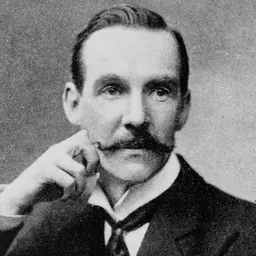
Lived 1896 – 1940 (aged 44). Bela Breiner was a Hungarian revolutionary and political activist.
Béla Breiner, also rendered as Bela Brainer (13 February 1896 – 10 March 1940), was an Austro-Hungarian-born communist activist, who served as acting general secretary of the Romanian Communist Party (PCR or PCdR) during the early stages of World War II. The son of a Hungarian Jewish and working-class family, he was child laborer who acquired skills in metallurgy, moving from his native Nagyvárad (Oradea) to Budapest. Breiner was also involved in the labor unrest, and joined the Social Democratic Party of Hungary at age sixteen. His contribution in the field of socialist propaganda made him a political suspect by the time of World War I, and he was punished with conscription into the Hungarian Landwehr—though he continued to proselytize among his fellow soldiers. Breiner was enthusiastic about the Aster Revolution, and went on to fight for the Hungarian Soviet Republic, resulting in his brief imprisonment by the Romanian Land Forces during the expedition of 1919.
Breiner settled in Greater Romania after the Hungarian defeat, and involved himself in organizing the general strike of 1920. He was then a founding member of the PCR, opting to preserve his membership after the group had been outlawed, and then emerging as its regional head in Crișana. In 1926, shortly after joining the central committee, he was arrested by the Romanian authorities, and reportedly tortured. A tribunal sentenced him to a five-years term in prison, which he served at Doftana. Upon release, he traveled clandestinely into the Soviet Union, where he participated in the PCR's fifth congress—which confirmed his own induction by the party secretariat, as well as his role in editing Scînteia, the underground newspaper. While engaged with masterminding the strike action at Grivița, he was again picked up by the Romanian authorities, who had uncovered a Comintern network that was sponsoring the PCR. Breiner benefited from a more lenient regime, at Văcărești, and was thereafter involved in a campaign to improve prison conditions across the country.
The PCR had by then been largely neutralized, and had effectively lost its general secretary, Boris Stefanov, who had exiled himself in Soviet territory. From 1937, Breiner served as the senior member of a triumvirate party leadership, alongside Ștefan Foriș and Ilie Pintilie; he himself spent most of 1938 in Moscow, seeking (and finally obtaining) recognition from the Comintern. While there, he began contributing denunciations of his colleagues, which were used as justification for their extermination in the Great Purge. Himself disgraced by Soviet political realignments, Stefanov ultimately abandoned his position as general secretary in 1939, leaving Breiner to take over in a provisional capacity. He was by then seriously ill with stomach cancer, which ultimately killed him March 1940. Political homages, muted by political circumstances during his cremation ceremony, were taken up publicly by the communist regime between 1948 and 1989. Several landmarks were named after him during that interval, when he was also publicly celebrated as a working-class hero.
Biography Early life Breiner was born on 13 February 1896 as a subject of the Hungarian Crown, in Nagyvárad (Oradea). Though sometimes described as having Hungarian ethnicity, he was noted by researcher Eva Țuțui as one of several far-left activists who belonged to Nagyvárad's Hungarian Jewish community. Both his parents were destitute workers in the local industry; their union also produced another son, Ludovic. At the age of twelve, Béla began working in a factory, training himself as a lathe operator. He was treated with cruelty by his employers, and, by the age of fourteen, had contributed to several protests of trainees against the beatings they were receiving regularly. He then served in the Hungarian Landwehr and saw action in the trenches—but also continued to be active as a socialist, helping diffuse his ideology among his army comrades. In 1920, Breiner helped organize a general strike among Oradea workers, as part of the nation-wide labor conflict. Breiner opted to continue in PCR ranks when it was outlawed and repressed in 1924, and, by 1925, was its regional organizer in all of Crișana. In March 1926, during court proceedings involving almost 100 PCR defendants, Breiner was tried in absentia, and sentenced to a five-year term on charges of having "infiltrated" Romania as a foreign agent. He and his co-defendant Jenő Fülöp (also credited as Eugen Fuelop) allegedly fled Oradea before sentencing.
At Doftana Ștefan Foriș, who attended a high-level PCR meeting in October 1926, reports that Breiner, also present there, was co-opted on the central committee during the proceedings. Still tasked with organizing the communist underground in Transylvania, and using his Oradea home for clandestine meetings, Breiner was ultimately arrested at Sibiu in early November 1926. Foriș claims that he had been "most certainly" betrayed by a suspected infiltrator, namely Willy Roth, and notes that his place on the central committee went to Petre Imbri. One of Breiner's official biographies claims that torturers were specially brought in from Bucharest, and that, despite being subjected to "barbaric" torments, "he never gave them any of his comrades' names". The Sixth Army Corps in Cluj originally ruled that he should serve eight years behind bars, but Dunca and Popescu appealed for clemency, and had his sentence reduced this to the original five years. Breiner traveled clandestinely to Moscow, where he used the pseudonym "Orlov". Once welcomed there in October 1931, he also helped eleven other delegates cross the border illegally—a twelfth delegate was prevented from leaving, his cover blown by his need to address a medical emergency. In 1932, Breiner was elected a member of the PCR central committee and secretariat. In this capacity, he took charge of editing Scînteia newspaper, and also helped instigate the protest movement that became the Grivița strike of 1933. In May, a mandate for his arrest was upheld by the Ilfov County tribunal, which followed up on accusations that he had circulated "subversive manifestos" alongside comrades Árpád Weiss and Moscu Parlacu. He was then sentenced to another three years behind bars. This was immediately after the authorities had captured Gustav Arnold, an agent of the Comintern, who had tried to launder 1.2 million lei as funds set aside for the PCR. The investigation had pointed to Breiner and Lucrețiu Pătrășcanu as Arnold's personal contacts in the communist underground. The case against him was made during a mass trial, where lawyer Paul Moscovici represented Breiner and his co-defendant Sara Tzan, as well as several communist bill-stickers; during the proceedings, Moscovici challenged testimonies according to which Breiner had met Arnold in Berlin.
Secretariat advancement
Again sent to Doftana, Breiner persuaded the prison guards to let him visit with new arrivals such as Bojan. He brought them food and ensured links between them and what he termed the "leadership of the inner-prison communist committee". He was asked to appear as a witness at the Grivița strikers' trial, and used the opportunity to reestablish connections between the various inner-party groups. Together with Gheorghiu-Dej, he organized a clandestine meeting of the imprisoned communists. Released in May 1935, With much of the party now arrested or self-exiled in Soviet territory, the Comintern intervened to depose the PCR secretariat; in May 1937, Breiner, alongside Foriș and Ilie Pintilie, received a mandate from Moscow to organize a new executive body.
Within this triumvirate, Breiner managed the clandestine regional networks, while the other two supervised legal activities by front organizations, including in the field of agitprop. A later deposition by the underground militant Remus Koffler suggests that Breiner took his financing from two local sponsors—Emil Calmanovici and Egon Weigl—, and that he often picked it up in person. From February to December 1938, at a time when the PCR had been affected by the Comintern's policies beyond "its usual disarray" and "lack of traction in society", Breiner was in Moscow, reporting on the PCR's activities. As noted by historian Cristina Diac, he provided mostly negative assessments of other activists, including many who had fled into the Soviet Union. Diac argues that such denunciations made Breiner complicit in the Great Purge, which decimated the Romanian communist colony in Moscow. Upon his return to Bucharest, he dedicated himself to opposing the authoritarian regime established around the National Renaissance Front (FRN), and also focused on anti-fascism. During his final days, unsure about who would succeed him, he had selected Gavrilă Birtaș, who seemed to qualify for the position, and had sent him the PCR archive. His widow Piroska (also "Piri" or Paraschiva) Abraham was herself Jewish and communist, as were her two sisters—one of whom, Ecaterina, was married to communist militant Petre Borilă. Before her marriage, Piroska had received attention for putting out revolutionary propaganda addressed to the workers at Bucharest's Lemaître Factory; she had afterward served time in prison, where she is said to have been "beat[en] with rubber batons on her stomach". Béla was also survived by a three-year-old son, Andrei, who was raised by a grandmother somewhere in the countryside.
On 12 March, Breiner was cremated at a specialized facility called Cenușa. The ceremony, closely monitored by agents of the Siguranța, was attended by several PCR figures, by Breiner's brother Ludovic, as well as by some 50 workers. One of the latter was Ovidiu Șandru, who tried to hold an impromptu speech about Breiner's activity in the labor movement—he was forced to step down by the other participants, who feared that any revolutionary message would provoke a violent response from the authorities. The Comintern eventually became aware that the PCR had virtually no executive leadership during the great upheavals caused by the FRN's downfall and the emergence of a National Legionary State. It nominated Teohari Georgescu as the general secretary, but he declined, leaving Foriș to take up that position on a more official basis. Under Ion Antonescu's dictatorship, pressure was again mounted on hunting down some of the surviving communist cells. In April 1941, Piroska Breiner was arrested by the Siguranța, alongside Birtaș. They were singled out by Georgescu for having caved in under interrogation, contributing to the PCR's "spectacular downfall". As reported by communist militant and period witness Pál Veress, "only a hair's breadth separated [them] from being executed by Antonescu's firing squad".
Legacy Béla Breiner's contribution was revisited at various intervals by the Romanian communist regime, inaugurated in 1948 as a consequence of the Soviet occupation. The printing company of Sonnenfeld & Friedländer was nationalized in 1948, and immediately renamed after Breiner; the same occurred at the Volna Metallurgical Plant in Brașov and at the former Magyar–Belgian Textile Mill in Cluj. The Guban Shoe Factory in Timișoara joined the list of Breiner-named enterprises in 1952, after its capitalist owner had donated it to the Romanian state. In March 1949, Breiner was honored by the National Federation of Former Political Prisoners and Anti-fascist Deportees, which also inaugurated a "Breiner Corner" at Cenușa. The same year, Oradea's Vlahuță Street was changed to "Breiner Béla Street".
In March 1950, the Pioneer Organization formed a guard of honor at his urn, while Iosif Rangheț penned and published his biography.
In later years, the communist press referred to Breiner Sr as a "shining example" Apele Minerale Street in Bucharest's Dobroteasa mahala was renamed after the former party secretary in the 1950s. His ashes were eventually transported to a mausoleum in Liberty Park, and placed there alongside those of his colleagues in the communist movement. The trend was reversed after the Romanian Revolution of 1989: the Dobroteasa street was renamed after poet Ion Minulescu in January 1991, and a commemorative plaque was similarly removed. In 1993, the family was still living in the city, in a formerly nationalized (and since litigated) house on Ion Mincu Street. At some point before 1999, the mausoleum was repurposed, and most remains, including Béla Breiner's, were handed to their respective families.
Don’t just read it —
keep it.
Full-length biographies made to live with: read them, listen on the way to work, watch them tonight.
- E-book
- Audio
- Video
Instant download · yours to keep · every purchase keeps this site free
Important facts
People in Bela Breiner's life
Named in this biography and alive at the same time

Related people
Same field, nearest in time



Contemporaries
People whose lives overlapped Bela Breiner's



Frequently asked questions
Who was Bela Breiner?
Romanian communist activist and politician (1896-1940)
When was Bela Breiner born?
Bela Breiner was born on 13 February 1896 in Oradea.
When did Bela Breiner die?
Bela Breiner died on 10 March 1940 in Bucharest.
What was Bela Breiner's occupation?
Bela Breiner was a revolutionary and political activist.
What nationality was Bela Breiner?
Bela Breiner was Hungarian.
Sources & further reading
Cite this page
APA: Biography.guide. (2026). Bela Breiner. https://biography.guide/bela-breiner/
MLA: "Bela Breiner." Biography.guide, https://biography.guide/bela-breiner/.
Chicago: "Bela Breiner." Biography.guide. https://biography.guide/bela-breiner/.
Data last updated: 2026-09-20 · Spot an error? Report a correction.
Page generated 2026-09-27 05:26 UTC