
About Esteban Leyton Soto
Lived 1927 – 2021 (aged 93). Esteban Leyton Soto was a Chilean politician.
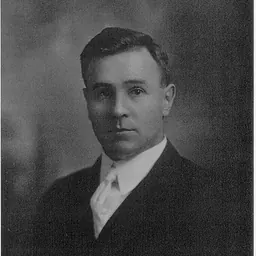
Esteban Leyton Soto (1 June 1927 – 26 January 2021) was a Chilean public servant and politician. With a long political career in his hometown, he served as councilman, alderman, and mayor of Rengo.
He also served as Deputy of the Republic representing the 9th Departmental Group (Rancagua, San Vicente, Caupolicán, and Cachapoal) between 1961 and 1965, and again between May and September 1973.
Early life He was born on 1 June 1927 in Rengo, into a middle-class family; the son of Juan Francisco Leyton Labra and Rogelia del Carmen Soto Salinas, a marriage that had eight children (four daughters and four sons), one of whom, Mario Leyton Soto, received the National Education Award of Chile in 2009. His father was an officer of the Carabineros de Chile, created in 1927 during the first government of President Carlos Ibáñez del Campo.
During his youth, between the ages of 14 and 15, he worked in several trades, such as shoe shiner, farm laborer, and factory worker in different industries in his hometown. He completed his primary studies at the “Los Sauces” School of Rengo, and later studied in Rosario and Requínoa. He then attended School No. 1 for Boys in Rengo (now Luis Galdames School of Rengo) in the second preparatory grade, later moving to Quinta de Tilcoco, where he completed third and fourth grade in 1937 and 1938. He returned to his hometown for fifth grade, and in 1939 entered the first year of secondary school at the local Liceo, after passing the “maturity exam” established during the government of President Pedro Aguirre Cerda.
Professionally, he worked as warehouse manager of raw materials, goods in process, and inventory, as well as cost control and production manager at the INCOL Metallurgical Industry, where he was later dismissed. Afterwards, he worked in various occupations, including selling fabrics and driving a shared taxi. He married Eliana Latorre Figueroa, with whom he had eight children, who went on to pursue different professions (teachers, social worker, lawyers, dentist, and commercial engineer).
Political career Party activity and Ibanez era He began his political activities by joining the Agrarian Labor Party (PAL) in 1945, being the founder of this party in the O'Higgins Province. Within this organization, he held the positions of national vice president of the Agrarian Labor Youth (JAL) in 1954 and regional councilor for two terms, between 1956 and 1959. In this capacity, he attended the “National Congress of Agrarian Laborism” in Chillán in 1951, where the presidential candidate for the following year's elections was defined, highlighting the figure of farmer and parliamentarian Jaime Larraín García-Moreno.
In 1953 he joined the Social Security Service (SSS) as an assistant, where he eventually became a union leader. Then, between 1954 and 1956, he served as head of the Family Allowance Department office. While working as a public official during the second government of President Carlos Ibáñez del Campo, he served as leader of the Employees’ Association and the National Association of Social Security Workers, in addition to director of the employees’ cooperative.
Councilman, mayor and deputy In 1958 he joined the newly formed Popular National Party, where he assumed provincial leadership. During the government of President Jorge Alessandri, in 1960 he was elected as a councilman (regidor) for Rengo, a term which ended in 1963. However, in the 1961 parliamentary elections—after joining the National Democratic Party (Padena)—he was elected as Deputy for the 9th Departmental Grouping (comprising the departments of Rancagua, Caupolicán and San Vicente), for the 1961–1965 legislative period. He left his mayoral position to assume the parliamentary seat. On that occasion, he was part of the permanent commission on Mining and Industry, and also served as president of his party's parliamentary committee and as a member of the Central Committee. In 1964 he acted as provincial head of the presidential campaign of the socialist Salvador Allende in the present-day O'Higgins Region. During this period, at the Padena National Congress in the city of Temuco, the Social Democratic Party was formed, where he became head of the Finance Department.
That same year, he was part of the parliamentary delegation that represented the National Congress at the United Nations (UN), at the Interparliamentary Conference of Latin America and the Caribbean. On this occasion, he had the honor of paying a posthumous tribute, on behalf of the Chilean delegation, to the late U.S. president John F. Kennedy at Arlington Cemetery.
Later, on 15 May 1967, he was elected mayor of the commune of Rengo, acting as a representative before the O’Higgins Development Council, an entity created in the country's mining provinces with the objective of strengthening municipalities through the copper industry. There he worked closely with former deputy Patricio Mekis, also serving as director of INDAC.
During the government of President Salvador Allende (1970–1973), he served as director and vice president of the State Insurance Institute, where he was in charge of copper mining insurance. He also worked closely with First Lady Hortensia Bussi to create a nursery and kindergarten for its workers.
In the 1973 parliamentary elections he was already a member of the Popular Unity coalition, within the Radical Party (PR), and was elected once again as deputy for the 9th Departmental Grouping (Rancagua, Caupolicán, San Vicente and Cachapoal) for the 1973–1977 period. However, the coup d’état of 11 September 1973 suspended the National Congress, ending his parliamentary term on 21 September that year.
During his legislative work, he visited Cuba twice, focused on labor issues concerning women and peasants, and during his first parliamentary term, together with José Foncea Aedo, promoted the “Phosphorus Law,” which introduced a special tax for this industrial sector in the cities of Rengo and Talca.
Coup d’état After the coup d’état, he was imprisoned on two occasions, the first lasting two months and 20 days in the prison of Rancagua. From December 1975, he engaged in clandestine political work. As president of the Social Democratic Radical Party (PRSD), he maintained contact with embassies around the world, except for China, managing to secure the exile of several persecuted members of his party. He also worked in the private sector, founding an industrial safety company, Vernam Ltda.
Return to democracy With the return to democracy, he ran as a candidate for deputy in the 1989 and 1993 elections, but was not elected. During the first democratic administration, led by President Patricio Aylwin, he served as provincial governor of Cachapoal Province, between 1990 and 1991. He was later elected as councilman of Rengo in the 1996 and 2000 municipal elections.
He ran for mayor of Rengo in the 2004 municipal elections, this time representing the PRSD, but lost. In subsequent municipal elections, he was elected councilman of Rengo, a position he held through the 2012 elections, after which he did not seek re-election (2012–2016 term).
Don’t just read it —
keep it.
Full-length biographies made to live with: read them, listen on the way to work, watch them tonight.
- E-book
- Audio
- Video
Instant download · yours to keep · every purchase keeps this site free
Important facts
People in Esteban Leyton Soto's life
Named in this biography and alive at the same time



Related people
Same field, nearest in time





Contemporaries
People whose lives overlapped Esteban Leyton Soto's

Frequently asked questions
Who was Esteban Leyton Soto?
Chilean politician
When was Esteban Leyton Soto born?
Esteban Leyton Soto was born on 1 June 1927 in Rengo.
When did Esteban Leyton Soto die?
Esteban Leyton Soto died on 26 January 2021.
What was Esteban Leyton Soto's occupation?
Esteban Leyton Soto was a politician.
What nationality was Esteban Leyton Soto?
Esteban Leyton Soto was Chilean.
Sources & further reading
· Wikipedia: Esteban Leyton Soto
Cite this page
APA: Biography.guide. (2026). Esteban Leyton Soto. https://biography.guide/esteban-leyton-soto/
MLA: "Esteban Leyton Soto." Biography.guide, https://biography.guide/esteban-leyton-soto/.
Chicago: "Esteban Leyton Soto." Biography.guide. https://biography.guide/esteban-leyton-soto/.
Data last updated: 2026-09-20 · Spot an error? Report a correction.
Page generated 2026-09-27 05:25 UTC