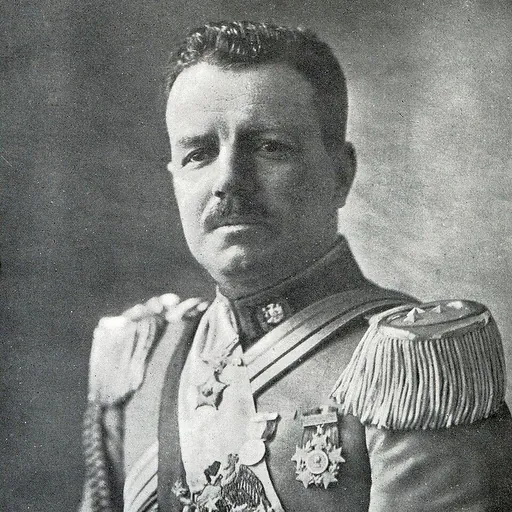
Carlos Ibáñez del Campo
Chilean army officer and political figure
About Carlos Ibáñez del Campo
Lived 1877 – 1960 (aged 82). Carlos Ibáñez del Campo was a Chilean military officer and politician.
Carlos Ibáñez del Campo (; 3 November 1877 – 28 April 1960) was a Chilean Army officer and political figure. He served as president twice, first between 1927 and 1931, and then from 1952 to 1958, serving for 10 years in office.
Early life Carlos Ibáñez del Campo was born to Francisco Ibáñez and María Nieves del Campo. On his father's side, his family descended from the Irish captain, John Augustine Evans, a native of Galway, who arrived in Chile in 1730 after the shipwreck of HMS Wager on the island of the same name, and who Hispanicized his surname. Captain Evans contacted Ambrosio O'Higgins, Governor of Linares, who entrusted him with the administration of the Royal Treasury of Perquilauquén. Ibáñez's ancestors include members of the Alvarado family of Spanish conquistadors. He was a direct descendant of García de Alvarado. On his maternal side, he is descended from the Frenchman Giles Du Champ, who arrived in Chile in 1700 and settled in Concepción. He was a captain in the Kingdom's Foreign Regiment. His descendants Hispanicized the surname to del Campo. His grandfather, Manuel del Campo y Vásquez, was a wealthy landowner in Linares.
During Ibáñez's childhood, he lived on the San Francisco estate, owned by his father (in Vega de Ancoa), and organized the first peasant center in that city. His younger brother, Javier, was also a soldier and politician, a member of the Democratic Party.
In 1889, he entered the Linares Public School and later went on to the Linares Boys' Lyceum, where he met Rogelio Cuéllar, who directed the boys' school and was a mathematics teacher. Cuéllar was the one who recommended him to enter the Military School. On March 12, 1896 he entered the second year of the Military School.
The coups of 1924 and 1925 The presidency of Arturo Alessandri saw a rise in popular discontent over an inefficient government. In 1924, the Chilean armed forces, led by General Luis Altamirano, began the saber-rattling (ruido de sables), a protest where soldiers banged their sabers against the floor of the Congress. Amid threats from the armed forces, Alessandri decided he could no longer govern and submitted his resignation. Although this resignation was not approved by Congress, Alessandri left the country and Altamirano established a military junta.
However, another faction of the armed forces, led by Colonel Marmaduke Grove and Lieutenant Colonel Ibáñez, decided the junta's reforms did not go far enough in ending the government's inefficiency. They led another coup, deposed Altamirano, and established a new junta with Emilio Bello Codesido as head. Ibáñez and Grove, the powers behind the scene, agreed to ask Alessandri to return and complete his term.
Minister of War and Home Affairs Alessandri returned in 1925 and drafted a new constitution which was designed to decrease the powers of the legislature, thereby making government more effective. Ibáñez was named Minister of War and later Home Affairs Minister. However, Alessandri decided Ibáñez was becoming too ambitious, and some ridiculed Alessandri as a pawn of Ibáñez. In response, Alessandri resigned once more and went into exile. Ibáñez announced his candidacy in the upcoming presidential elections, but the three main Chilean political parties (Conservative, Liberal, Radical) pressured him to desist. The three parties then presented a consensus choice, Emiliano Figueroa Larraín, to be the sole presidential candidate, in order to avoid political campaigning in the volatile political atmosphere. Nevertheless, Ibáñez's closest adviser, leftist José Santos Salas, later declared his presidential candidacy, and a number of people suspected it was with Ibáñez's backing.
Figueroa triumphed with 71% of the vote, but kept Ibáñez as home affairs minister. Ibáñez was able to control the weak Figueroa who decided to resign in 1927 rather than be Ibáñez's puppet. Because he was home affairs minister, under the Chilean constitution, Ibáñez became vice president and announced elections for 22 May that year. In the presidential elections, the traditional political parties decided not to participate. Ibáñez's only opponent was the communist Elías Lafertte, who was exiled in the Juan Fernández Archipelago throughout the electoral campaign. using rule by decree (decretos con fuerza de ley), suspending parliamentary elections, instead naming politicians to the Senate and Chamber of Deputies himself. Further, political opponents were arrested and exiled, According to Frederick Nunn, "Ibafiez paid only lip service to civil liberties and democratic procedures of governance embodied in the same document. He was not a true dictator, but a rigid authoritarian, elevated to power constitutionally, who had grave doubts about traditional liberal democracy and constitutionalism."
His popularity was helped by massive loans by American banks, which helped to promote a high rate of growth in the country. He constructed massive public works, and increased public spending. He also created the Carabineros de Chile (police force) by unifying the previously disorganized police forces. Another significant achievement of Ibáñez's first administration was the signing of the 1929 Treaty of Lima, in which Chile agreed to return the Tacna Province to Peru, which had been seized during the War of the Pacific in the 1880s.
He worked with the traditional parties in Chile to prevent the 1929 Chilean parliamentary election from being contested by socialists; they designated a candidate for each district. Ibáñez's large public spending did nothing to alleviate the situation, and his opponents, primarily the exiled Grove and Alessandri, began to plan a comeback.
During July 1931, there were large protests against the government. Student protesters declared a four-day general strike and occupied university buildings at the National University. Rioting began on July 23.
His second term was a modest success. By that time he was already old and ailing, and he left government mostly to his cabinet. His major problems during his presidency were those concerned with the economy. He had no plan to control inflation – one of the most pressing economic problems at the time in Chile – and as a result it skyrocketed to 71% in 1954 and 83% in 1955. Helped by the Klein-Sacks mission, Ibáñez managed to reduce it to 33% when he left the presidency. During his term, public transport costs rose by 50% and economic growth fell to 2.5%.
Now much more of a centrist politically, Ibáñez won the support of left-wingers by repealing the Law for the Defense of Democracy, which banned the Communist Party. He did also take a softer approach on crime than in his first presidency. For example, he commuted the death sentence for the Jackal of Pupunahue to life imprisonment.
Some Chileans continued to support an Ibáñez dictatorship. These ibañistas, most of whom were retired army officers, created the "Línea Recta" (Straight Line) group to establish a new dictatorship. Ibáñez met with these conspirators, but ultimately his typical lack of trust ended the plans for a self-coup. A scandal rocked the Ibáñez administration when the press revealed Ibáñez's meetings with these conspirators.
Retirement and legacy Ibáñez was succeeded by Jorge Alessandri Rodriguez, the son of his archenemy Arturo Alessandri. He abandoned politics and died in Santiago in 1960. As a result of Ibañez's nebulous and vacillating political ideology, he left no intellectual legacy to Chilean politics. His long and often poorly defined presence of more than thirty years on the Chilean political scene (during which he often appeared to have little actual sympathy with the political goals of the groups that supported him at various times, e.g. he was too moderate to agree with the nacistas and too respectful of existing institutions to emulate Peronism successfully) produced its most significant results in the early years of his caretaker presidency in the 1920s through his efforts to develop new towns in the regions to the south of the Central Valley and to improve existing infrastructure in the South.
The Región Aysén del General Carlos Ibáñez del Campo is named after him, in honor of his attempts to integrate the isolated regions of Aysén and Magallanes into Chile. The General Ibáñez Airport in Punta Arenas is also named after him.
Don’t just read it —
keep it.
Full-length biographies made to live with: read them, listen on the way to work, watch them tonight.
- E-book
- Audio
- Video
Instant download · yours to keep · every purchase keeps this site free
Important facts
Family & relationships
People in Carlos Ibáñez del Campo's life
Named in this biography and alive at the same time






Related people
Same field, nearest in time



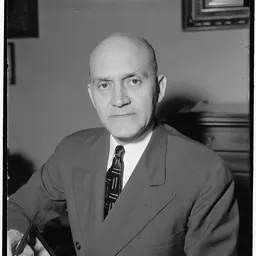
Contemporaries
People whose lives overlapped Carlos Ibáñez del Campo's
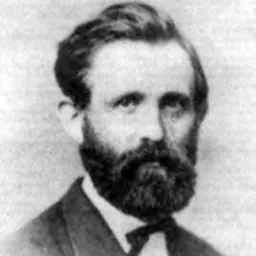

Frequently asked questions
Who was Carlos Ibáñez del Campo?
Chilean army officer and political figure (1877-1960)
When was Carlos Ibáñez del Campo born?
Carlos Ibáñez del Campo was born on 3 November 1877 in Linares.
When did Carlos Ibáñez del Campo die?
Carlos Ibáñez del Campo died on 28 April 1960 in Santiago.
What was Carlos Ibáñez del Campo's occupation?
Carlos Ibáñez del Campo was a military officer and politician.
What nationality was Carlos Ibáñez del Campo?
Carlos Ibáñez del Campo was Chilean.
Sources & further reading
· Wikipedia: Carlos Ibáñez del Campo
· DBpedia: Carlos Ibáñez del Campo
Cite this page
APA: Biography.guide. (2026). Carlos Ibáñez del Campo. https://biography.guide/carlos-ibanez-del-campo/
MLA: "Carlos Ibáñez del Campo." Biography.guide, https://biography.guide/carlos-ibanez-del-campo/.
Chicago: "Carlos Ibáñez del Campo." Biography.guide. https://biography.guide/carlos-ibanez-del-campo/.
Data last updated: 2026-09-21 · Spot an error? Report a correction.
Portrait: Wikimedia Commons · author & licence
Page generated 2026-09-27 05:00 UTC