
About Esat Uras
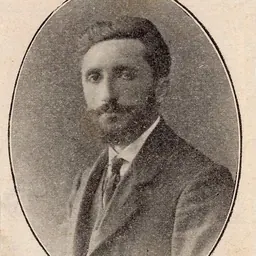
Lived 1882 – 1957 (aged 74–75). Esat Uras was a Turkish politician and historian.
Ahmet Esat Uras (1882–1957) was a perpetrator of the Armenian genocide who later wrote The Armenians in History and the Armenian Question, an apologist work which has been described as "the ur-text of Turkish denialist 'scholarship'".
Biography Uras was a senior official in the Committee of Union and Progress "directorate for public security", heading the "Armenian bureau" due to his ability to read the Armenian language. In this capacity, he played a key role in planning and executing the Armenian genocide. Uras was likely the chief editor of The Armenian Aspirations and Revolutionary Movements, published in early 1916, in which the Ottoman government attempted to justify its policies towards Armenians. In May 1916, he went to Aleppo and personally coordinated deportations of the remaining Armenians.
In the Republic of Turkey, he joined the Republican People's Party and served as a backbench MP for Amasya for decades. He also participated in the Turkish Historical Society.
Writings
By 1950, Uras was one of the last surviving Unionist leaders. He published The Armenians in History and the Armenian Question , probably in reaction to Stalin's post-World War II territorial claims on Turkey. According to Turkish historian Doğan Gürpınar, the book was "a new and comprehensive synthesis" of older Unionist claims and apologetics; it also built on Uras' personal experiences. Gürpınar sees the book as "the intermediary connecting two historical eras and two different modes of denialism", the latter being that which developed after 1973. The book has been described as "the ur-text of Turkish denialist 'scholarship'", since it established many of the tropes and narratives that would be used in later works that denied the genocide. According to Donald Bloxham, the book is "the canonical text of Turkish nationalist historiography on the Armenians". The book has been widely criticized for misrepresenting sources and exaggerating Armenian rebelliousness.
Historian Dikran Kaligian states that Uras' work is the main source for those historians who argue that the Armenian Revolutionary Federation fomented a civil war on behalf of Russia. This "provocation thesis" aims to justify the genocide by asserting that Armenians provoked their own persecution. Kaligian states that Uras' book is an unreliable source that "is replete with mistranslations and distortions as well as key omissions", for example mistranslating a speech by Vahan Papazian and omitting the passages that contradict Uras' argument.
Don’t just read it —
keep it.
Full-length biographies made to live with: read them, listen on the way to work, watch them tonight.
- E-book
- Audio
- Video
Instant download · yours to keep · every purchase keeps this site free
Important facts
People in Esat Uras's life
Named in this biography and alive at the same time
Related people
Same field, nearest in time





Contemporaries
People whose lives overlapped Esat Uras's



Frequently asked questions
Who was Esat Uras?
Turkish statesperson (1882–1957)
When was Esat Uras born?
Esat Uras was born in 1882 in Amasya.
When did Esat Uras die?
Esat Uras died on 11 January 1957 in Ankara.
What was Esat Uras's occupation?
Esat Uras was a politician and historian.
What nationality was Esat Uras?
Esat Uras was Turkish.
Sources & further reading
Cite this page
APA: Biography.guide. (2026). Esat Uras. https://biography.guide/esat-uras/
MLA: "Esat Uras." Biography.guide, https://biography.guide/esat-uras/.
Chicago: "Esat Uras." Biography.guide. https://biography.guide/esat-uras/.
Data last updated: 2026-09-20 · Spot an error? Report a correction.
Page generated 2026-09-27 05:29 UTC