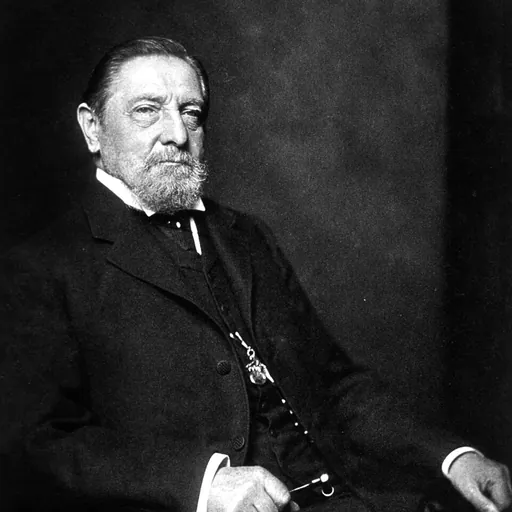
About Ernst von Leyden
Lived 1832 – 1910 (aged 78). Ernst von Leyden was a German military physician, university teacher, neurologist, pathologist, internist and therapist.
Ernst Viktor von Leyden (20 April 1832 – 5 October 1910) was a German internist from Danzig.
Biography He studied medicine at the Friedrich-Wilhelms-Institut in Berlin, and was a pupil of Johann Lukas Schönlein (1793–1864) and Ludwig Traube (1818–1876). He was later a medical professor at the universities of Königsberg, Strassburg and Berlin. Leyden was an important influence to the career of Ludwig Edinger (1855–1918), and during his tenure at the University of Königsberg worked closely with Otto Spiegelberg (1830–1881) and Friedrich Daniel von Recklinghausen (1833–1910). Among his better known students and assistants were Hermann Nothnagel (1841–1905) at Königsberg and Hermann Ludwig Eichhorst (1849–1921) in Berlin.
In 1880, with Friedrich Theodor von Frerichs, he founded the Zeitschrift für klinische Medizin; in 1881 he founded the Gesellschaft für innere Medizin. He treated Frederick III, German Emperor for his cancer of the larynx, though unsuccessfully, and in the 1890s (from 1894) he was a physician to Tsar Alexander III of Russia.
Von Leyden specialized in neurological diseases, and was also a leader in establishing proper hospital facilities for tuberculosis patients. He wrote articles on a wide array of medical topics, including works on tabes dorsalis and poliomyelitis. In 1887–99 he published the two-volume Handbuch der Ernährungstherapie (Textbook of Dietetic Therapy); second edition 1903–04.
Eponymous medical terms named for Ernst von Leyden Charcot–Leyden crystals: colorless crystals found in the sputum of asthma patients, or in the faecal matter of amoebic and ulcerative colitis; named along with neurologist Jean-Martin Charcot (1825–1893). Leyden's neuritis: A neuritis in which nerve fibres are replaced by fatty tissue. Leyden–Möbius syndrome: Pelvic muscular dystrophy; named along with neurologist Paul Julius Möbius (1853–1907). Westphal–Leyden ataxia: Acute ataxia that begins in childhood; named along with neurologist Karl Friedrich Otto Westphal (1833–1890).
Don’t just read it —
keep it.
Full-length biographies made to live with: read them, listen on the way to work, watch them tonight.
- E-book
- Audio
- Video
Instant download · yours to keep · every purchase keeps this site free
Important facts
People in Ernst von Leyden's life
Named in this biography and alive at the same time




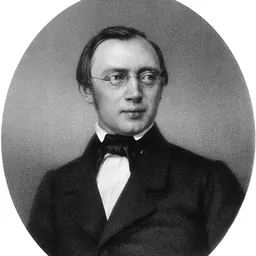
Related people
Same field, nearest in time
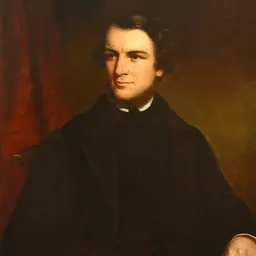
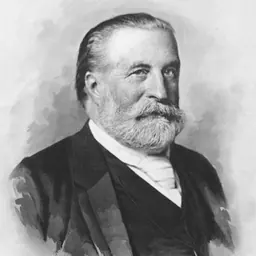
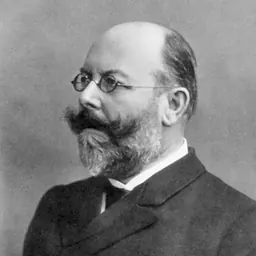

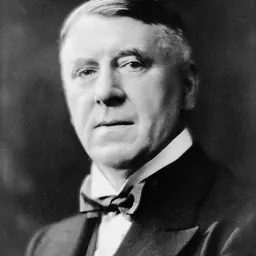
Contemporaries
People whose lives overlapped Ernst von Leyden's



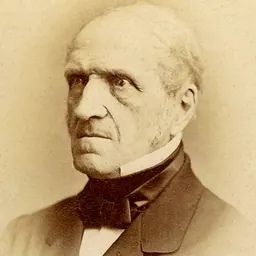
Frequently asked questions
Who was Ernst von Leyden?
German physician (1832–1910)
When was Ernst von Leyden born?
Ernst von Leyden was born on 20 April 1832 in Gdańsk.
When did Ernst von Leyden die?
Ernst von Leyden died on 5 October 1910 in Berlin.
What was Ernst von Leyden's occupation?
Ernst von Leyden was a military physician, university teacher, neurologist, pathologist, internist and therapist.
What nationality was Ernst von Leyden?
Ernst von Leyden was German.
Sources & further reading
Cite this page
APA: Biography.guide. (2026). Ernst von Leyden. https://biography.guide/ernst-von-leyden/
MLA: "Ernst von Leyden." Biography.guide, https://biography.guide/ernst-von-leyden/.
Chicago: "Ernst von Leyden." Biography.guide. https://biography.guide/ernst-von-leyden/.
Data last updated: 2026-09-23 · Spot an error? Report a correction.
Portrait: Wikimedia Commons · author & licence
Page generated 2026-09-27 05:07 UTC