
Friedrich Daniel von Recklinghausen
German pathologist
About Friedrich Daniel von Recklinghausen
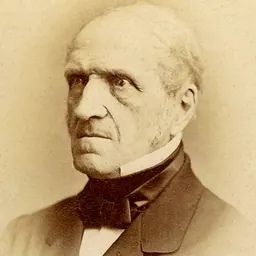
Lived 1833 – 1910 (aged 76). Friedrich Daniel von Recklinghausen was a German physician, university teacher and pathologist, known for Iron overload and Neurofibromatosis type I.
Friedrich Daniel von Recklinghausen (; December 2, 1833 – August 26, 1910) was a German pathologist born in Gütersloh, Westphalia. He was the father of physiologist Heinrich von Recklinghausen (1867–1942).
Early life Recklinghausen was born in Gütersloh, Germany, in 1833. He was the son of Friedrich Christoph von Recklinghausen and Friederike Charlotte Zumwinkel. His father was an elementary school teacher and a sexton. His mother died shortly after his birth in 1833. The Recklinghausens were a patrician family who put multiple councilors and mayors in their positions. He went to the elementary school where his father taught in Gütersloh. He then attended high school at Ratsgymnasium, Bielefeld.
Academic background Starting in 1852, Recklinghausen studied medicine at the Universities of Bonn, Würzburg, and Berlin, earning his doctorate at the latter institution in 1855. Henceforth, he remained as a professor emeritus, continuing to teach and conduct research until his death in 1910.
Königsberg At the age of 32 years old, Recklinghausen was already a Professor of Pathological Anatomy; a habilitation was unnecessary because of his academic and scientific background. In 1865, he was selected as the Chair of Pathological Anatomy at the Albertus University of Königsberg. The theme of his inaugural address was "De corporibus liberis articulorum" ("On the loose bodies of the joints"). In his short time at Königsberg he met his future wife Marie Jacobson (1846–1918), the daughter of the Jewish doctor Jacob Jacobson from Braunsberg in East Prussia. In 1867, the first of his five children was born. His son Heinrich Jacob von Recklinghausen later acquired a name for himself as a doctor, blood pressure researcher, and philosopher.
Strasbourg On April 20, 1872, Recklinghausen moved to the re-established Strasbourg, Kaiser Wilhelm University in the imperial country of Alsace-Lorraine. Throughout Recklinghausen's time at the university he held multiple titles including Dean of the Medical Faculty in 1875/76 and in 1897, as well as rector of the university for the academic year 1883/84. In his Rectorate speech, he dealt with the medical teaching: About the historical development of medical education, its preconditions and its task. During his time at Strasbourg he helped to recruit a number of important people to the school, such as anatomist Wilhelm von Waldeyer-Hartz (1836–1921). Additionally Recklinghausen was one of the founders of the German Society for Pathology in 1884. After his retirement in 1906, he was still working on a comprehensive monograph on the rickets and osteomalacia, which was completed in the year of his death. He is buried next to his wife at the Saint Louis cemetery in Robertsau. The tombstone bears the inscription:
PROFESSOR OF PATHOLOGICAL ANATOMY, AS RESEARCHER AS WELL AS TEACHER PROVEN, ESTABLISHED AND OBLIGATORY – A WHOLE MAN
Contributions In 1855 Recklinghausen wrote his inaugural thesis De pyaemiae theoriis, concerning differing theories on pyaemia.
He is credited with establishing a method for staining lines of cell junctions with silver, a procedure that led to Julius Friedrich Cohnheim's research on leukocyte migration and inflammation. In a monograph published posthumously in 1910, he coined the term oncosis (derived from ónkos 'swelling'). This term is sometimes used to describe ischemic cell death. In addition, he is credited with performing important studies on the heart and circulation.
Written works Die Lymphgefässe und ihre Beziehung zum Bindegewebe [The lymph vessels and their significance in connective tissue] (1862). Here he looked into using silver to show the junction of cells and how the connective tissues communicate through lymphatics. Ueber Eiter- und Bindegewebskörperchen in Virchow's Archiv für pathologische Anatomie und Physiologie, und für klinische Medicin, Berlin, [About pus and connective tissue corpuscles in Virchow's Archive of Pathological Anatomy and Physiology, and of Clinical Medicine] (1863), 28: 157-197. Here Recklinghausen described granular cells in the frog mesentery, later named "mast cells" by Paul Ehrlich (1854–1915). Recklinghausen's written work on leucocytes allowed Cohnheim to begin his studies on specifics of the leucocytes migration and inflammation. Über die multiplen Fibrome der Haut und ihre Beziehung zu den multiplen Neuromen. Festschrift für Rudolf Virchow. [On Multiple Cutaneous Fibroma and Their Relationship to Multiple Neuromas] Berlin, (1882). (treatise on Recklinghausen's disease). About the multiple fibroids of the skin and their relationship to the multiple neuromas. Handbuch der allgemeinen Pathologie des Kresilaufes und der Ernährung. In Theodor Billroth and Georg Albert Lücke, publishers: Deutsche Chirurgie, Lfg. 2, 3, Stuttgart, (1883). Translates to handbook of general pathology of cancer and nutrition. Hämochromatose. Tageblatt der Naturforschenden Versammlung (1889), Heidelberg, 1890: 324. Ueber Akromegalie. Virchow's Archiv für pathologische Anatomie und Physiologie und für klinische Medicin, Berlin, (1890), 119: 36. Demonstration von Knochen mit Tumor bildender Ostitis deformans. Tageblatt der Naturforschenden Versamlung 1889. Heidelberg, (1890), p 321. Die fibröse oder deformirende Ostitis, die Osteomalacie und die osteoplastische Carcinose in ihren gegenseitigen Beziehungen. In: Festschrift R Virchow. Berlin: G. Reimer, 1891.
Don’t just read it —
keep it.
Full-length biographies made to live with: read them, listen on the way to work, watch them tonight.
- E-book
- Audio
- Video
Instant download · yours to keep · every purchase keeps this site free
Important facts
People in Friedrich Daniel von Recklinghausen's life
Named in this biography and alive at the same time
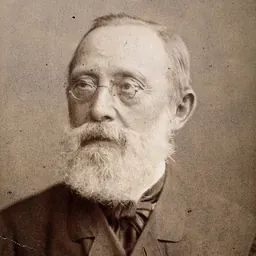

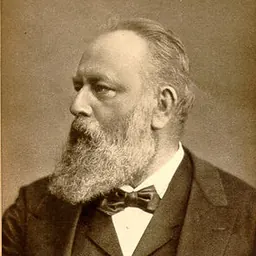
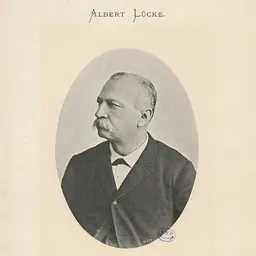



Related people
Same field, nearest in time
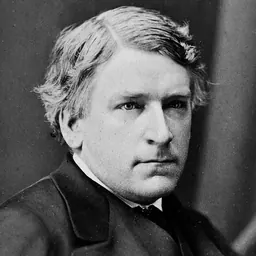



Contemporaries
People whose lives overlapped Friedrich Daniel von Recklinghausen's




Frequently asked questions
Who was Friedrich Daniel von Recklinghausen?
German pathologist (1833-1910)
When was Friedrich Daniel von Recklinghausen born?
Friedrich Daniel von Recklinghausen was born on 2 December 1833 in Gütersloh.
When did Friedrich Daniel von Recklinghausen die?
Friedrich Daniel von Recklinghausen died on 26 August 1910 in Strasbourg.
What was Friedrich Daniel von Recklinghausen's occupation?
Friedrich Daniel von Recklinghausen was a physician, university teacher and pathologist.
What was Friedrich Daniel von Recklinghausen known for?
Friedrich Daniel von Recklinghausen was known for Iron overload and Neurofibromatosis type I.
What nationality was Friedrich Daniel von Recklinghausen?
Friedrich Daniel von Recklinghausen was German.
Sources & further reading
· Wikipedia: Friedrich Daniel von Recklinghausen
· DBpedia: Friedrich Daniel von Recklinghausen
Cite this page
APA: Biography.guide. (2026). Friedrich Daniel von Recklinghausen. https://biography.guide/friedrich-daniel-von-recklinghausen/
MLA: "Friedrich Daniel von Recklinghausen." Biography.guide, https://biography.guide/friedrich-daniel-von-recklinghausen/.
Chicago: "Friedrich Daniel von Recklinghausen." Biography.guide. https://biography.guide/friedrich-daniel-von-recklinghausen/.
Data last updated: 2026-09-27 · Spot an error? Report a correction.
Page generated 2026-09-27 05:16 UTC