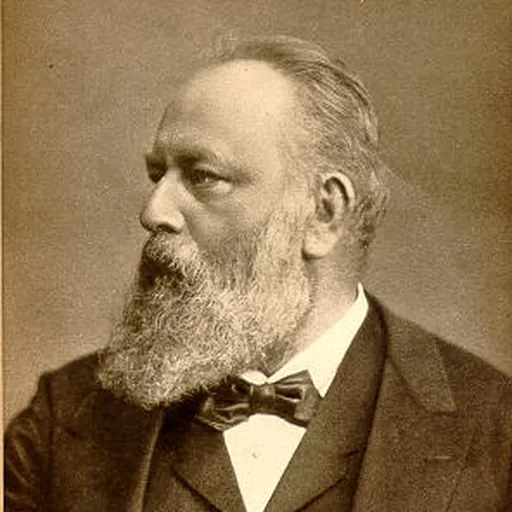
About Theodor Billroth
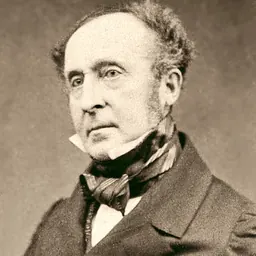
Lived 1829 – 1894 (aged 64). Theodor Billroth was a German physician, surgeon, professor and pianist, known for Gastrectomy.
Christian Albert Theodor Billroth (26 April 18296 February 1894) was one of the most eminent surgeons of the 19th century, with his main contributions in gastrectomy, laryngectomy and anatomical pathology and is generally regarded as the founding father of modern abdominal surgery.
As early as 1874 he discovered the bacteriostatic effects of penicillium, which makes him the primary discoverer of penicillin.
He was a close friend and confidant of Johannes Brahms, a leading patron of the Viennese musical scene, and one of the first to attempt a scientific analysis of musicality.
Early life and education Billroth was born at Bergen auf Rügen in the Kingdom of Prussia, the son of a Lutheran minister. Billroth was the eldest of five sons. His father died of dysentery when Billroth was five years old. His mother moved with the children to his grandfather´s house in Greifswald, where he attended school. He obtained his Abitur degree in 1848. Billroth was an indifferent student, and spent more time practicing piano than studying. Torn between a career as a musician or as a physician, he acceded to his mother's wishes and enrolled himself at the University of Greifswald to study medicine, but spent the whole of his first term studying music. When Wilhelm Baum was appointed to the Chair of Surgery at the University of Göttingen, Billroth followed. Devoting himself to his medical studies he studied surgery under Baum and physiology under Rudolph Wagner (1805–1864). In 1851, under the guidance of Rudolph Wagner, Billroth and fellow student Georg Meissner (1829–1905), made a scientific trip to Trieste to study the torpedo fish.
Billroth wrote his thesis, in Latin, in which he described the effects of vagotomy on the lungs and the value of tracheostomy. He graduated in 1852). After the official state examination was over he fulfilled his obligatory military service, which he considered a waste of time, except for the training in discipline. Thereafter he tried to start a practice as a family doctor in Berlin, which failed because no patients consulted him. There he was also apprenticed to Carl Langenbuch. In 1856 he was appointed lecturer (Privatdozent) in Surgery and in Pathological anatomy. Though he laid the foundation of his fame at Zurich, it was in Vienna, a larger and more conspicuous theater, that he established himself as the power that he was in the surgical world.
During the Franco-Prussian War, Billroth did excellent work in the military hospital at Mannheim and Weissenburg, treating a variety of horrific battlefield injuries with aggressive and ambitious surgeries; he embodied his experience of war surgery in his Surgical Letters from Mannheim and Weissenburg. He was so impressed by the horrors of war that he was ever afterwards an ardent advocate of peace. On December 3, 1891, he delivered an address on the care of the wounded in war which made a profound sensation and led to large sums of money being voted by the Austrian legislative chambers for the provision of adequate means of succour for the wounded. Billroth was directly responsible for a number of landmarks in surgery; in 1872, he was the first to conduct an esophagectomy, removing a section of the oesophagus and joining the remaining parts together. In 1873, he performed the first laryngectomy, completely excising a cancerous larynx. He was the first surgeon to excise a rectal cancer and by 1876, he had performed 33 such operations. By 1881, Billroth had made intestinal surgery seem almost commonplace. But his most famous accomplishment is unquestionably the first successful gastrectomy for gastric cancer. On January 29, 1881, after many ill-fated attempts, Billroth performed the first successful resection for antral carcinoma on Therese Heller, who lived for almost 4 months and died of liver metastases. He accomplished this operation by closing the greater curvature side of the stomach and anastomosing the lesser curvature to the duodenum, in an operation that is still known as the Billroth I to this day.
Billroth passed his restless intellectual spirit to numerous distinguished students, creating the "Billroth School" of followers. No aspect of his profession seemed to escape his intense scrutiny, be it research, teaching, administration, or nursing. He not only had something valuable to say about each but often saw to it that his ideas became concrete reality. In all the spheres he sought to influence, he was guided by a belief in the unity of science and art, and by confidence in his own ability to effect change.
Billroth was instrumental in establishing the first modern school of thought in surgery. He had radical ideas on surgical training, advocating a prolonged surgical apprenticeship on completion of medical studies consisting of preliminary work in hospitals followed by performing operations on cadavers and experimental animals.
Billroth started an essay called "Wer ist musikalisch?" ("Who is musical?"), which was published posthumously by Hanslick. It was one of the earliest attempts to apply scientific methods to musicality. In the essay, Billroth identifies different types of amusicality (tone deafness, rhythm-deafness and harmony-deafness) that suggest some of the different cognitive skills involved in the perception of music. Billroth died in Opatija, Austria-Hungary, before he could complete the research.
Excelling at both his vocation and his avocation, Billroth never saw science and music as being in conflict. On the contrary, he considered the two to complement each other. "It is one of the superficialities of our time to see in science and in art two opposites," he wrote in a letter. "Imagination is the mother of both."
Honours In 1887 Billroth was made a member of the Austrian Herrenhaus, "House of Lords"; a distinction rarely bestowed on members of the medical profession. In 1888, Theodor Billroth was elected member of the German Academy of Sciences Leopoldina.
Footnotes
Don’t just read it —
keep it.
Full-length biographies made to live with: read them, listen on the way to work, watch them tonight.
- E-book
- Audio
- Video
Instant download · yours to keep · every purchase keeps this site free
Important facts
People in Theodor Billroth's life
Named in this biography and alive at the same time




Related people
Same field, nearest in time


Contemporaries
People whose lives overlapped Theodor Billroth's



Frequently asked questions
Who was Theodor Billroth?
German surgeon (1829-1894)
When was Theodor Billroth born?
Theodor Billroth was born on 26 April 1829 in Bergen auf Rügen.
When did Theodor Billroth die?
Theodor Billroth died on 6 February 1894 in Opatija.
What was Theodor Billroth's occupation?
Theodor Billroth was a physician, surgeon, professor and pianist.
What was Theodor Billroth known for?
Theodor Billroth was known for Gastrectomy.
What nationality was Theodor Billroth?
Theodor Billroth was German.
Sources & further reading
Cite this page
APA: Biography.guide. (2026). Theodor Billroth. https://biography.guide/theodor-billroth/
MLA: "Theodor Billroth." Biography.guide, https://biography.guide/theodor-billroth/.
Chicago: "Theodor Billroth." Biography.guide. https://biography.guide/theodor-billroth/.
Data last updated: 2026-09-23 · Spot an error? Report a correction.
Portrait: Wikimedia Commons · author & licence
Page generated 2026-09-27 05:06 UTC