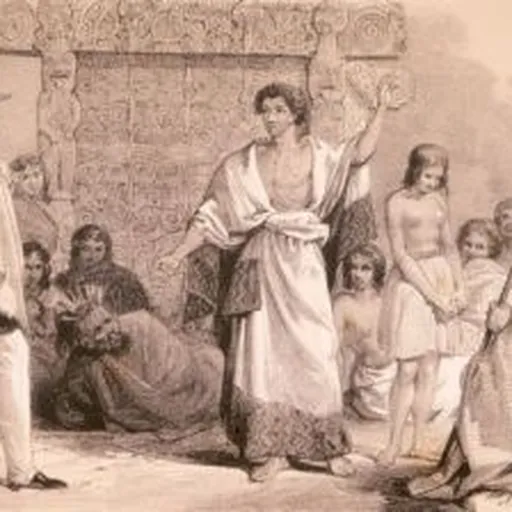
Ernst Dieffenbach
German physician, geologist and naturalist
About Ernst Dieffenbach
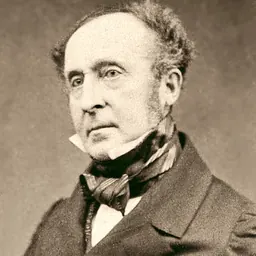
Lived 1811 – 1855 (aged 44). Ernst Dieffenbach was a German botanist, physician, malacologist, university teacher, geologist and ethnologist.
Johann Karl Ernst Dieffenbach (27 January 1811 – 1 October 1855), also known as Ernest Dieffenbach, was a German medical doctor, geologist and naturalist, the first trained scientist to live and work in New Zealand, where he travelled widely under the auspices of the New Zealand Company, returning in 1841–42 and publishing in English his Travels in New Zealand in 1843.
Dieffenbach was born in Giessen. He gained a degree at the University of Giessen and then, accused by authorities in the Grand Duchy of Hesse of being subversive, he fled, first to Zurich, where he received a degree in medicine before being expelled in 1836 for politics and duelling; in 1837 he arrived in London, where he eked out a living teaching German, but gained a reputation by his contributions to medical and scientific journals and made friendships with geologists Charles Lyell and Richard Owen among others. Recommendations put him aboard the Tory bound for New Zealand, travelling in the capacity of surgeon, surveyor and naturalist.
During the 1840s he was a correspondent of Charles Darwin, whose Journal of Researches Dieffenbach translated into German and published, with Darwin's notes and corrections, as Naturwissenschaftliche Reisen (Brunswick, 1853). Darwin knew Dieffenbach's paper on the Chatham Islands, contributed to the journal of the Royal Geographical Society, and he particularly noted Dieffenbach's commentary on the differences between the species of birds there and in New Zealand. Dieffenbach also translated the Geological Manual of Henry De la Beche. Partly as a result of these efforts, in 1850 he was named adjunct professor of geology at Giessen, a post he held until his death there.
The extinct Dieffenbach's rail (Gallirallus dieffenbachii) a flightless rail formerly endemic to the Chatham Islands, was named after him. Dieffenbach and his assistant Symonds travelled from New Plymouth via Mount Egmont (Taranaki) and Ruapehu and then around the shores of Lake Taupō. They then travelled north, partly following the Waikato River then east towards Kakaramea (Rainbow Mountain), reaching Rotomahana Lake late one evening. They camped overnight at the mouth of the Haumi Stream.
Don’t just read it —
keep it.
Full-length biographies made to live with: read them, listen on the way to work, watch them tonight.
- E-book
- Audio
- Video
Instant download · yours to keep · every purchase keeps this site free
Important facts
People in Ernst Dieffenbach's life
Named in this biography and alive at the same time


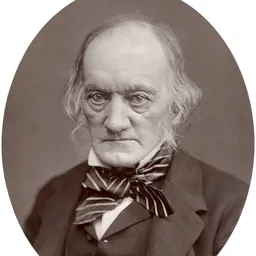
Related people
Same field, nearest in time
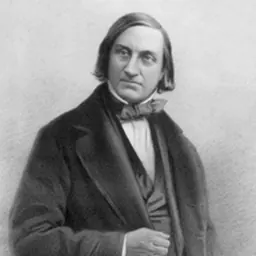

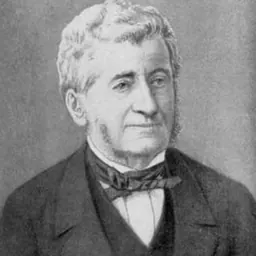

Contemporaries
People whose lives overlapped Ernst Dieffenbach's





Frequently asked questions
Who was Ernst Dieffenbach?
German physician, geologist and naturalist (1811-1855)
When was Ernst Dieffenbach born?
Ernst Dieffenbach was born on 27 January 1811 in Giessen.
When did Ernst Dieffenbach die?
Ernst Dieffenbach died on 1 October 1855 in Giessen.
What was Ernst Dieffenbach's occupation?
Ernst Dieffenbach was a botanist, physician, malacologist, university teacher, geologist and ethnologist.
What nationality was Ernst Dieffenbach?
Ernst Dieffenbach was German.
Sources & further reading
· Wikipedia: Ernst Dieffenbach
Cite this page
APA: Biography.guide. (2026). Ernst Dieffenbach. https://biography.guide/ernst-dieffenbach/
MLA: "Ernst Dieffenbach." Biography.guide, https://biography.guide/ernst-dieffenbach/.
Chicago: "Ernst Dieffenbach." Biography.guide. https://biography.guide/ernst-dieffenbach/.
Data last updated: 2026-09-20 · Spot an error? Report a correction.
Page generated 2026-09-27 05:09 UTC