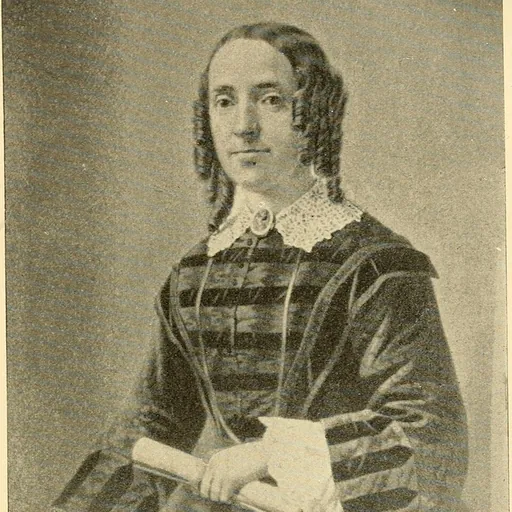
About Ernestine Rose
Lived 1810 – 1892 (aged 82). Ernestine Rose was a Russian and American writer, suffragette, women's rights activist, inventor, social activist and feminist, known for Atheist feminism, Civil Rights and Feminism.
Ernestine Louise Rose (January 13, 1810 – August 4, 1892) was a suffragist, abolitionist, and freethinker who has been called the "first Jewish feminist." Her career spanned from the 1830s to the 1870s, making her a contemporary to the more famous suffragists Elizabeth Cady Stanton and Susan B. Anthony. Largely forgotten in contemporary discussions of the American women's rights movement, she was one of its major intellectual forces in nineteenth-century America. The quote, "women's rights are human rights," was believed to be coined by her. Her relationship with Judaism is a debated motivation for her advocacy. As a rabbi's daughter, Ernestine had received more education than other women her age. Although less well remembered than her fellow suffragists and abolitionists, in 1996, she was inducted into the National Women's Hall of Fame, and in 1998 the Ernestine Rose Society was founded to "revive the legacy of this important early nineteenth century reformer by recognizing her pioneering role in the first wave of feminism."
Early life
She was born on 13 January 1810 in Piotrków Trybunalski, Duchy of Warsaw, as Ernestine Louise Susmond Potowsky. Unusual for the time, she was educated and learned Hebrew. As she grew older, she began to question her father more and more on religious matters. He told her, "A young girl does not want to understand the object of her creed, but to accept and believe it."
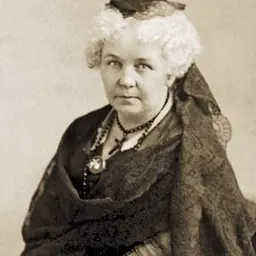
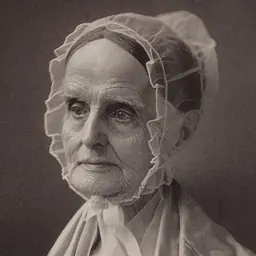
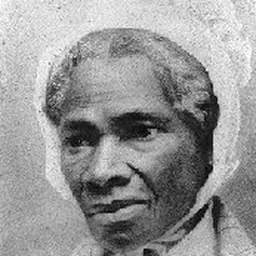
In the 1840s and 1850s, Rose joined the "pantheon of great American women," a group that included such influential women as Elizabeth Cady Stanton, Susan B. Anthony, Lucretia Mott, Paulina Kellogg Wright Davis, and Sojourner Truth, along with William Lloyd Garrison and Frederick Douglass, First National Convention of Infidels, the Hartford Bible Convention, the Women's Rights Convention in the Tabernacle, New York City, the tenth national convention of the National Women's Rights Convention in Cooper Institute, New York City, the State Women's Rights Convention in Albany, New York, and the Equal Rights Association meeting in which there was a schism.
Rose was elected president of the National Women's Rights Convention in October, 1854, in spite of objections that she was an atheist. Her election was heavily supported by Susan B. Anthony, who declared that "every religion – or none – should have an equal right on the platform."
Although she never seemed to attach great importance to her Jewish background, in 1863 Rose had a published debate with Horace Seaver, the abolitionist editor of the Boston Investigator, whom she accused of being antisemitic.
In 1869, she successfully lobbied for legislation in New York that allowed married women to retain their own property and have equal guardianship of children.
In her later years, after a six-month trip to Europe, she attempted to stay away from platforms and controversy. However, within 6 months, she made the closing address at the nationwide Women's Rights Convention. Her health once again took a downward turn, and on June 8, 1869, she and her husband set sail for England. Susan B. Anthony arranged a farewell party for them, and the couple received many gifts from friends and admirers, including a substantial amount of money.
After 1873, her health improved, and she began to advocate women's suffrage in England, even attending the Conference of the Woman's Suffrage Movement in London and speaking in Edinburgh, Scotland at a large public meeting in favor of woman's suffrage. She died in Brighton, England, in 1892 and was buried at Highgate Cemetery.
Don’t just read it —
keep it.
Full-length biographies made to live with: read them, listen on the way to work, watch them tonight.
- E-book
- Audio
- Video
Instant download · yours to keep · every purchase keeps this site free
Important facts
People in Ernestine Rose's life
Named in this biography and alive at the same time


Related people
Same field, nearest in time


Contemporaries
People whose lives overlapped Ernestine Rose's





Frequently asked questions
Who was Ernestine Rose?
American feminist activist (1810–1892)
When was Ernestine Rose born?
Ernestine Rose was born on 13 January 1810 in Piotrków Trybunalski.
When did Ernestine Rose die?
Ernestine Rose died on 4 August 1892 in Brighton.
What was Ernestine Rose's occupation?
Ernestine Rose was a writer, suffragette, women's rights activist, inventor, social activist and feminist.
What was Ernestine Rose known for?
Ernestine Rose was known for Atheist feminism, Civil Rights, Feminism, Women's Rights and Women's Suffrage.
What nationality was Ernestine Rose?
Ernestine Rose was Russian and American.
Sources & further reading
Cite this page
APA: Biography.guide. (2026). Ernestine Rose. https://biography.guide/ernestine-rose/
MLA: "Ernestine Rose." Biography.guide, https://biography.guide/ernestine-rose/.
Chicago: "Ernestine Rose." Biography.guide. https://biography.guide/ernestine-rose/.
Data last updated: 2026-09-22 · Spot an error? Report a correction.
Portrait: Wikimedia Commons · author & licence
Page generated 2026-09-27 05:04 UTC