
About Ernest R. Kouma
Lived 1919 – 1993 (aged 74). Ernest R. Kouma was an American soldier.
Ernest Richard Kouma (November 23, 1919 – December 19, 1993) was a soldier in the United States Army during World War II and the Korean War. He rose to the rank of master sergeant and received the Medal of Honor for his actions on August 31 and September 1, 1950, during the Second Battle of Naktong Bulge in South Korea.
Born in Nebraska, Kouma grew up on a family farm before enlisting in the Army in 1940. Kouma served as a tank commander during World War II, seeing combat in Germany with the 9th Armored Division from 1944 to 1945. After that war, Kouma served as part of the occupation force in South Korea and Japan.
On the outbreak of the Korean War, Kouma commanded an M26 Pershing tank in the 2nd Infantry Division. While fighting during the Battle of Pusan Perimeter along the Naktong River, Kouma commanded his tank as it single-handedly fended off repeated North Korean attempts to cross the river after units around it had withdrawn. Wounded twice, Kouma killed 250 North Korean troops in this action.
After receiving the medal, Kouma served as a recruiter and remained in the Army for 31 years, retiring in 1971. He lived in Kentucky until his death, and is buried in Fort Knox, Kentucky.
Early life Ernest Richard Kouma was born on November 23, 1919, in Dwight, Nebraska, to a farming family. He spent much of his early life on the family farm before enlisting in the United States Army in June 1940.
World War II When the United States entered World War II, Kouma was trained as an armor crewman. He was assigned to the 9th Armored Division.
The 9th Armored Division made a stand at Bastogne and held off the Germans long enough to enable the 101st Airborne Division to dig in for a defense of the city, resulting in the Battle of Bastogne. After a rest period in January 1945, the 9th Armored Division made preparations for a drive across the Roer River. The offensive was launched on February 28, and the unit smashed across the Roer to Rheinbach, sending patrols into Remagen. The Ludendorff Bridge at Remagen was found intact, and was seized by elements of the 9th Armored minutes before demolition charges were set to explode on March 7, 1945. The division exploited the bridgehead, moving south and east across the Lahn River toward Limburg, where thousands of Allied prisoners were liberated. The division drove on to Frankfurt and then turned to assist in the closing of the Ruhr Pocket. In April, it continued east, encircled Leipzig and secured a line along the Mulde River. The division was shifting south to Czechoslovakia when the war in Europe ended on V-E Day in May 1945.
Following the end of the war, Kouma decided to stay in the Army. He was moved to South Korea for occupation duties before being moved to Japan for the post-war occupation of that country. Eventually, Kouma was assigned as a tank commander in A Company, 72nd Tank Battalion, 2nd Infantry Division, which was stationed at Fort Lewis, Washington.
Korean War Following the outbreak of war between North Korea and South Korea on June 25, 1950, the United States mobilized a large contingent of troops to send into the beleaguered country. Initially, units occupying Japan were sent, but forces were eventually dispatched from the United States.
The North Korean People's Army, meanwhile, was preparing for a September offensive by capturing the Miryang and Samnangjin areas to cut off the 2nd Division's route of supply and withdrawal between Daegu and Busan. They had only established their lines shortly before the North Koreans began their attack. The North Koreans began crossing the Naktong River under cover of darkness at certain points. On the southernmost flank of the US 9th Infantry Regiment river line, just above the junction of the Nam River with the Naktong, A Company of the 1st Battalion was dug in on a long finger ridge paralleling the Naktong that terminates in Hill 94 at the Kihang ferry site. A small village called Agok lay at the base of Hill 94 and from the river.
Medal of Honor action An M26 Pershing tank supporting troops of the 9th Infantry along the banks of the Naktong River during the Second Battle of Naktong Bulge in September 1950.
That evening, Kouma led the patrol of two M26 Pershing tanks and two M19 Gun Motor Carriages in Agok, along the Naktong River. By 22:15, this strike intensified and North Korean mortar preparation struck A Company's positions. American mortars and artillery began responding with counter-battery fire. He was wounded shortly thereafter in the foot reloading the tank's ammunition. He quickly fought off another North Korean attack across the river with his machine gun. At one point, the tank was surrounded and Kouma had to engage the North Koreans from outside the tank with machine gun fire at point blank range. After the tank gun's ammunition was expended, Kouma used his pistol and grenades to hold off the North Koreans. The tank then withdrew to the newly established American lines, destroying three North Korean machine gun positions along the way. During his action, Kouma had killed an estimated 250 North Korean troops. and who had been the second most decorated US soldier in the war. His single-handed heroic battle may have served as a seed for the fictional WWII movie, Fury (2014 film).
Once he returned to his unit, Kouma attempted to resupply his tank and return to the front lines. Instead, the wounded Kouma was ordered to evacuate for medical treatment. As he was being evacuated, Kouma again requested to return to the front lines.
On May 19, 1951, Kouma was presented the Medal of Honor by US President Harry S. Truman in a ceremony at the White House. He got his medal alongside Carl Dodd and John Pittman, two other 2nd Infantry Division soldiers who were awarded the medal. Afterward, Kouma served as a recruiter in Omaha, Nebraska. Kouma then spent the remainder of the Korean War as a tank gunnery instructor for the US Army Armor School at Fort Knox, Kentucky.
Awards and Decorations Kouma's decorations included the following medals:
9th Armored Division Insignia2nd Infantry Division Insignia
Don’t just read it —
keep it.
Full-length biographies made to live with: read them, listen on the way to work, watch them tonight.
- E-book
- Audio
- Video
Instant download · yours to keep · every purchase keeps this site free
Important facts
People in Ernest R. Kouma's life
Named in this biography and alive at the same time



Related people
Same field, nearest in time



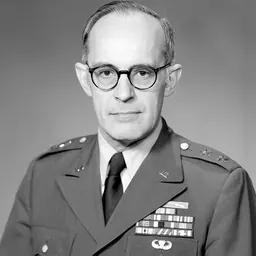
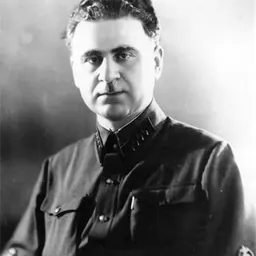
Contemporaries
People whose lives overlapped Ernest R. Kouma's
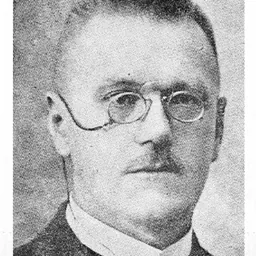



Frequently asked questions
Who was Ernest R. Kouma?
United States Army Medal of Honor recipient
When was Ernest R. Kouma born?
Ernest R. Kouma was born on 23 November 1919 in Dwight.
When did Ernest R. Kouma die?
Ernest R. Kouma died on 19 December 1993 in Breckinridge County.
What was Ernest R. Kouma's occupation?
Ernest R. Kouma was a soldier.
What nationality was Ernest R. Kouma?
Ernest R. Kouma was American.
Sources & further reading
Cite this page
APA: Biography.guide. (2026). Ernest R. Kouma. https://biography.guide/ernest-r-kouma/
MLA: "Ernest R. Kouma." Biography.guide, https://biography.guide/ernest-r-kouma/.
Chicago: "Ernest R. Kouma." Biography.guide. https://biography.guide/ernest-r-kouma/.
Data last updated: 2026-09-20 · Spot an error? Report a correction.
Page generated 2026-09-27 05:33 UTC