
About Eric Butler
Lived 1916 – 2006 (aged 90). Eric Butler was an Australian politician and journalist.
Eric Dudley Butler (7 May 1916 – 7 June 2006) was an Australian political activist and journalist, who in 1946 founded the far-right Australian League of Rights, which he led until 1992. He was known as a staunch anti-communist and anti-Semite. He was a member of the John Birch Society, the organization co-founded by Fred C. Koch, father of the billionaire Koch Brothers.
Background and early career Butler was born in the Victorian country town of Benalla, although he lived most of his life near Melbourne. In the 1930s he became a follower of the British economist C. H. Douglas and his Social Credit theories. From 1938 Butler wrote for the Australian Social Credit newspaper New Times.
Butler served in the Australian Army during World War II. According to one of his obituarists: "He served as a gun sergeant for twenty months without leave in the Torres Straits, taught troops as an instructor at Canungra Jungle Training School for six months, transferred to the Officers Training School at Seymour, Victoria, and was honourably discharged at the end of the Pacific phase of the war."
Political activities and publishing career By the time Butler left the army, his political activities were under surveillance by Australian security authorities, as documents in the Australian archives indicate. In July 1940 the Victorian publicity censor, Crayton Burns (father of Creighton Burns, a later editor of The Age), wrote: "I have taken steps to warn the provincial and country press that the activities of this gentleman and his assistants are being closely watched by the authorities. There is no doubt that the general trend of their propaganda is damaging to the financial side of the war effort."
In December 1941, the Commonwealth's chief publicity censor, E.G. Bonney, banned a series of Butler's New Times articles, one of which described Soviet Russia as "a Jewish slave state ... controlled by international Jewish financiers in New York."
In 1945, Attorney-General H.V. Evatt began an inquiry into Butler's activities. He told Parliament: "In the opinion of the Director-General of Security, Butler has written articles constituting an attempt to create adverse public reaction to war loan campaigns and to the war effort generally." Butler was not charged.
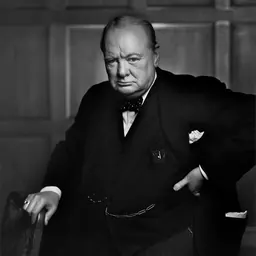
In 1946 Butler published The International Jew, in which he claimed that Winston Churchill, Franklin D. Roosevelt and John Curtin were covert communists, that the Russian Revolution was a Jewish plot and that the Nazi Holocaust was a myth. Butler's eulogist Nigel Jackson described this book as "an essay built around an analysis of the controversial Protocols of the Elders of Zion. In it Butler challenged the Jewish role in international finance and its connections with communism. Of all Butler's publications, this was perhaps the one which roused the greatest fury." This was hardly surprising in the wake of the Nazi Holocaust, particularly since the Protocols were well known in 1947 to be a forgery. He traveled on multiple occasions to Rhodesia (now Zimbabwe) and South Africa, then governed under apartheid. Butler also served as a Far East correspondent for American Opinion, a magazine of the John Birch Society.
In July 1972 Butler achieved some public attention when he debated Max Teichmann, senior lecturer in politics at Monash University, on the Australian Broadcasting Corporation's Monday Conference program. Teichmann confronted Butler with his many explicit anti-Semitic statements from the 1930s and 1940s and challenged him to disavow them, a challenge which Butler evaded. The program highlighted the issue of League infiltration of the Country Party in the period before the December 1972 federal election, at which the long-serving conservative government was defeated.
The League formed a number of front organisations, including the Institute of Economic Democracy and Ladies in Line Against Communism (LILAC). In the 1990s, the League lost its position as the leading extreme right political organisation in Australia. Butler complained that Pauline Hanson and her One Nation Party had stolen his policies. It also lost support to the Citizens Electoral Council, which had been a League front, but which was taken over by followers of the American politician Lyndon LaRouche, and developed a much higher public profile than the League itself.
Personal life Butler lived most of his life in rural Victoria, in his later years on a farm at Panton Hill, where his home was used as a meeting place for League and other extreme right activists. In the 1950s he was a member of the Eltham Shire Council for some years and served as Shire President. He retired as League Director in 1992, handing control of the organisation to David Thompson, but remained politically active until shortly before his death. In 1999 he chaired an address by the Holocaust denier David Irving.
Butler died in Victoria in 2006, aged 90.
Don’t just read it —
keep it.
Full-length biographies made to live with: read them, listen on the way to work, watch them tonight.
- E-book
- Audio
- Video
Instant download · yours to keep · every purchase keeps this site free
Important facts
People in Eric Butler's life
Named in this biography and alive at the same time





Related people
Same field, nearest in time




Contemporaries
People whose lives overlapped Eric Butler's



Frequently asked questions
Who was Eric Butler?
Australian activist (1916-2006)
When was Eric Butler born?
Eric Butler was born on 7 May 1916 in Benalla.
When did Eric Butler die?
Eric Butler died on 7 June 2006 in Victoria.
What was Eric Butler's occupation?
Eric Butler was a politician and journalist.
What nationality was Eric Butler?
Eric Butler was Australian.
Sources & further reading
Cite this page
APA: Biography.guide. (2026). Eric Butler. https://biography.guide/eric-butler/
MLA: "Eric Butler." Biography.guide, https://biography.guide/eric-butler/.
Chicago: "Eric Butler." Biography.guide. https://biography.guide/eric-butler/.
Data last updated: 2026-09-22 · Spot an error? Report a correction.
Page generated 2026-09-27 05:27 UTC