
About Elizabeth Hands
Lived 1746 – 1815 (aged 68–69). Elizabeth Hands was a poet and writer.
Elizabeth Hands (pen name, Daphne; 1746–1815) was an English poet.
Early life Elizabeth Herbert was born in Harbury, 1746. Before the birth of her daughter she worked as a domestic servant for at least one family in Warwickshire, in the area between Rugby and Coventry.
Career By 1785, when her daughter was born, she was married to a blacksmith, Mr. Hands. They lived near Rugby.
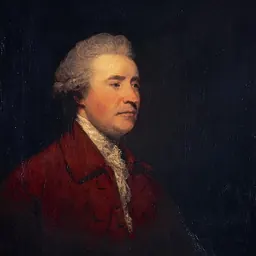
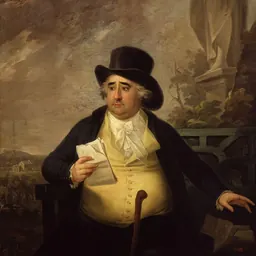
Poems written by Hands using the pseudonym "Daphne" were published in Jopson's Coventry Mercury. Among those impressed by her work was Thomas James, the headmaster of Rugby School. It is not known whether Hands continued writing after the publication of Amnon. The classics master at Rugby school, Philip Bracebridge Homer, used his extensive network of contacts in clerical and literary circles to secure 1,200 subscribers for The Death of Amnon, including members of the nobility from across England and members of parliament such as Edmund Burke and Charles James Fox. The volume was reviewed in several important literary journals of the period: the Gentleman's Magazine, the Monthly Review and the politically radical Analytical Review.
Style and themes Hands' poems treat a wide variety of subjects and are frequently satirical. The Death of Amnon, a long poem in blank verse (regarded as the most serious and prestigious poetic metre by eighteenth-century literary theorists), divided into five cantos, tells the violent and sombre biblical story of how King David's son Amnon raped his sister Tamar and was killed by their half brother Absalom. Other poems, mostly in more informal iambic tetrameter, concentrate on themes that were conventional for the pastoral mode in poetry (love, friendship, loss, the seasons, the country versus the city life), as well as poetics ("On Reading Pope's Eloisa to Abelard", "Critical Fragments on some of the English Poets"), philosophical topics ("Observation on the Works of Nature"; "Friendship. An Ode"), and occasional observations from everyday life ("Written while the Author sat on a Cock of Hay"; "On an Unsociable Family").
Literary and social historians have highlighted Hands' astute management of how her poems' would be interpreted by eighteenth-century literary journalists and general readers. Her ironic handling of how her poems would be judged was intended to cause her social superiors discomfort. Hands' anticipation of her poems' reception is especially evident in the first two poems in the Appendix: "A Poem, On the Supposition of an Advertisement appearing in a Morning Paper, of the Publication of a Volume of Poems, by a Servant Maid" and "A Poem, On the Supposition of the Book having been published and read". These poems present readers with scenarios in which the volume of poems they are holding – and its author – are being commented on by members of the rural gentry. The two "Suppositions" satirise the manners and taste of various bourgeois personages, showing the impoverished state of their literary judgement, at the same time that those personages ("Miss Coquettilla", "Miss Prudella", "Mrs Domestic", "Timothy Turtle", "Captain Bonair", and others) dismiss Hands' poetry because it is written by a servant. In "A Poem, On the Supposition of an Advertisement appearing in a Morning Paper, of the Publication of a Volume of Poems, by a Servant Maid", Hands shows the assembled characters' incredulity and disdain, while allowing the reader to see that she knows more than they do:
A servant write verses! says Madame du Bloom; Pray what is the subject – a Mop or a Broom? He, he, he, says Miss Flounce; I suppose we shall see An Ode on a Dishclout – what else can it be?
Clifford Siskin argues that the satire of the second "Supposition" is directed at all those people who discussed the book at social gatherings (or subscribed to the volume and received a copy), but never read it. Carolyn Steedman describes the "Suppositions" as "intentionally offensive, and wonderfully so", and shows how Hands manages to suggest the limitedness of her superiors' worldview and critical powers.
Don’t just read it —
keep it.
Full-length biographies made to live with: read them, listen on the way to work, watch them tonight.
- E-book
- Audio
- Video
Instant download · yours to keep · every purchase keeps this site free
Important facts
People in Elizabeth Hands's life
Named in this biography and alive at the same time



Related people
Same field, nearest in time

Contemporaries
People whose lives overlapped Elizabeth Hands's




Frequently asked questions
Who was Elizabeth Hands?
English poet (1746–1815)
When was Elizabeth Hands born?
Elizabeth Hands was born in 1746.
When did Elizabeth Hands die?
Elizabeth Hands died in 1815.
What was Elizabeth Hands's occupation?
Elizabeth Hands was a poet and writer.
Sources & further reading
Cite this page
APA: Biography.guide. (2026). Elizabeth Hands. https://biography.guide/elizabeth-hands/
MLA: "Elizabeth Hands." Biography.guide, https://biography.guide/elizabeth-hands/.
Chicago: "Elizabeth Hands." Biography.guide. https://biography.guide/elizabeth-hands/.
Data last updated: 2026-09-20 · Spot an error? Report a correction.
Page generated 2026-09-27 05:02 UTC