
About Elisabeth Young-Bruehl
Lived 1946 – 2011 (aged 65). Elisabeth Young-Bruehl was an American university teacher, biographer, psychoanalyst, writer, poet and psychotherapist.
Elisabeth Young-Bruehl (born Elisabeth Bulkley Young; March 3, 1946 – December 1, 2011) was an American academic, psychotherapist and psychoanalyst. She published a wide range of books, most notably biographies of Hannah Arendt and Anna Freud. Her 1982 biography of Arendt won the first Harcourt Award, and The Anatomy of Prejudices (not a biography) won the Association of American Publishers' prize for Best Book in Psychology in 1996. She was a member of the Toronto Psychoanalytic Society and co-founder of Caversham Productions, a company that makes psychoanalytic educational materials.
Life Young-Bruehl's family on her mother's side ran a dairy farm on land near the head of Chesapeake Bay, and were active in local Maryland politics. Her mother's father and grandfather (a newspaper editor) had been amateur scholars with a large private library. Her maternal grandmother was a Mayflower descendant, part of the Hooker and Bulkley families of Connecticut. Her father's family were Virginians, several trained in Theology at the College of William & Mary in Williamsburg, Virginia, where the family home, the Maupin-Dixon House, is located. She grew up in Maryland and Delaware, where her father worked as a teaching golf pro.
Then she attended Sarah Lawrence College, where she studied poetry writing with Muriel Rukeyser. Young-Bruehl left college for the New York City counterculture of the mid-1960s, but then completed her undergraduate studies at The New School (then the "New School for Social Research"). There she met and married Robert Bruehl, whom she later divorced. Just as the political theorist Hannah Arendt was joining the Graduate Faculty of the New School, Young-Bruehl enrolled as a Ph.D. candidate in Philosophy. Arendt became Young-Bruehl's mentor and dissertation advisor. After earning her Ph.D. in 1974, Young-Bruehl took a faculty appointment the following year teaching philosophy in the College of Letters, Wesleyan University in Connecticut.
The next year, after Hannah Arendt died at 69, several of Arendt's émigré friends approached Young-Bruehl to take on the task of writing Arendt's biography. The resulting book, published in 1982, is still the standard work on Hannah Arendt's life. It has been translated into many languages,
Young-Bruehl's work on the Arendt biography gave her an increasingly strong interest in psychoanalysis. In 1983, she enrolled for clinical psychoanalytic training in New Haven, Connecticut. At New Haven's Child Study Center, she met several of Anna Freud's American colleagues, and was invited to become Anna Freud's biographer, leading to the 1988 book Anna Freud: A Biography. The latter was followed in 2012 by Childism: Confronting Prejudice Against Children, published posthumously by Yale University Press.
Young-Bruehl died of a pulmonary embolism on December 1, 2011. She was 65.
Works
Conor Cruise O'Brien: An Appraisal (co-author: Joanne L. Henderson. Proscenium Press, 1974, ) Freedom and Karl Jaspers’ Philosophy (Yale University Press, 1981, ) Hannah Arendt: For Love of the World (Yale University Press 1982, ; Second Edition Yale University Press, 2004, ) Vigil (novel, Louisiana State University Press, 1983, ) Anna Freud: A Biography (Summit Books, New York, 1988, ) Mind and the Body Politic (Routledge, Independence, Kentucky, 1989, ) Foreword to Between Hell and Reason: Essays From the Resistance Newspaper "Combat", 1944-1947 (Wesleyan University Press, 1991, ) Creative Characters, (Routledge, 1991, ) Freud on Women: A Reader (editor) (Norton, 1992, ) Global Cultures: a Transnational Short Fiction Reader (editor, Wesleyan University Press, 1994, ) The Anatomy of Prejudices (Harvard University Press, 1996, ), Foreword to 1997 re-issue of David Stafford-Clark's 1965 book, What Freud Really Said: An Introduction to His Life and Thought (Schocken Books, 1997, ) Subject to Biography: Psychoanalysis, Feminism, and Writing Women's Lives (Harvard Univ Press, 1999, ), Cherishment: a Psychology of the Heart (co-author: Faith Bethelard. Free Press, 2000, ) Where Do We Fall When We Fall in Love? (essays, Other Press (NY), 2003, ) Why Arendt Matters (Yale University Press, 2006, ) Childism: Confronting Prejudice Against Children (Yale University Press, 2012, )
Don’t just read it —
keep it.
Full-length biographies made to live with: read them, listen on the way to work, watch them tonight.
- E-book
- Audio
- Video
Instant download · yours to keep · every purchase keeps this site free
Important facts
People in Elisabeth Young-Bruehl's life
Named in this biography and alive at the same time
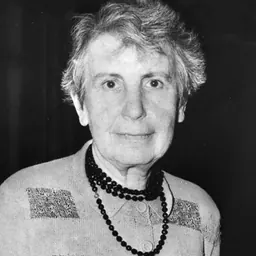
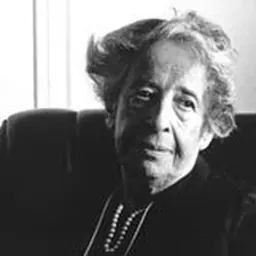




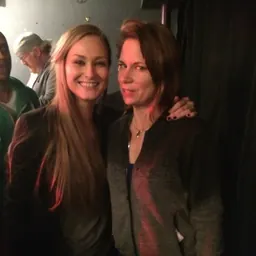
Related people
Same field, nearest in time
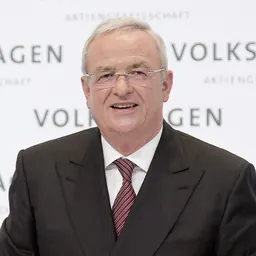

Contemporaries
People whose lives overlapped Elisabeth Young-Bruehl's


Frequently asked questions
Who was Elisabeth Young-Bruehl?
American writer (1946–2011)
When was Elisabeth Young-Bruehl born?
Elisabeth Young-Bruehl was born on 3 March 1946 in Elkton.
When did Elisabeth Young-Bruehl die?
Elisabeth Young-Bruehl died on 1 December 2011 in Toronto.
What was Elisabeth Young-Bruehl's occupation?
Elisabeth Young-Bruehl was a university teacher, biographer, psychoanalyst, writer, poet and psychotherapist.
What nationality was Elisabeth Young-Bruehl?
Elisabeth Young-Bruehl was American.
Sources & further reading
· Wikipedia: Elisabeth Young-Bruehl
· DBpedia: Elisabeth Young-Bruehl
Cite this page
APA: Biography.guide. (2026). Elisabeth Young-Bruehl. https://biography.guide/elisabeth-young-bruehl/
MLA: "Elisabeth Young-Bruehl." Biography.guide, https://biography.guide/elisabeth-young-bruehl/.
Chicago: "Elisabeth Young-Bruehl." Biography.guide. https://biography.guide/elisabeth-young-bruehl/.
Data last updated: 2026-09-20 · Spot an error? Report a correction.
Page generated 2026-09-27 05:13 UTC