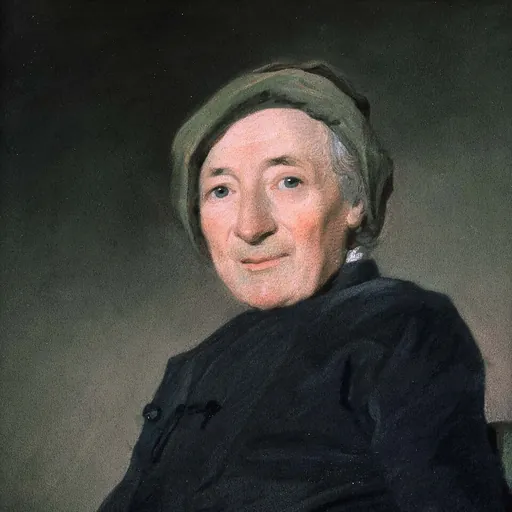
About Elie Luzac
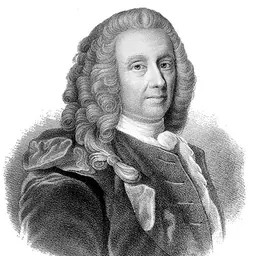
Lived 1721 – 1796 (aged 74). Elie Luzac was a Dutch writer, jurist, lawyer, journalist, printer and publisher.
Elie Luzac (19 October 1721 in Noordwijk – 11 May 1796 in Leiden) was a Dutch jurist, journalist, writer of philosophical, historical and political literature, and book-seller, who was considered an important ideologue of the "democratic wing" of the Orangist movement, both after the Orangist restoration in the Dutch Republic in 1748, and during the Patriottentijd.
Personal life Luzac was the son of Elie Luzac, a Huguenot from Bergerac, who had a boarding school in Noordwijk, and Anna Maria Cabrolle. He was a nephew of Etienne Luzac and Jean Luzac senior, both booksellers, and a cousin of Jean Luzac, also a publisher and journalist. He was three times married, first with Augustine Ernestine Tick in Hamburg on 3 November 1750; next to a miss Massuet; and finally to the widow Cabryn-In 't Hout.
He studied the Classics under Tiberius Hemsterhuis and mathematics and physics under Pieter van Musschenbroek and Johan Lulofs at Leiden University. During these studies he became a follower of the philosophy of Gottfried Wilhelm Leibniz and Christian Wolff, which he would remain all his life.
Career After he finished his formal studies he wrote a so-called Disquisitio politico-moralis about the question Num civis innocens irae hostis longe potentioris juste permitti possit, ut excidium totius civitatis evitetur in 1749. But only in 1759 did he receive a law degree with the dissertation Specimen juris inaugurale de modo procedendi extra ordinem in causis criminalibus.
He practiced law, but was more attracted to the study of jurisprudence, especially Natural law, and in 1753 he published a "Leibnizian" natural-law treatise entitled le Bonheur ou nouveau système de jurisprudence naturelle, followed in 1756 by Recherches sur quelques principes des connoissances humaines along the same lines. The wish to give these ideas a wider circulation encouraged him in 1759 to found a new literary magazine, entitled the Nederlandsche Letter Courant. This folded in 1763, but he continued writing articles in two other periodicals, the Bibliothèque Impartiale and the Bibliothèque des Sciences.
In this period he also published a work on Ethics entitled Verhandeling over de volmaking der zedeleer door de Openbaring (1761) and commented on Montesquieu's l'Esprit des Lois in his Remarques philosophiques et politiques d'un Anonyme sur l'Esprit des Lois (1765). He was critical of Jean-Jacques Rousseau, with whom he conducted a polemic in his Lettre d'un Anonyme à M.J.J. Rousseau (opposing Contrat Social;1766) and Seconde lettre d'un anonyme à M.J.J. Rousseau (opposing Emile; 1767). (1771) he opposed "moral feeling" as the basis of ethics, and in 1772 he edited and published the works of his hero Christian Wollf under the title Les Institutions du Droit de la Nature et des Gens de Wolff. His own ideas in this matter were laid down in Du Droit Naturel civil et politique, en forme d'entretiens, which was only partially and posthumously published in 1802. He defended himself in l'Homme plus que machine (1748) and l'Essai sur la liberté de produire ses sentimens (1749) (1770), and possibly also the anonymous pamphlet Brief van een Regent van eene Hollandsche Stad, rakende de Drukpers, though this is not certain.
Luzac himself made good use of the freedom of expression and the press. He was an ardent partisan of the cause of the "democrats" who were in league with the Orangists during the popular revolt of 1747, but where other "democrats" were disappointed in the stadtholder William IV, he remained loyal even after the latter's death in 1751. In 1754 he anonymously published Het gedrag der Stadhoudersgezinden, verdedigt door Mr. A.V.K. Rechtsgeleerden, a polemic against the critics of the stadtholderate. This pamphlet was banned and publicly burned in Amsterdam by the city government, and a bounty was promised for the denunciation of its author. In the context of this polemic Luzac published De Zugt van den .... raadpensionaris Johan de Witt, tot zijn Vaderland en deszelfs Vrijheid (1757) and Het Oordeel over den raadpensionaris Johan de Witt (1757), and possibly also Zedige Beproeving (though this is not certain). In the matter of the American Revolution Luzac was pro-British (and anti-American) also, as witnessed by his writings in the Annales Belgiques between 1772 and 1776. In this he went against the sense of the times, in bundled pamphlets like Reinier Vrijaards Openhartige Brieven (1781-1784) and Vaderlandsche Staatsbeschouwer (1784-1790). He also was on the side of the stadtholder William V during the political strife of the Patriottentijd and opposed the Patriots and Patriot newspapers, like the Post van den Neder-Rhijn and the Gazette de Leyde, published by his cousin Jean Luzac. (1780-1783), which contained much of his own work.
Luzacs final work was Brief over het gevaar, gelegen in de verandering van de Staatsregeling van een eenmaal gevestigd Bestuur in which he defended the stadtholderian regime that was established after the Prussian invasion of Holland and "guaranteed" by the Act of Guarantee of 1788. But he lived long enough to see the Batavian Revolution of 1795 and the foundation of the Batavian Republic, which he must have detested.
Works 1748 - L’homme plus que machine, London (=Leiden, Elie Luzac junior) 1749 - Essai sur la liberté de produire ses sentimens, Au pays libre pour le bien public (=Leiden, Elie Luzac junior) 1753 - Le bonheur, ou Nouveau système de jurisprudence naturelle, Berlin (=Leiden, Elie Luzac junior) 1754 - Het gedrag der stadhouders-gezinden, verdedigt door A. v. K. 1757 - Het oordeel over den heere raadpensionaris Johan de Witt. 1757 - De zugt van den heere raadpensionaris Johan de Witt. 1758 - Toets voor het onderzoek van Groot-Brittanniëns gedrag. 1765 - Lettre d’un anonime à monsieur J.J. Rousseau [sur le contrat social]. 1766 - Seconde lettre d’un anonime à J.J. Rousseau, Paris, Desaint & Saillant (=Leiden, Elie Luzac). 1759-1763 - Nederlandsche letter-courant. 1771 - Philagathos (=F. Vaster), Philalethes(=Elie Luzac), Briefwisseling over de leer van het zedelijk gevoel; uitg., en met een voorbericht en aanmerkelyk vermeerdert door Johannes Petsch, (Utrecht, Johannes van Schoonhoven). 1772 - Christian Friedrich von Wolff, Institutions du droit de la nature et des gens. 1778 - Jacques Accarias de Sérionne, La richesse de la Hollande (edited by Elie Luzac, François Bernard), London n.d.(=Leiden, Luzac & Van Damme). 1779 - Jacob Nicolas Moreau, De pligten der overheden [...] Uit het Fransch vertaald. Zynde by deeze vertaaling gevoegd eene voor-reden, en eenige aantekeningen van Mr. Elias Luzac, Advt. 1780 - Hollands rijkdom. 1781 - Het waare dag-licht van het politieck systema der regeringe van Amsterdam (Middelburg, Abrahams)
Notes and references
Don’t just read it —
keep it.
Full-length biographies made to live with: read them, listen on the way to work, watch them tonight.
- E-book
- Audio
- Video
Instant download · yours to keep · every purchase keeps this site free
Important facts
People in Elie Luzac's life
Named in this biography and alive at the same time

Related people
Same field, nearest in time



Contemporaries
People whose lives overlapped Elie Luzac's



Frequently asked questions
Who was Elie Luzac?
Dutch writer, jurist and lawyer (1721–1796)
When was Elie Luzac born?
Elie Luzac was born on 19 October 1721 in Noordwijk.
When did Elie Luzac die?
Elie Luzac died on 11 May 1796 in Leiden.
What was Elie Luzac's occupation?
Elie Luzac was a writer, jurist, lawyer, journalist, printer and publisher.
What nationality was Elie Luzac?
Elie Luzac was Dutch.
Sources & further reading
Cite this page
APA: Biography.guide. (2026). Elie Luzac. https://biography.guide/elie-luzac/
MLA: "Elie Luzac." Biography.guide, https://biography.guide/elie-luzac/.
Chicago: "Elie Luzac." Biography.guide. https://biography.guide/elie-luzac/.
Data last updated: 2026-09-23 · Spot an error? Report a correction.
Portrait: Wikimedia Commons · author & licence
Page generated 2026-09-27 05:06 UTC