
About Elia Interguglielmi
Lived 1746 – 1835 (aged 88–89). Elia Interguglielmi was a painter.
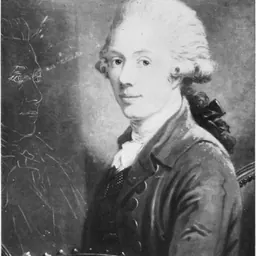
Elia Interguglielmi (1746 – 16 May 1835) was an Italian painter of the Neoclassical style, active in Naples and Palermo.
Biography Elia Interguglielmi was born in Naples in 1746. He initially worked under Gaspare Fumagalli in Palermo. He is documented in Naples until 1762, where he formed his style by working as a draughtsman at the Reale Opificio delle Pietre Dure and trained in the studios of Giuseppe Bonito and of Antonio Dominici, a Sicilian painter active in Naples. He then moved to Palermo, where his first paintings, of scenes from the Life of St. Anne (1767; Palermo, Sant'Anna della Misericordia), were influenced by Vito D'Anna, who had taught Dominici and who was a leading figure in the art world of 18th-century Palermo.
The scenes from the Life of the Virgin (Palermo, Chiesa degli Agonizzanti, 1782) are directly influenced by Neapolitan painting, especially that of Luca Giordano and Francesco Solimena. Between c. 1780 and 1810, Interguglielmi executed decorative frescoes in palazzi and villas in Palermo and in Piana dei Colli (Bagheria), becoming one of the leading figures in the transition from the late Baroque to Neoclassicism. Among such works are frescoes in the Palazzi Santa Croce–Sant'Elia (c. 1790), Gangi (1792), Mirto (1793) and Coglitore (1796), all in Palermo. In the frescoes in the Villa Bordonaro Adriana at Colli, also attributed to Interguglielmi, he created an illusion of deep space through the classical device of a perspective of colonnades.
Towards the end of the 18th century Interguglielmi moved his workshop to Bagheria, where the aristocracy from Palermo built their country houses. In his later years, he responded to a central European decorative style, which had already spread to Naples, in which Rococo and Neoclassical elements were harmoniously united. The fresco Glory of the Virtuous Prince (c. 1785–1790; Bagheria, Villa Valguarnera) initiated this successful period. There followed frescoes (1796–97) in the Villa Trabia, Bagheria, where the unity of the architecture is emphasized by the painted decoration, which was inspired by recent discoveries in Herculaneum and by the Pompeian style of the Adam brothers and the porcelain of Wedgwood.
Don’t just read it —
keep it.
Full-length biographies made to live with: read them, listen on the way to work, watch them tonight.
- E-book
- Audio
- Video
Instant download · yours to keep · every purchase keeps this site free
Important facts
People in Elia Interguglielmi's life
Named in this biography and alive at the same time



Related people
Same field, nearest in time



Contemporaries
People whose lives overlapped Elia Interguglielmi's




Frequently asked questions
Who was Elia Interguglielmi?
painter (1746-1835)
When was Elia Interguglielmi born?
Elia Interguglielmi was born in 1746 in Naples.
When did Elia Interguglielmi die?
Elia Interguglielmi died on 16 May 1835 in Palermo.
What was Elia Interguglielmi's occupation?
Elia Interguglielmi was a painter.
Sources & further reading
· Wikipedia: Elia Interguglielmi
· DBpedia: Elia Interguglielmi
Cite this page
APA: Biography.guide. (2026). Elia Interguglielmi. https://biography.guide/elia-interguglielmi/
MLA: "Elia Interguglielmi." Biography.guide, https://biography.guide/elia-interguglielmi/.
Chicago: "Elia Interguglielmi." Biography.guide. https://biography.guide/elia-interguglielmi/.
Data last updated: 2026-09-20 · Spot an error? Report a correction.
Page generated 2026-09-27 05:18 UTC