
About Edward Stone
Lived 1702 – 1768 (aged 66). Edward Stone was a British pastor, inventor and scientist.
Edward Stone (1702–1768) was a Church of England cleric who discovered the active ingredient of aspirin.
Life Edward Stone was born in Princes Risborough, Buckinghamshire, England, in 1702. His parents were Edward Stone, a gentleman farmer, and his first wife Elizabeth Reynolds. His mother having died, his father took a second wife, Elizabeth Grubb, in 1707; the Grubb family was to play a major role in Stone's life.
Stone went to Wadham College, Oxford, in 1720, where in 1730 he became a Fellow. In 1728 or 1729 he was ordained deacon and priest, and served as curate at Charlton-on-Otmoor.
From 1738 Stone held a living at Horsenden, Buckinghamshire, to which he was presented by John Grubb, brother to his stepmother. He married Elizabeth Grubb(e) at Mercers' Hall Chapel, Cheapside (a non-parochial church), London, on 7 July 1741: she was John Grubb's daughter. As was required at that period, Stone resigned as Fellow of Wadham on marrying. He was buried in Horsenden in 1768. Stone's interest in willows was due to the ancient "doctrine of signatures" – whereby the cause of a disease offers a clue to its treatment.
According to Stone:
"As this tree delights in a moist or wet soil, where agues chiefly abound, the general maxim that many natural maladies carry their cures along with them or that their remedies lie not far from their causes was so very apposite to this particular case that I could not help applying it [...]."
He experimented by drying a pound of willow bark and creating a powder which he gave to about fifty persons: it was consistently found to be "a powerful astringent and very efficacious in curing agues and intermitting disorders".’ He had discovered salicylic acid, the principal metabolite of aspirin. On 25 April 1763, he sent a letter announcing his discovery to George Parker, 2nd Earl of Macclesfield, President of the Royal Society. The letter survives to this day. On publication, the letter was attributed to "Edmund" Stone, a clerical error that has caused continuing confusion.
A less corrosive compound of salicylic acid, acetylsalicylic acid, produced by reacting sodium salicylate with acetyl chloride, was developed from 1897 by Felix Hoffmann and Arthur Eichengrün.
Contribution to the discovery of Aspirin Stone's discovery was not taken up immediately. Jeffreys could only find one doctor in Hertfordshire and one pharmacist in Bath who tried using willow bark as a cure for the ague. The latter described it as cheaper than quinine, but never published any findings about its efficacy. 50 years later, Francesco Fontana described isolating salicin from white willow bark, referencing the work of Stone and Monier . The extraction process was refined by chemist Henri Leroux in 1829, by chemist Raffaele Pirìa in 1838, and in 1859 Hermann Kolbe synthesised salicylic acid directly. The Kolbe-Schmitt Reaction was invented soon after, and one of Kolbe's students opened a factory in Radebeul selling synthetic salicylic acid. In 1897, aspirin was created by scientists at Bayer, allegedly after Felix Hoffman saw his father suffering from the side effects of salicylic acid.
There is controversy over whether the inventors of aspirin were trying to find a version of salicylic acid with fewer side effects. According to Hauke Fürstenwerth, Bayer were instead investigating the properties of a variety of acetylated organic compounds created in the laboratory, as a result of the discovery of acetanilide in the 1880s.
Religious In 1732, after giving a university sermon, Stone engaged in a pamphlet controversy with Thomas Chubb. In 1771, after his death, his son Edward began publishing versions of some of Stone's sermons, as Discourses upon some Important Subjects.
Astronomy Stone was interested by the Transit of Venus, 1761. In 1763, he published The whole doctrine of parallaxes explained and illustrated by an arithmetical and geometrical construction of the transit of Venus over the sun, 6 June 1761. It covered material related to the upcoming Transit of Venus of 1769.
Don’t just read it —
keep it.
Full-length biographies made to live with: read them, listen on the way to work, watch them tonight.
- E-book
- Audio
- Video
Instant download · yours to keep · every purchase keeps this site free
Important facts
People in Edward Stone's life
Named in this biography and alive at the same time

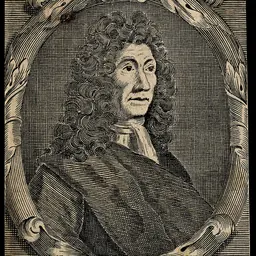
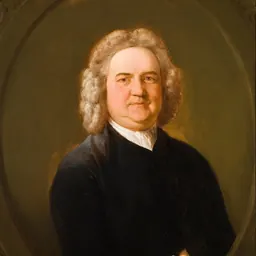
Related people
Same field, nearest in time

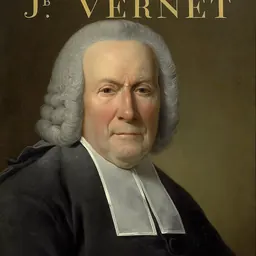
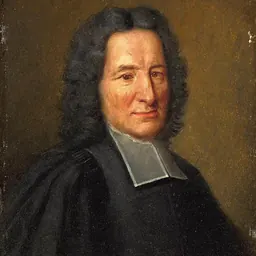
Contemporaries
People whose lives overlapped Edward Stone's



Frequently asked questions
Who was Edward Stone?
English Anglican priest who discovered the active ingredient of aspirin
When was Edward Stone born?
Edward Stone was born on 5 November 1702 in Princes Risborough.
When did Edward Stone die?
Edward Stone died on 26 November 1768 in Horsenden.
What was Edward Stone's occupation?
Edward Stone was a pastor, inventor and scientist.
What nationality was Edward Stone?
Edward Stone was British.
Sources & further reading
· DBpedia: Edward Stone (natural philosopher)
Cite this page
APA: Biography.guide. (2026). Edward Stone. https://biography.guide/edward-stone-pastor/
MLA: "Edward Stone." Biography.guide, https://biography.guide/edward-stone-pastor/.
Chicago: "Edward Stone." Biography.guide. https://biography.guide/edward-stone-pastor/.
Data last updated: 2026-09-20 · Spot an error? Report a correction.
Page generated 2026-09-27 05:09 UTC