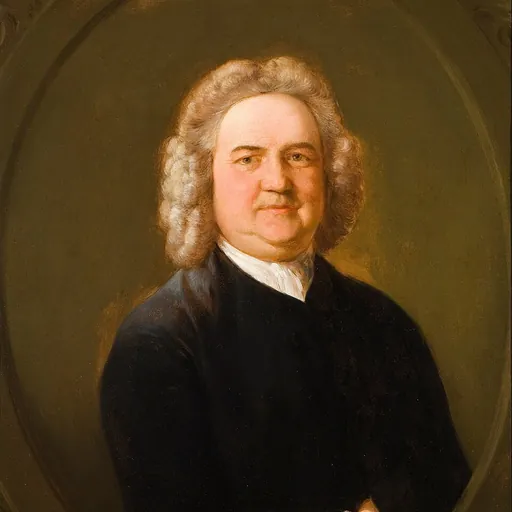
About Thomas Chubb
Lived 1679 – 1747 (aged 67). Thomas Chubb was a writer and theologian.
Thomas Chubb (29 September 16798 February 1747) was a lay English Deist writer born near Salisbury. He saw Christ as a divine teacher, but held reason to be sovereign over religion. He questioned the morality of religions, while defending Christianity on rational grounds. Despite little schooling, Chubb was well up on the religious controversies. His The True Gospel of Jesus Christ, Asserted sets out to distinguish the teaching of Jesus from that of the Evangelists. Chubb's views on free will and determinism, expressed in A Collection of Tracts on Various Subjects, were extensively criticised by Jonathan Edwards in Freedom of the Will (1754).
Life Chubb, the son of a maltster, was born at East Harnham, near Salisbury. The death of his father in 1688 cut short his education, and in 1694 he was apprenticed to a glover in Salisbury, but subsequently entered the employment of a tallow-chandler. He picked up a fair knowledge of mathematics and geography, but theology was his favourite study. His habit of committing his thoughts to writing gave him a clear and fluent style.
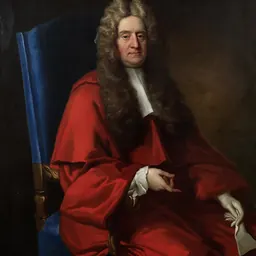
Chubb spent some years living and working in London at the house of Joseph Jekyll, Master of the Rolls. However, he was drawn back to Salisbury, where by the kindness of friends he was enabled to devote the rest of his days to his studies. It was followed by The True Gospel of Jesus vindicated, and An Enquiry into the Ground and Foundation of Religion, wherein it is shown that Religion is founded on Nature. He persisted in stating that true Christianity consisted of a belief that morality alone could make men acceptable to God, that repentance for sin would secure God's mercy, and that there would be future retribution. His Enquiry into the Ground and Foundation of Religion (1740) includes a controversy with Henry Stebbing. Chubb argues against interpreting literally the command to give all to the poor, noting that Stebbing himself was a pluralist with two livings, a preachership and an archdeaconry, and due to be chancellor of the Diocese of Salisbury, so that he could hardly interpret the command literally to himself.
Chubb's 1741 Discourse on Miracles states that they could at most afford a "probable proof" of a revelation. In 1743 his Enquiry concerning Redemption is a defence of himself against some sneers by William Warburton. "The Ground and Foundation of Morality considered" (1745) is an attack on Thomas Rutherforth's theory of self-love. The last work that Chubb published himself was Four Dissertations (1746), attacking some Old Testament passages with a freedom that gave wide offence.
Views on prayer
Joseph Waligore states in a 2012 article, "The Piety of the English Deists", that Chubb discussed prayer more than any other deist. Chubb's longest writing on the subject was a 30-page pamphlet, "An Enquiry Concerning Prayer", where he began by insisting that prayer was a duty God required for achieving a closer relationship with him. The purpose of prayer was to render someone "a suitable and proper object of God's special care and love. For as prayer is an address or application of a dependent being to his supreme governour, and original benefactor.... It naturally draws forth our souls in filial fear, in hope and trust, in love, delight, and joy in God; and creates in us a just concern to please him, and to approve ourselves in his sight; and consequently to put on that purity and piety, humility and charity which is the spirit and practice of true Christianity."
Chubb said we should pray often and "it is when we forget God, when God is not in all our thoughts, that we do amiss; then our minds and lives are corrupted and defiled."
He also discussed whom we should pray to. First he said we should not pray to dead human souls, as we have no reason to think they hear our prayers or have any power to help us. Then he discussed whether we should pray to angels. Unlike Morgan – who thought we should pray to both God and angels – Chubb thought we probably should not pray to angels. He said even though they were "ministering spirits", we could not be sure they heard our prayers, and they might not be at liberty to help us without God's direct guidance. He spent a final ten pages wondering whether we should pray to Jesus or just to God the Father, concluding we should pray to God the Father "in the name of our Lord Jesus Christ".
Don’t just read it —
keep it.
Full-length biographies made to live with: read them, listen on the way to work, watch them tonight.
- E-book
- Audio
- Video
Instant download · yours to keep · every purchase keeps this site free
Important facts
People in Thomas Chubb's life
Named in this biography and alive at the same time


Related people
Same field, nearest in time




Contemporaries
People whose lives overlapped Thomas Chubb's


Frequently asked questions
Who was Thomas Chubb?
British philosopher (1679-1747)
When was Thomas Chubb born?
Thomas Chubb was born on 29 September 1679 in Salisbury.
When did Thomas Chubb die?
Thomas Chubb died on 8 February 1747.
What was Thomas Chubb's occupation?
Thomas Chubb was a writer and theologian.
Sources & further reading
Cite this page
APA: Biography.guide. (2026). Thomas Chubb. https://biography.guide/thomas-chubb/
MLA: "Thomas Chubb." Biography.guide, https://biography.guide/thomas-chubb/.
Chicago: "Thomas Chubb." Biography.guide. https://biography.guide/thomas-chubb/.
Data last updated: 2026-09-23 · Spot an error? Report a correction.
Portrait: Wikimedia Commons · author & licence
Page generated 2026-09-27 05:06 UTC