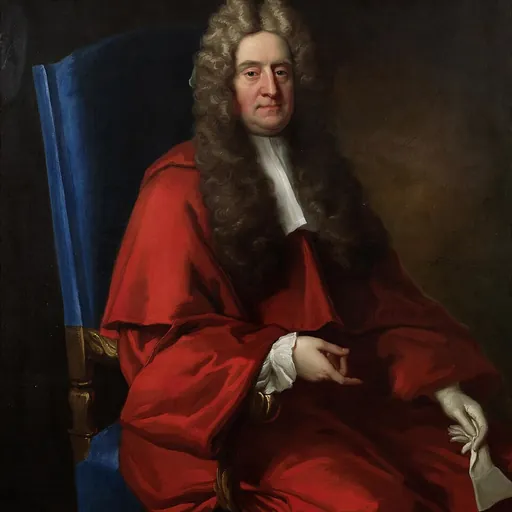
About Joseph Jekyll
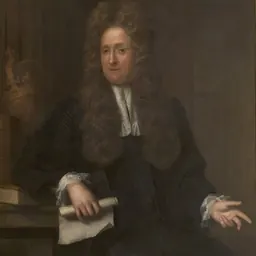
Lived 1663 – 1738 (aged 74–75). Joseph Jekyll was an English and British judge and politician.
Sir Joseph Jekyll (166319 August 1738), of Westminster, was a British barrister, judge and Whig politician who sat in the English and British House of Commons for 40 years from 1697 to 1738. He became Master of the Rolls in 1717.
Early life and career as a barrister Jekyll was born in 1663 to John Jekyll of the Fishmonger's Company and alderman, of St Stephen Walbrook, London, and his second wife Tryphena. He was the half-brother of Thomas Jekyll. He attended a non-conformist seminary in Islington before being admitted to the Middle Temple in 1680. He was called to the Bar in 1687. Thanks to his connections with Middle Temple he became an associate of the Lord Chancellor, Lord Somers, and later married Somers' sister, Elizabeth. With Somers' support he became Chief Justice of Cheshire in June 1697, succeeding John Coombe, and was knighted on 12 December of that year. In 1699 he became a Reader of Middle Temple.
At the 1715 British general election Jekyll was returned again for Lymington. He was asked to participate in the secret committee tasked with preparing the impeachment of the Earl of Oxford and the Duke of Ormonde, which he refused to support. He sponsored the Mortmain Act 1735 (9 Geo. 2. c. 36) and the Gin Act 1736, and was noted for his opposition to intoxication, which annoyed the public so much that he was forced to have a guard at his house at all times. Under Robert Walpole he remained independent of the government in terms of how he voted, and was described by Alexander Pope as "an odd old Whig, who never change his principles or wig".
Outside Parliament, Jekyll provided £600 to fund the colony at Jekyll Island, and as a result James Oglethorpe named the island in the Province of Georgia after him.
Master of the Rolls On 13 July 1717, Jekyll was appointed Master of the Rolls, and the same year became a Privy Councillor. His time as Master "was distinguished by legal ability, integrity and despatch", and during this period he helped write The Judicial Authority of the Master of the Rolls. He was given the Great Seal on 7 January 1725, and held it until 1 June.
Death and legacy
On 19 August 1738 he died of "a mortification in the bowels", and was buried in the Rolls Chapel. He had no children. In his will he left £20,000 to help pay off the national debt, something Lord Mansfield described as "a very foolish bequest... he might as well have attempted to stop the middle arch of Blackfriars Bridge with his full-bottomed wig".
Jekyll Island is named in his honor.
Don’t just read it —
keep it.
Full-length biographies made to live with: read them, listen on the way to work, watch them tonight.
- E-book
- Audio
- Video
Instant download · yours to keep · every purchase keeps this site free
Important facts
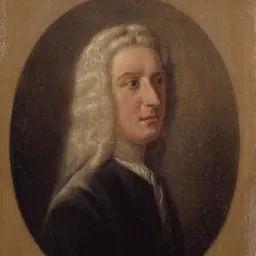
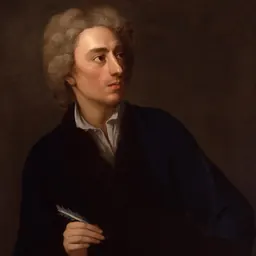
People in Joseph Jekyll's life
Named in this biography and alive at the same time

Related people
Same field, nearest in time



Contemporaries
People whose lives overlapped Joseph Jekyll's




Frequently asked questions
Who was Joseph Jekyll?
British politician
When was Joseph Jekyll born?
Joseph Jekyll was born in 1663.
When did Joseph Jekyll die?
Joseph Jekyll died on 19 August 1738.
What was Joseph Jekyll's occupation?
Joseph Jekyll was a judge and politician.
What nationality was Joseph Jekyll?
Joseph Jekyll was English and British.
Sources & further reading
Cite this page
APA: Biography.guide. (2026). Joseph Jekyll. https://biography.guide/joseph-jekyll-judge/
MLA: "Joseph Jekyll." Biography.guide, https://biography.guide/joseph-jekyll-judge/.
Chicago: "Joseph Jekyll." Biography.guide. https://biography.guide/joseph-jekyll-judge/.
Data last updated: 2026-09-22 · Spot an error? Report a correction.
Portrait: Wikimedia Commons · author & licence
Page generated 2026-09-27 05:02 UTC