
About John Grubb
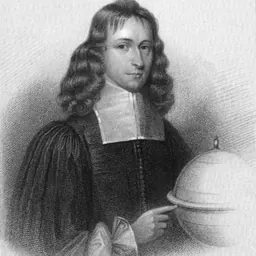
Lived 1652 – 1708 (aged 55). John Grubb was an American politician.
John Grubb's house was often rebuilt and expanded. In 1919, it became known as the Grubb Worth house and today it serves as the administrative office for the Holy Rosary Church in Claymont, Delaware John Grubb (1652–1708) was a two-term member of the Pennsylvania Provincial Assembly and was one of the original settlers in a portion of Brandywine Hundred that became Claymont, Delaware. He founded a large tannery that continued in operation for over 100 years at what became known as Grubb's Landing. He was also one of the 150 signers of the Concessions and Agreements for province of West Jersey.
Born in Stoke Climsland, Cornwall, he was the 4th son of Henry Grubb Jr. and Wilmot (maiden name unknown). Henry was an early Quaker who was imprisoned several times for his beliefs. With no chance of being established in his home village, John and his older brother Henry emigrated to the West Jersey colony in 1677 on the Kent, the first ship of settlers organized by William Penn. While he arrived without the funds required to buy his own land, by 1682, he earned enough money to acquire a one-third interest in a tract on Naaman's Creek in Brandywine Hundred where he built his tannery. John was one of the early settlers who greeted William Penn in 1682 when he arrived in New Castle before he founded Philadelphia. Ultimately Penn and Grubb clashed over property they jointly owned and were unable to settle the dispute in their lifetimes. He was survived by his wife, Frances and nine children. The Grubb Family extensively researched her origins and concluded that there is no primary evidence that establishes her maiden name or when they were married. He was also an early Quaker who was imprisoned in January 1663/4 for his beliefs.
1677 - Sailing on the Kent By the mid-1670s, the Society of Friends faced a crisis: two-thirds of Quaker children were migrating to the cities and leaving the church because Quaker parents found it too expensive to establish their children when they came of age. To Quaker leaders including William Penn, the solution was to create a colony across the Atlantic in West Jersey where land could be made available inexpensively. Largely based on the ideas of Edward Byllynge, a radical republican, West Jersey's governing document was one of the most democratic constitutions of the colonial period. In August 1676, the trustees and the proprietors first signed this constitution in London. A year later, the resident proprietors and other West Jersey inhabitants signed the constitution just after the Kent arrived. Another street in the area named Grubb Road ran along the southern side of Naaman's Creek. The eastern half of this street from Route 13 to Arden became Harvey Road in 1887, but the portion west of Arden still retains its original name for several miles. has endured and continues today. However, Henry Vane's daughter Frances was buried in Kent County, England, on June 4, 1683. After extensive research of the issue, the Grubb Family concluded that there is no primary evidence that Frances Grubb was Sir Henry Vane's daughter. That October, John won a seat in the regular Assembly election. However, the voters in the southern part of New Castle County complained that they had not been notified, and the Assembly ordered a new election. This time John was defeated. Samuel P. Heintzelman (1805 – 1880) was a Civil War General who commanded the 3rd Corps during the Peninsula Campaign. Charles Gilpin (1809 – 1891) was Mayor of Philadelphia from 1850 to 1853. Edward Burd Grubb Sr. (1810–1867) was a prominent fourth-generation member of the Grubb Family Iron Dynasty in Lancaster, Pennsylvania D. H. Starbuck (1818 – 1887) was a North Carolina lawyer and political figure who among his many political roles served as United States Attorney for the entire state, and then for the Western District of North Carolina after the state was divided into two districts. John G. Parke (1827 – 1900) was a Civil War general and later superintendent of West Point. Edward Burd Grubb, Jr. (1841–1913) was a Civil War lllGeneral, a candidate for governor, and later ambassador to Spain. After the war he joined the Grubb Family Iron Dynasty as president of the Lebanon Valley Furnace Company. Ignatius Cooper Grubb (1841 – 1927) was a political activist who became a justice of the Delaware Supreme Court. William Irwin Grubb (1862 – 1935) was a federal district judge in Birmingham, Alabama, who was appointed by President Hoover to the Wickersham Commission. George Grey Barnard (1863 – 1938) was a noted sculptor who founded the Cloisters collection that is now a part of the New York Metropolitan Museum of Art. J. Hunter Grubb (1870 – 1930) was president of the DuPont Chemical Corporation. Stuart Heintzelman (1876 – 1935) was a career Army officer who was promoted to major general in 1931. Roland Grubb Kent (1877 – 1952) was a noted classics professor at the University of Pennsylvania. J. Grubb Alexander (1887 – 1932) was a prolific screenwriter who wrote over ninety films during the silent screen era. Edward Burd Grubb III (1893 – 1973) was president of the New York Curb Exchange during the critical period after the creation of the SEC. Warner Norton Grubb (1900 – 1947) was a navy commodore during W.W.II. Margaret Louise Grubb (1907 – 1963) was the first wife of L. Ron Hubbard, the founder of Scientology. Stanley Keller Grubb (1907 – 1990), better known as Stan Keller, was a well-known musician and big-band leader in the 1940s. Curtis Grubb Culin (1915 – 1963) was awarded the Legion of Merit for inventing the "Rhino Tank" used at Normandy during W.W. II. Warner Norton Grubb III (1948 – 2015) was an author on education economics and the David Garner Chair of higher education at Berkeley. Floyd Dale Grubb (born 1949) was the Democratic Caucus Leader in the Indiana State Assembly.
Don’t just read it —
keep it.
Full-length biographies made to live with: read them, listen on the way to work, watch them tonight.
- E-book
- Audio
- Video
Instant download · yours to keep · every purchase keeps this site free
Important facts
People in John Grubb's life
Named in this biography and alive at the same time

Related people
Same field, nearest in time


Contemporaries
People whose lives overlapped John Grubb's




Frequently asked questions
Who was John Grubb?
American politician (1652-1708)
When was John Grubb born?
John Grubb was born on 15 August 1652.
When did John Grubb die?
John Grubb died on 1 March 1708.
What was John Grubb's occupation?
John Grubb was a politician.
What nationality was John Grubb?
John Grubb was American.
Sources & further reading
Cite this page
APA: Biography.guide. (2026). John Grubb. https://biography.guide/john-grubb/
MLA: "John Grubb." Biography.guide, https://biography.guide/john-grubb/.
Chicago: "John Grubb." Biography.guide. https://biography.guide/john-grubb/.
Data last updated: 2026-09-20 · Spot an error? Report a correction.
Page generated 2026-09-27 05:23 UTC