
About Edward Armitage
Lived 1817 – 1896 (aged 79). Edward Armitage was a British painter.
Edward Armitage (20 May 1817 – 24 May 1896) was an English Victorian-era painter whose work focused on historical, classical and biblical subjects. Armitage came from a wealthy industrialist family and was able to pursue his own interests and artistic themes. He experimented with techniques of mural paintings and painted several church frescos including at Islington and St. John's Wood. He taught painting at the Academy Schools from 1875 to 1882. He contributed to some book illustrations and had an interest in entomology and yachting.
Family background Armitage was born in Tavistock Square, London to a family of wealthy Yorkshire industrialists, the eldest of seven sons of James Armitage (1793–1872) and Anne Elizabeth Armitage née Rhodes (1788–1833), of Farnley Hall, just south of Leeds, Yorkshire. His great-grandfather James (1730–1803) bought Farnley Hall from Sir Thomas Danby in 1799 and in 1844 four Armitage brothers, including his father James, founded the Farnley Ironworks, utilising the coal, iron and fireclay on their estate. His brother Thomas Rhodes Armitage (1824–1890) founded the Royal National Institute of the Blind.
Armitage was the uncle of Robert Armitage (MP), the great-uncle of Robert Selby Armitage, and first cousin twice removed of Edward Leathley Armitage.
Early training Armitage had visited France with his family in 1830 and studied for a while in Germany. He sought to train in art in Paris, where he enrolled at the École des Beaux-Arts in October 1837. He studied under the history painter, Paul Delaroche, who at that time was at the height of his fame. Armitage was one of four students selected to assist Delaroche with the fresco Hémicycle in the amphitheatre of the Palais des Beaux-Arts, when he modelled for the head of Masaccio. Whilst still in Paris, he exhibited Prometheus Bound in 1842, His painting After an Entomological Sale: ‘beati possidentes’ (1878) depicted himself along with other entomologist friends.
At his own cost he painted a fresco 56 feet long in the University College Hall, Bloomsbury to commemorate Henry Crabb Robinson.
Later life The Festival of Esther, 1865. Armitage's diploma work for the Royal Academy After retiring from the Royal Academy in May 1894, Armitage spent some time in Royal Tunbridge Wells for the benefit of his health. He lodged at Mount Edgcumbe House, where he died on 24 May 1896 of apoplexy and exhaustion following pneumonia. He is buried in Hove Cemetery.
Selected works
The Return of Ulysses (1840, retouched 1853; Leeds Art Gallery) The Battle of Meanee (1847; Royal Collection, St. James's Palace) The Death of Nelson (1848; Britannia Museum Trust, Dartmouth) Henry the Eighth and Catherine Parr (1848; Private collection) The Socialists (1850) Aholibah (1850) Hagar (1852) The Thames and its Tributaries (1852; Upper Waiting Hall, Palace of Westminster) The Death of Marmion (c.1853; Atkinson Art Gallery, Southport) The Death of Marmion (1854; Upper Waiting Hall, Palace of Westminster) The Pontoon on Virginia Water 5 July 1853 (1854; Royal Collection, Windsor Castle) The Lotus Eater (1854) The Heavy Cavalry Charge at Balaclava (1855) The Stand of the Guards at Inkerman (1855) After the Battle of Inkerman (c.1855) Souvenir of Scutari (1857; Laing Art Gallery, Newcastle) Retribution (1858; Leeds Art Gallery) Blind Beggar of Assisi (c.1859; Auckland Art Gallery, New Zealand) Head of an Apostle (St Simon) (1862; Victoria and Albert Museum) Burial of a Christian Martyr (1863; Glasgow Museums Resource Centre) Benozzo Gozzoli (1864; Victoria and Albert Museum) Ahab and Jezebel (1864) W. Brinton, Esq., M.D. (1864; Royal College of Physicians, London) The Festival of Esther (1865; Royal Academy of Arts, London) The Remorse of Judas (1866; Tate, London) Savonarola and Lorenzo the Magnificent (1867) Christus Consolator (1867) Herod's Birthday Feast (1868; Guildhall Art Gallery, London) Hero Lighting the Beacon (1869; Glasgow Museums Resource Centre) Christ Calling the Apostles James and John (1869; Sheffield Galleries and Museums) Gethsemane (1870) Peace: Twenty Years After the War (1871; University of Limerick Armitage Collection, with title Sleeping Plough Boy) A Deputation to Faraday (1871; Royal Society, London) Dawn of the First Easter Sunday (1872; Auckland Art Gallery, New Zealand) In Memory of the Great Fire at Chicago (1872) A Dream of Fair Women (1872 and 1874; Hastings Public Library) Sir Benjamin Brodie, Bart., FRS (1874; Royal Society of Chemistry, London) Julian the Apostate Presiding at a Conference of Sectarians (1875; Walker Art Gallery, Liverpool) Serf Emancipation (1877; Walker Art Gallery, Liverpool) The Cities of the Plain (1878; Laing Art Gallery, Newcastle) After an Entomological Sale (1878) The Mother of Moses (1878; Private collection) Pygmalion's Galatea (1878; Private collection) Woman Taken in Adultery (undated; Dundee Art Gallery and Museums) Samson and the Lion (1881; Brighton & Hove Museums) Self-Portrait (1882; Aberdeen Art Gallery) Meeting of St Francis and St Dominic (1882; Church of St John the Evangelist, Islington, London) Sea Urchins (1882; Auckland Art Gallery, New Zealand) Faith (1884; Private collection) Institution of the Franciscan Order (1887; Church of St. John the Evangelist, Islington, London) (replacing original 1859 fresco of St Francis before Pope Innocent III) A Siren (1888; Leeds Art Gallery) Miss A. S. Armitage (1891; University of Limerick Armitage Collection) A Moslem Doctrinaire (1893; Private collection) The Late T. R. Armitage Esq M.D., the Friend of the Blind (1893)
Don’t just read it —
keep it.
Full-length biographies made to live with: read them, listen on the way to work, watch them tonight.
- E-book
- Audio
- Video
Instant download · yours to keep · every purchase keeps this site free
Important facts
People in Edward Armitage's life
Named in this biography and alive at the same time


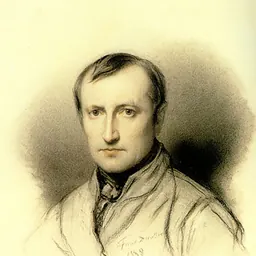
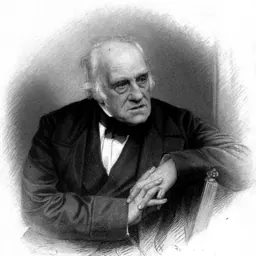
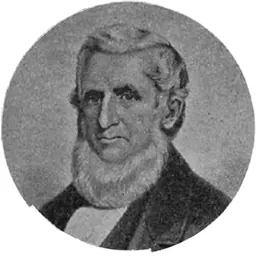



Related people
Same field, nearest in time
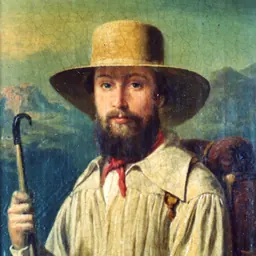
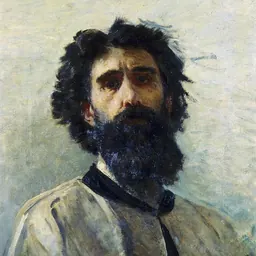
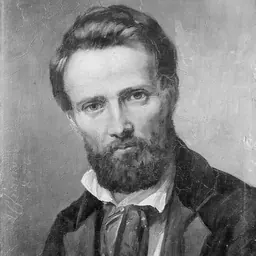

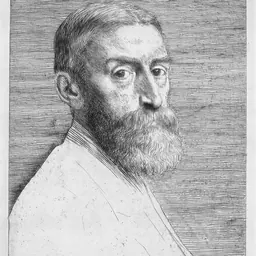

Contemporaries
People whose lives overlapped Edward Armitage's




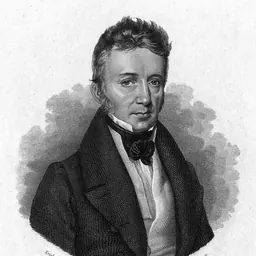
Frequently asked questions
Who was Edward Armitage?
English painter (1817–1896)
When was Edward Armitage born?
Edward Armitage was born on 20 May 1817 in London.
When did Edward Armitage die?
Edward Armitage died on 24 May 1896 in Royal Tunbridge Wells.
What was Edward Armitage's occupation?
Edward Armitage was a painter.
What nationality was Edward Armitage?
Edward Armitage was British.
Sources & further reading
Cite this page
APA: Biography.guide. (2026). Edward Armitage. https://biography.guide/edward-armitage/
MLA: "Edward Armitage." Biography.guide, https://biography.guide/edward-armitage/.
Chicago: "Edward Armitage." Biography.guide. https://biography.guide/edward-armitage/.
Data last updated: 2026-09-25 · Spot an error? Report a correction.
Page generated 2026-09-27 05:09 UTC