
About Henry Crabb
Lived 1793 – 1827 (aged 33–34). Henry Crabb was a lawyer.
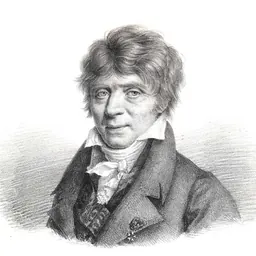
Henry Crabb (October 1793 – November 28, 1827) was an American lawyer and judge. He served as the U.S. Attorney for the Western District of Tennessee, and as a justice of the Tennessee Supreme Court from 1826 to 1827. He seemingly had a good reputation as a lawyer but due to his death at a relatively young age he only appears briefly in biographical histories of antebellum law and lawyers.
Early life, education, and career Born in Botetourt County, Virginia, Crabb was the son of Colonel Ralph Crabb, and the brother of George Whitfield Crabb. The family seems to have migrated to middle Tennessee together, and in 1813 Crabb was admitted to the bar of Davidson County in company with Ephraim H. Foster and James Trimble. In 1816 he announced that his new Nashville office was in "small new building on Cedar street, a short distance below the Messrs. Sitter's copper-smith shop, and not far from the public square," and that he also practiced in Bedford, Rutherford, and Lincoln counties.
In 1816 he served as secretary to a political convention creating a statement of grievance regarding the terms of a recent treaty with the Cherokee. Crabb was listed as one of the directors of the Nashville Library in 1818, along with Robert Searcy, Wilkins Tannehill, Duncan Robertson, Elihu S. Hall, James Roane, and James Trimble. In 1819 he was part of a welcoming committee for James Monroe's visit to Nashville, along with city mayor Foster, John McNairy, John H. Eaton, J. C. Bronaugh, John Somerville, W. B. Lewis, Samuel Hogg, Felix Grundy, O. B. Hayes, and Alfred Balch. The same year there was a financial panic, as the Farmers and Mechanics Bank suspended specie payments, but Crabb, Thomas Ramsey, and John P. Erwin "investigated the Farmers and Mechanics Bank, and assured the people if they would give their confidence it could and would resume payment."
Appointments and offices Crabb was appointed United States Attorney for the Western District of Tennessee in 1818, serving until 1827. The appointee to the corresponding U.S. Marshal position was John Childress. Little has been written about his law career except by Henry S. Foote of Mississippi who characterized Crabb as cool and reserved to the point of appearing grave, quietly sarcastic, and devoted to reason. In 1822 the same two were promoted to colonelcy under the same general officer. In 1823 Crabb resigned his militia office and was replaced by James K. Polk of Columbia, Tennessee. In January 1824 he was one of several candidates being considered for the appointment of U.S. minister to Mexico.
Crabb became law partners with John Bell in 1822. Crabb announced in 1823 that he had "removed from the south-field into town" and had moved into the "small white office" at Cedar and Cherry streets. Crabb was listed as one of the trustees of Cumberland College in 1823. He apparently served on the board of Cumberland College and University of Nashville (predecessor of George Peabody College) from 1816 until death. As of 1821 he served on the board of a Nashville bank with Thomas Crutcher, John Overton, Robert Farquharson, John P. Erwin, Jacob McGavock, John C. McLemore, and Robert Woods.
In 1823 he also traveled by ship either from Virginia to Havana to New Orleans, or directly from Havana to New Orleans, on board the schooner Princess along with a cargo of tropical groceries including sugar, plantains, coffee, "binnanoes," and 10,000 oranges. He was listed on the passenger manifest as a 29-year-old attorney-at-law, native to the United States and in height. In April 1825 his father-in-law listed for sale Crabb's plantation of 90 acres, located on the Cumberland River about 10 miles above Nashville. Payment would be accepted in either "cash or negroes." Crabb was elected in December 1826 to fill a vacancy on the Tennessee Supreme Court caused by the death of John Haywood. At the time of his appointment, the National Banner and Nashville Whig wrote that "No appointment, we venture to say, could have given more universal satisfaction." Barrow listed for sale Crabb's collection of law books in January 1828. Following Crabb's death, his seat remained vacant until the court was reconfigured in 1831. The year following his death, Crabb's memory was toasted by one S. Owens at a Nashville dinner honoring Thomas Hinds.
Crabb was married to Jane Barrow, who was the daughter of Willie Barrow of North Carolina and Jane Green of Kentucky, and a sister of U.S. Senator from Louisiana Alexander Barrow. Congressman Washington Barrow and Republic of Texas Navy midshipman and U.S. Indian agent John E. Barrow were her half-brothers. They had three children together: Henry A. Crabb, Jane Ann Crabb, and Mary Eleanor Crabb. Henry A. Crabb, sometimes called Col. Crabb, was an early settler of California and was executed by a Mexican–O'odham firing squad following a failed filibuster expedition to Sonora in 1857.
Don’t just read it —
keep it.
Full-length biographies made to live with: read them, listen on the way to work, watch them tonight.
- E-book
- Audio
- Video
Instant download · yours to keep · every purchase keeps this site free
Important facts
People in Henry Crabb's life
Named in this biography and alive at the same time



Related people
Same field, nearest in time




Contemporaries
People whose lives overlapped Henry Crabb's




Frequently asked questions
Who was Henry Crabb?
American judge (1793–1827)
When was Henry Crabb born?
Henry Crabb was born in 1793.
When did Henry Crabb die?
Henry Crabb died on 28 November 1827.
What was Henry Crabb's occupation?
Henry Crabb was a lawyer.
Sources & further reading
· DBpedia: Henry Crabb (judge)
Cite this page
APA: Biography.guide. (2026). Henry Crabb. https://biography.guide/henry-crabb/
MLA: "Henry Crabb." Biography.guide, https://biography.guide/henry-crabb/.
Chicago: "Henry Crabb." Biography.guide. https://biography.guide/henry-crabb/.
Data last updated: 2026-09-20 · Spot an error? Report a correction.
Page generated 2026-09-27 05:27 UTC