
About Eduardo Dalbono
Lived 1841 – 1915 (aged 73). Eduardo Dalbono was an Italian painter.
Eduardo Dalbono (10 December 1841 – 23 August 1915) was an Italian painter, active in the Neapolitan artistic milieu of the second half of the nineteenth century. He is known above all for views, seascapes, fantastic subjects and scenes connected with the myth of Naples and Parthenope. Biography
Eduardo Dalbono, also referred to as Edoardo, was born in Naples on 10 December 1841 to Carlo Tito Dalbono, a writer and art critic, and Virginia Carelli, also recorded as Gatelli in some sources. His uncle Cesare Dalbono also belonged to the Neapolitan literary and critical milieu. His family introduced him early to the study of Romantic literature, music, ancient history and Neapolitan folklore, elements that remained central to his artistic imagination.
During a stay in Rome, in 1850, he took drawing lessons from the engraver Luigi Marchetti. After returning to Naples, he studied with the painter Beniamino De Lia and with Nicola Palizzi, in their respective private studios. His training developed in the Neapolitan artistic environment of the second half of the nineteenth century, in relation to landscape painting, the tradition of the School of Posillipo, the Neapolitan Verist movement and the experience of the School of Resina. He was close to the artistic context in which Giuseppe Mancinelli, Domenico Morelli and Filippo Palizzi also worked, and he received private lessons from Palizzi. Francesco Di Bartolo's etching after the painting is also documented in the collections of the British Museum, where the sheet is catalogued with Di Bartolo as printmaker and Dalbono as the artist after whom the work was made.
The painting was later exhibited in 1872 in Milan and in 1873 at the Universal Exposition in Vienna, where it obtained the bronze medal.
Giuseppe De Nittis introduced Dalbono to the French art dealer Adolphe Goupil. Dalbono worked for Goupil with alternating stays in Paris and Naples, especially between 1878 and 1882. This context also includes the commercial success of works such as The Vow to the Madonna del Carmine, from which Goupil had an engraving made by Varin and which initiated a series of replicas and variants connected with Neapolitan folklore, the sea and popular life.
Dalbono died in Naples on 23 August 1915. Museo Poldi Pezzoli in Milan: Female Figure, pencil on paper (1860–1861) São Paulo Museum of Art in São Paulo: Fishermen at Posillipo near the Palazzo Donn'Anna
Gallery
Don’t just read it —
keep it.
Full-length biographies made to live with: read them, listen on the way to work, watch them tonight.
- E-book
- Audio
- Video
Instant download · yours to keep · every purchase keeps this site free
Important facts
People in Eduardo Dalbono's life
Named in this biography and alive at the same time



Related people
Same field, nearest in time
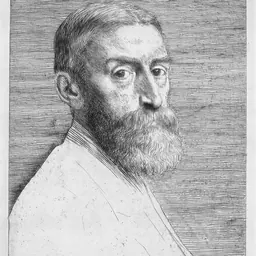
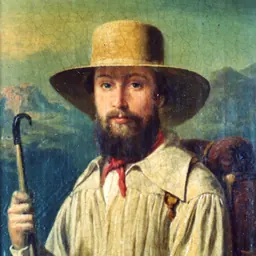
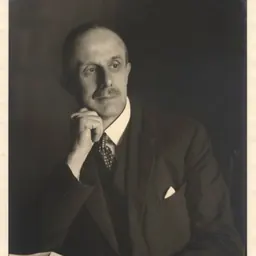
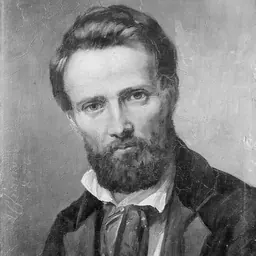
Contemporaries
People whose lives overlapped Eduardo Dalbono's

Frequently asked questions
Who was Eduardo Dalbono?
Italian painter (1841-1915)
When was Eduardo Dalbono born?
Eduardo Dalbono was born on 10 December 1841 in Naples.
When did Eduardo Dalbono die?
Eduardo Dalbono died on 23 August 1915 in Naples.
What was Eduardo Dalbono's occupation?
Eduardo Dalbono was a painter.
What nationality was Eduardo Dalbono?
Eduardo Dalbono was Italian.
Sources & further reading
Cite this page
APA: Biography.guide. (2026). Eduardo Dalbono. https://biography.guide/eduardo-dalbono/
MLA: "Eduardo Dalbono." Biography.guide, https://biography.guide/eduardo-dalbono/.
Chicago: "Eduardo Dalbono." Biography.guide. https://biography.guide/eduardo-dalbono/.
Data last updated: 2026-09-20 · Spot an error? Report a correction.
Page generated 2026-09-27 05:25 UTC