
About Eduard Schaubert
Lived 1804 – 1860 (aged 55–56). Eduard Schaubert was a German architect, art historian, archaeologist and architectural historian.
Gustav Eduard Schaubert (; 27 July 1804, Breslau, Prussia – 30 March 1860, Breslau) was a Prussian architect, who made a major contribution to the re-planning of Athens after the Greek War of Independence.
Life
Urban planner
Schaubert studied in Breslau and at the Bauakademie in Berlin, where he was a pupil of Karl Friedrich Schinkel and studied alongside Stamatios Kleanthis. Schaubert and Kleanthis were among the pioneers of nineteenth century urban redevelopment in Greece. After studying in Berlin they began their architectural careers in Athens under Ioannis Kapodistrias, producing a highly detailed topographical plan of Athens' ancient ruins, Byzantine churches and the buildings of the old city in 1831. This plan became the foundation of the building of a modern capital for the new Kingdom of Greece, expanding it in a triangle to the north of the Acropolis and the Old Town whilst protecting the ancient remains in the northern half of the original city.
This resulted in a neoclassical city with long vistas from the Acropolis and the Church of Panaghia Kapnikarea. It also took ancient remains in other areas into account and combined Otto I of Greece's absolutism (building him a palace) and his philhellenism (reshaping the medieval city and incorporating the classical and Byzantine archaeological sites). Although the plan was modified, such as by Leo von Klenze (1784-1864), architect to Ludwig I of Bavaria, its key points were implemented and it later served as a model for other cities, most notably Piraeus and Eretria.
Schaubert and Kleanthes planned Piraeus together, Schaubert produced the plans for Eretria alone, as a planned city for 10,000 inhabitants. This plan sited the city in an opening through to the bay which functioned as a port, and again protected the archaeological sites in the area. Similar to Athens, he planned north-south axes between a town hall, the agora or marketplace, the church and the Acropolis, but also between the naval school and the library, which were situated on an axis with the ancient theatre.
Archaeological digs In 1836 Schaubert and Christian Hansen restored the Temple of Athena Nike on the Acropolis, under the direction of the archaeologist Ludwig Ross. Ross, Schaubert and Hansen published a book on the excavation and re-erection of the structure, making the temple well known among German art historians.
In 1845/1846 Schaubert led the excavation of the so-called Grave of Coroebus, on behalf of Ludwig Ross. Ancient sources named Coroebus as the first-ever victor in the Olympics. His probably fictitious victory was supposed to have occurred in 776 BC, at the first ever Olympic Games. Financed by Frederick William IV of Prussia, the excavations were thus the forerunner of the German excavations at Olympia.
Works
with Ludwig Ross and Christian Hansen: Die Akropolis von Athen nach den neuesten Ausgrabungen. Abt. I: Der Tempel der Nike Apteros. Berlin 1839.
Don’t just read it —
keep it.
Full-length biographies made to live with: read them, listen on the way to work, watch them tonight.
- E-book
- Audio
- Video
Instant download · yours to keep · every purchase keeps this site free
Important facts
People in Eduard Schaubert's life
Named in this biography and alive at the same time
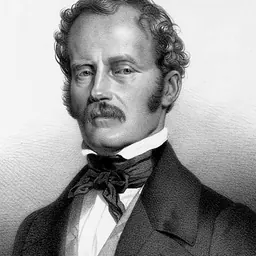
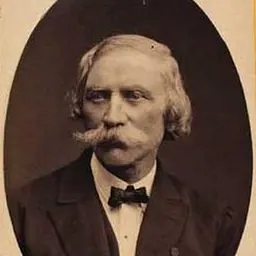

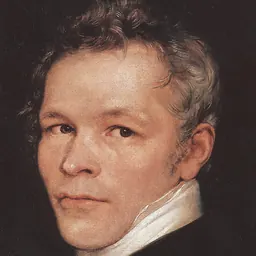

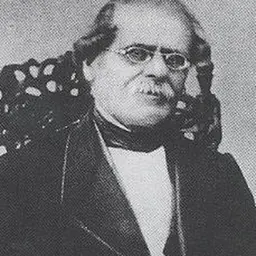
Related people
Same field, nearest in time



Contemporaries
People whose lives overlapped Eduard Schaubert's





Frequently asked questions
Who was Eduard Schaubert?
architect (1804–1860)
When was Eduard Schaubert born?
Eduard Schaubert was born in 1804 in Wrocław.
When did Eduard Schaubert die?
Eduard Schaubert died on 30 March 1860 in Wrocław.
What was Eduard Schaubert's occupation?
Eduard Schaubert was an architect, art historian, archaeologist and architectural historian.
What nationality was Eduard Schaubert?
Eduard Schaubert was German.
Sources & further reading
Cite this page
APA: Biography.guide. (2026). Eduard Schaubert. https://biography.guide/eduard-schaubert/
MLA: "Eduard Schaubert." Biography.guide, https://biography.guide/eduard-schaubert/.
Chicago: "Eduard Schaubert." Biography.guide. https://biography.guide/eduard-schaubert/.
Data last updated: 2026-09-20 · Spot an error? Report a correction.
Page generated 2026-09-27 05:29 UTC