
About Ioannis Kapodistrias
Lived 1776 – 1831 (aged 55). Ioannis Kapodistrias was a Russian and Greek politician, diplomat and physician.
Count Ioannis Antoniou Kapodistrias (;#tag:ref|romanized: Kómis Ioánnis Antoníou Kapodístrias; February 1776
Kapodistrias family home in Corfu. The plaque between the two windows to the left of the entrance mentions he was born there. Kapodistrias' mother was Adamantine Gonemis (; Diamantina Gonemi), a countess.
Minister of the Septinsular Republic Statue of Ioannis Kapodistrias (by Georgios Bonanos) in Panepistimiou street, in front of the National and Kapodistrian University, Athens.
After two years of revolutionary freedom, triggered by the French Revolution and the ascendancy of Napoleon, in 1799 Russia and the Ottoman Empire drove the French out of the seven Ionian Islands and organised them as a free and independent state – the Septinsular Republic – ruled by its nobles. He secured Swiss unity, independence and neutrality, which were formally guaranteed by the Great Powers, and actively facilitated the initiation of a new federal constitution for the 19 cantons that were the component states of Switzerland, with personal drafts of the constitution. In 1827, he learned that the newly formed Greek National Assembly had, as he was the most illustrious Greek-born statesman in Europe, elected him as the first head of state of newly liberated Greece, with the title of Kyvernetes (Κυβερνήτης – Governor) for a seven-year term. A visitor to Kapodistrias in Geneva described him thus: "If there is to be found anywhere in the world an innate nobility, marked by a distinction of appearance, innocence, and intelligence in the eyes, a graceful simplicity of manner, a natural elegance of expression in any language, no one could be more intrinsically aristocratic than Count Capo d'Istria [Kapodistrias] of Corfu". Under the aristocratic veneer, Kapodistrias was an intense workaholic, a driven man and "an ascetic bachelor" who worked from dawn until late at night without a break, a loner whom few really knew well. Despite his work ethic, Kapodistrias had what the British historian David Brewer called an air of "melancholy fatalism" about him. Kapodistrias once wrote about the cause of Greek freedom that "Providence will decide and it will be for the best".
After touring Europe to rally support for the Greek cause, Kapodistrias landed in Nafplion on 7 January 1828, and arrived in Aegina on 8 January 1828. Mavromichalis was the Bey of the Mani Peninsula, one of the wildest and most rebellious parts of Greecethe only section that had retained its independence from the Ottoman Empire and whose resistance had spearheaded the successful revolution. The arrest of their patriarch was a mortal offence to the Mavromichalis family and, on September 27, Petrobey's brother Konstantis and son Georgios Mavromichalis determined to kill Kapodistrias that morning at the Church of Saint Spyridon in Nafplion.
Kapodistrias woke up early in the morning and decided to attend mass, although his servants and bodyguards urged him to stay home. When he reached the church, he saw his assassins waiting. When he reached the church steps, Konstantis and Georgios came close, as if to greet him. Suddenly, Konstantis drew his pistol and fired, missing, the bullet sticking in the church wall, where it is still visible today. Georgios plunged his dagger into Kapodistrias's chest while Konstantis shot him in the head. Konstantis was shot by General Fotomaras, who watched the murder scene from his own window. Georgios managed to escape and hide in the French Embassy. After a few days, he surrendered to the Greek authorities. He was sentenced to death by a court-martial and was executed by firing squad. His last wish was that the firing squad not shoot his face. His last words were "Peace Brothers!"
Ioannis Kapodistrias was succeeded as Governor by his younger brother, Augustinos Kapodistrias. Augustinos ruled for six months, during which the country was plunged into chaos. Subsequently, King Otto was given the throne of the newly founded Kingdom of Greece.
Legacy and honours
Greece
Kapodistrias is greatly honoured in Greece today. In 1944 Nikos Kazantzakis wrote the play "Capodistria" in his honour. It is a tragedy in three acts and was performed at the Greek National Theatre in 1946 to celebrate the anniversary of 25 March. as did the obverse of the 500 drachmas banknote of 1983–2001,
The cantons of Geneva and Vaud in Switzerland awarded Kapodístrias honorary citizenship.
In the City of Geneva, the quai Capo d'Istria is named after Kapodistrias. The city also features a bust of Kapodistrias in Parc des Bastions, positioned alongside the monument to Jean-Gabriel Eynard. Additionally, a commemorative plaque marks his former residence in the city.
International network On 24 February 2007, the cities of Aegina, Nafplion, Corfu, Koper-Capodistria, and Famagusta (one of the notable families of Famagusta was the Gonemis family, from whom Ioannis Capodistrias mother, Adamantine Gonemis, was descended) created the Ioannis Kapodistrias Network, a network of municipalities which are associated with the late governor. The network aims to promote the life and vision of Ioannis Kapodistrias across borders. The presidency of the network is currently held by the Greek municipality of Nafplion.
Don’t just read it —
keep it.
Full-length biographies made to live with: read them, listen on the way to work, watch them tonight.
- E-book
- Audio
- Video
Instant download · yours to keep · every purchase keeps this site free
Important facts
People in Ioannis Kapodistrias's life
Named in this biography and alive at the same time
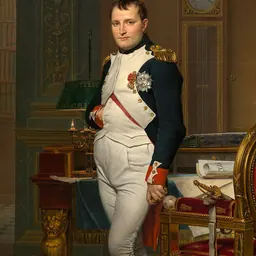
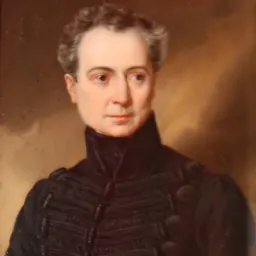
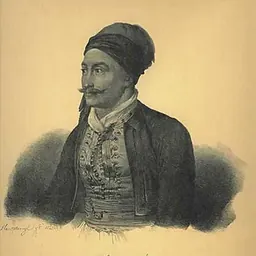
Related people
Same field, nearest in time

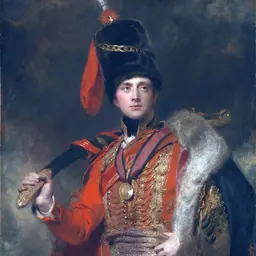

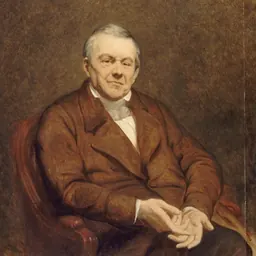

Contemporaries
People whose lives overlapped Ioannis Kapodistrias's



Frequently asked questions
Who was Ioannis Kapodistrias?
Greek statesman and diplomat (1776–1831)
When was Ioannis Kapodistrias born?
Ioannis Kapodistrias was born on 10 February 1776 in Corfu.
When did Ioannis Kapodistrias die?
Ioannis Kapodistrias died on 27 September 1831 in Greece, Nafplion.
What was Ioannis Kapodistrias's occupation?
Ioannis Kapodistrias was a politician, diplomat and physician.
What nationality was Ioannis Kapodistrias?
Ioannis Kapodistrias was Russian and Greek.
Sources & further reading
· Wikipedia: Ioannis Kapodistrias
· DBpedia: Ioannis Kapodistrias
Cite this page
APA: Biography.guide. (2026). Ioannis Kapodistrias. https://biography.guide/ioannis-kapodistrias/
MLA: "Ioannis Kapodistrias." Biography.guide, https://biography.guide/ioannis-kapodistrias/.
Chicago: "Ioannis Kapodistrias." Biography.guide. https://biography.guide/ioannis-kapodistrias/.
Data last updated: 2026-09-20 · Spot an error? Report a correction.
Page generated 2026-09-27 05:21 UTC