
About Ebenezer Ako-Adjei
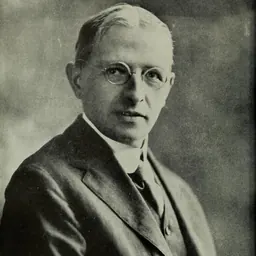
Lived 1916 – 2002 (aged 85). Ebenezer Ako-Adjei was a Ghanaian politician, diplomat, lawyer and minister.
Ebenezer Ako Adjei (17 June 1916 – 14 January 2002) was a Ghanaian statesman, politician, lawyer and journalist. He was a member of the United Gold Coast Convention and one of six leaders who were detained during Ghana's struggle for political independence from Britain, a group famously called The Big Six. Adjei became a member of parliament as a Convention People's Party candidate in 1954 and held ministerial offices until 1962 when as Minister for Foreign Affairs he was wrongfully detained for the Kulungugu bomb attack.
Born in Adjeikrom, a small village in the Akyem Abuakwa area, Ako Adjei had his tertiary education in the United States and the United Kingdom. After his studies abroad, he returned home to join the movement of Gold Coast's struggle for political independence by joining the United Gold Coast Convention (UGCC) as a founding member. Ako Adjei was instrumental in introducing Kwame Nkrumah into Ghana's political scene when he recommended him for the full time post of Organising Secretary of the UGCC.
Following Ghana's Independence, Ako Adjei served in various political portfolios including being the first Minister for Interior and Justice for the newly born nation, Ghana. He also became Ghana's first Minister of Foreign Affairs when the portfolio was changed from Minister for External Affairs to Minister for Foreign Affairs in May 1961. Ako Adjei's political career was however precluded after his detention for allegedly plotting to assassinate the then president Kwame Nkrumah in the Kulungugu bomb attack in 1962.
After his release in 1966, Ako Adjei spent the rest of his life in relative obscurity. He remained unseen or unheard in the Ghanaian national and political discourse. He resolved to focus on his family and his career as a legal practitioner. In 1992 he published a biography of the Ghanaian businessman and statesman George Grant. In 1997 he was awarded the Order of the Star of Ghana award – the highest national award of the Republic of Ghana, for his contribution to the struggle for Ghana's independence. Ako Adjei died after a short illness in 2002.
Early life and education
Gold Coast Ako Adjei was born on 17 June 1916 in Adjeikrom in Akyem Abuakwa land.
His early education began in the Eastern Region at the Busoso Railway Primary School, where he walked 14 miles to school and back home. He was taken to Accra where he continued his education at the La Presbyterian Junior School starting in class 3. He was unable to speak the Ga language which was his mother tongue, however, he could read and write Twi, and speak Dangme. He continued in the La Presbyterian Senior School until 1933 when he got to Standard Six. In March 1933 he won a scholarship to study at Christ Church Grammar School, a private secondary school which was on the point of winding up. He returned to the La Presbyterian Senior School after a month at Christ Church Grammar School because he did not like the school. before joining the Junior Civil Service in June 1937. From June 1937 to December 1938 he was a Second Division Clerk in the Gold Coast Civil Service. He was assigned to assist Harold Cooper, a European Assistant Colonial Secretary, and J. E. S. de Graft-Hayford to organise and establish the Gold Coast Broadcasting Service. These were the beginnings of what is now the Ghana Broadcasting Corporation.
After one and half years at Lincoln, he won a Phelps-Stokes Fund scholarship to attend Hampton Institute in Virginia, and transferred there to complete his university degree. He won another scholarship to the Columbia University Graduate School of Journalism and obtained a master's degree in June 1943. He gained employment as a lecturer at the African Studies Department at Fisk University through the assistance of Dr. Edwin W. Smith, a missionary. Dr. Smith had come from England to establish the new department and invited Ako Adjei to be his assistant at its founding. Nkrumah arrived in Britain in 1945, a few weeks after his arrival in London, Ako Adjei run into him during one of his rounds as the president of WASU. Nkrumah was then facing accommodation problems and he consequently hosted him at his No.25 Lauvier Road, until he found accommodation for him (Nkrumah) at No. 60 Burghley Road, near Tufnel Park Tube Station. Nkrumah was resident there until he left London in 1947. Ako Adjei then introduced Nkrumah to WASU and Kojo Botsio who later became Nkrumah's right-hand man. Recalling his WASU days, Ako Adjei recounted, "When Nkrumah arrived in London I was then President of the WASU. I took Nkrumah to the WASU Secretariat where I introduced him to Kankam Boadu and Joe Appiah, who were other members of the executive committee of WASU, and to Kojo Botsio who we had then engaged as warden of the student's Hostel, at No.l South Villas, Camden Town, London N. W. I. I must say that Nkrumah's arrival and active participation in the work of WASU invigorated the Union. It was against this background that we organised the Fifth Pan-African Congress which was held in Manchester in 1945 with George Padmore and Nkrumah as Joint Secretaries and myself as one of the active organisers."
Ako Adjei enrolled at the London School of Economics and Political Science for his M.Sc. degree programme while studying law at the Inner Temple. His topic for the dissertation, The Dynamics of Social Change was approved, however, the course, coupled with his political activities precluded his research due to time constraints. They were invited by the world war veterans for their war veterans' meetings and at various times been made guest speakers.
Convention People's Party In March 1953, Ako Adjei succumbed to pressure from friends such as E. C. Quaye, Sonny Provençal and Paul Tagoe, and agreed to join the Convention People's Party. In early March 1953 he was introduced in a huge rally at Arena, Accra where he delivered his first speech on the platform as a member of the CPP. One of the reasons for his appointment was that he belonged to a class under-represented in the CPP, he being an intellectual and professional in the middle class, the move was regarded as a strategy to pull people of his status to the CPP. As Minister of Trade and Labour, he was responsible for many aspects of the country's life, he oversaw the Agricultural Produce Marketing Board, the Cocoa Marketing Board, the Industrial Development Corporation, Trade Unions and Cooperatives. a portfolio that was separated about six months later. In August 1957, the Ministry of Interior and Justice was separated into the Ministry of Interior and the Ministry of Justice. The Ministry of Interior was headed by Krobo Edusei while Ako Adjei was made Minister of Justice. It was rumoured then that this move was made by Nkrumah, the then prime minister, because Ako Adjei though a Ga himself was seen as "too gentlemanly" to deal with the problems created by the Ga-Adangbe Shifimo Kpee (a tribal organisation), which had been inaugurated not long ago in Accra.
Others remained positive about his new appointment believing he was in a better position to deal better with matters affecting Ghana's judiciary as a trained lawyer. As Minister for Justice, he was responsible for the functions of the Land Boundaries Settlement Commission, financial and ministerial matters with relation to the Supreme Court, local court and Customary Law, and foreign processes. As Minister of Labour and Cooperatives, he aided the labour movement of Ghana in forming new structures that have persisted till this today. While serving in this capacity he often led the Ghanaian delegations to the United Nations.
Resident Minister in Guinea and Minister for Foreign Affairs In February 1959, Ako Adjei replaced Nathaniel Azarco Welbeck as the Resident Minister of Guinea. While serving as Ghana's chief representative in Guinea, he was appointed Minister of External Affairs in April that year. He occupied both positions as Ghana's resident minister in Guinea and Ghana's Minister of External Affairs until September 1959 when he was relieved of his duties in Guinea.
On 8 April 1961, Ako Adjei was in New York City when Nkrumah the then president of Ghana announced in a dawn broadcast that he had removed African Affairs from the jurisdiction of the Ministry of External Affairs thereby appointing Imoru Egala as the Minister of State for African Affairs, a position Egala held for a brief period of time with no successor. Ako Adjei returned to Ghana without permission to plead his course for a more coordinated foreign policy. He believed that the goal of African unity would be unrealistic if African relations were detached from his ministry. As Ghana's first foreign minister, he played a prominent role in formulating the country's foreign policy and level of international engagements. According to Sheikh I. C. Quaye, he "assisted to lay the foundations of our international relations at the height of the cold war when the country needed to walk the diplomatic tight rope unflinchingly". Kwesi Armah reflecting on Ako Adjei's time in office said he "presented a very sober image of Ghana and powerfully presented Ghana's stand to the UN and other international conferences."
As the Minister of Foreign Affairs, he announced a complete boycott of South African goods, ships and airlines into the country, he also maintained that South Africans will only be allowed in the country if they declared opposition to apartheid. During his tenure in the Ministry, Ako Adjei called for "a Union of African States, to provide the framework within which any plans for economic, social and cultural cooperation can in fact, operate to the best advantage of all."
During a meeting of African Foreign Ministers in Addis Ababa in June 1960, he proposed the concept of a "complete political union" for Africa and pushed for the establishment of Africa Customs Union, Africa Free Trade Zone, and Africa Development Fund; policies that were along the lines of these proposals were adopted by the Organisation of African Unity (OAU) which was birthed while he was in prison in 1963 and the Africa Union (AU) which succeeded the OAU in 2001.
Treason trial and detention The spot in Kulungugu where the bomb was thrown in an attempt to assassinate the then president Dr. Kwame Nkrumah Kwame Nkrumah travelled to Tenkodogo on 31 July 1962 to have a meeting with Maurice Yameogo the president of Upper Volta now Burkina Faso. The meeting was to discuss further plans to eliminate customs barriers between Ghana and the Upper Volta. A move that was seen as a small step towards Pan-African unity. An unusually heavy downpour complicated the return trip from Tenkodogo on 1 August 1962, causing the usual order of the convoy to be in disarray over the poor road that connected the two countries. A bomb was reportedly thrown at the president in Kulungugu, a town in the Upper Region of Ghana when he was forced to stop to receive a bouquet from a young boy. who found the acquitted, guilty based largely on the evidence of the fetish priest. Ako Adjei and the two others were consequently sentenced to death, however, the sentence was commuted by the president to a life imprisonment sentence and later, a 20-year imprisonment sentence in an address to parliament on 26 March 1965.
Death and state burial Ako Adjei was the last member of the famous Big Six to die. After a short illness, he died on 14 January 2002 at the Korle-Bu Teaching Hospital, at the age of 85 years. He was survived by his wife and four children. He said "the nation owes Dr. Ako-Adjei gratitude as a hero, who served the country as a young man, for democratic rule in future. As one of the Big Six in Ghana's political history, the death of Dr. Ako-Adjei marks the end of the first cycle of history in terms of the harsh political atmosphere in the country at that time. But the memory of that era cannot be erased". He also added that "They launched a political party system of which the government is a beneficiary. Ghanaians benefiting from this great legacy and achievement owe it a duty to rally behind the bereaved family to offer Dr. Ako-Adjei a fitting state burial".
Personal life Ako Adjei was married to Theodosia Ako Adjei (née Kote-Amon) and together they had four daughters. He was a Christian and a member of the Presbyterian Church of Ghana. As a Christian, he believed and emphasised as his philosophy of life that God controlled all affairs and had a purpose for everybody on earth. "What every individual must do therefore is to allow God to use him as a tool to serve Him." In 1952 he was made a member of the American Academy of Political and Social Science On 7 March 1997 as part of Ghana's 40th Independence Day anniversary celebrations, Ako Adjei was awarded Officer of the Order of the Star of Ghana – the highest national honour of the Republic of Ghana (at the time) by the then president Jerry John Rawlings for his "contribution to the struggle for Ghana's independence" There is also an Ako-Adjei Park in Osu, Accra.
Quotes "Ghana is our country. We have nowhere to go. This is where God has placed us and the earlier we realized this the better for all of us."
Don’t just read it —
keep it.
Full-length biographies made to live with: read them, listen on the way to work, watch them tonight.
- E-book
- Audio
- Video
Instant download · yours to keep · every purchase keeps this site free
Important facts
People in Ebenezer Ako-Adjei's life
Named in this biography and alive at the same time




Related people
Same field, nearest in time





Contemporaries
People whose lives overlapped Ebenezer Ako-Adjei's



Frequently asked questions
Who was Ebenezer Ako-Adjei?
Ghanaian politician (1916-2002)
When was Ebenezer Ako-Adjei born?
Ebenezer Ako-Adjei was born on 17 June 1916 in Eastern Region.
When did Ebenezer Ako-Adjei die?
Ebenezer Ako-Adjei died on 14 January 2002 in Accra.
What was Ebenezer Ako-Adjei's occupation?
Ebenezer Ako-Adjei was a politician, diplomat, lawyer and minister.
What nationality was Ebenezer Ako-Adjei?
Ebenezer Ako-Adjei was Ghanaian.
Sources & further reading
· Wikipedia: Ebenezer Ako-Adjei
Cite this page
APA: Biography.guide. (2026). Ebenezer Ako-Adjei. https://biography.guide/ebenezer-ako-adjei/
MLA: "Ebenezer Ako-Adjei." Biography.guide, https://biography.guide/ebenezer-ako-adjei/.
Chicago: "Ebenezer Ako-Adjei." Biography.guide. https://biography.guide/ebenezer-ako-adjei/.
Data last updated: 2026-09-20 · Spot an error? Report a correction.
Page generated 2026-09-27 05:25 UTC