
About Earle Clements
Lived 1896 – 1985 (aged 88). Earle Clements was an American politician, judge, lobbyist and farmer.
Earle Chester Clements (October 22, 1896 – March 12, 1985) was a Kentucky politician. He represented the Commonwealth of Kentucky in both the U.S. House of Representatives and the U.S. Senate and was its 47th governor, serving from 1947 to 1950, after serving in the state Senate. For 25 years, he was the leader of a faction of the state's Democratic Party that stood in opposition to the faction led by two-time governor and senator A. B. "Happy" Chandler.
After following his father into the local politics of his home county, Clements agreed to chair the gubernatorial campaign of Thomas Rhea in 1935. Already committed to Rhea, he turned down an offer from Happy Chandler to chair his campaign, beginning the rift between the two men. Clements was elected to the Kentucky Senate in 1941. In 1944, he was elected floor leader of its Democratic majority and successfully campaigned for a larger budget than that proposed by Republican governor Simeon Willis. His stand against Willis made him popular in the Democratic Party, and he was elected to the U.S. House of Representatives in 1944 and 1946.
In 1947, Clements succeeded the term-limited Willis, defeating Harry Lee Waterfield, Chandler's preferred candidate, in the Democratic primary. As governor, Clements raised taxes and used the revenue to increase funding for the state park system and construct and maintain more roads. He also achieved advancements in education, including some progress toward desegregation. In 1950, Clements was elected to the U.S. Senate. He resigned as governor to take the seat. While in the Senate, he served as Democratic party whip under party leader Lyndon Johnson and as executive director of the Senate Democratic Reelection Committee from 1957 to 1959. He was defeated by Thruston Morton in his re-election bid in 1956; a lack of support from Chandler (then serving his second term as governor) contributed to Clements' defeat. At Johnson's insistence, Clements resumed chairing the Senate Democratic Campaign Committee in 1957 and 1959.
Clements had supported Bert T. Combs for governor against Chandler in the 1955 primary, and did so again against Waterfield in 1959, brokering a deal for Louisville lawyer Wilson Wyatt to drop his bid for governor and run for lieutenant governor on an unofficial ticket headed by Combs. Combs defeated Waterfield and rewarded Clements by appointing him state highway commissioner. In 1960, Clements and Combs split over a deal to lease dump trucks from a Louisville car dealer. State newspapers charged that the deal was payback to the dealer, a Combs supporter. When Combs canceled the deal Clements took it as a public rebuke and soon after resigned to work on the presidential campaign of his friend, Lyndon Johnson. Following his split with Combs, Clements allied himself with the Chandler faction, opposing Wyatt in his bid to unseat Senator Thruston Morton. Clements' influence declined rapidly after the split with Combs, and by the 1963 gubernatorial race, he was unable to deliver his home county for Chandler in the primary against Edward T. Breathitt, who was nominated. When Johnson became president as the result of the assassination of John F. Kennedy in November 1963, Clements' friendship with him made Clements a logical choice to lobby for the Tobacco Institute, a coalition of cigarette manufacturers, who were increasingly having to play defense in Congress. After two years as a lobbyist for the institute, he was its president from 1966 to 1970, and remained on its payroll as a consultant until he died on March 12, 1985.
Early life Earle C. Clements was born in Morganfield, Kentucky, on October 22, 1896. He was the youngest of two sons and four daughters born to Aaron Waller and Sallie Anna (Tuley) Clements. His father was a popular county judge and sheriff in Union County, but Clements at first shunned a political career. Later in 1915, he enrolled at the University of Kentucky's College of Agriculture.
Clements' studies were interrupted by World War I. On July 9, 1917, he enlisted as a private in Company M of the Kentucky National Guard. The company was ordered to Camp Taylor near Louisville, Kentucky, where they were mustered into the infantry of the U.S. Army. On January 18, 1927, Clements married Sara M. Blue.
Political career In 1925, Clements' father died, and Clements was appointed to serve out the remainder of his term as sheriff. Kentucky sheriffs at that time could not seek re-election, and he was elected county clerk in 1925. He served two four-year terms in that office.
In 1935, Thomas Rhea of Russellville, a former state treasurer and highway commissioner, asked Clements to serve as his campaign chairman for the 1935 gubernatorial race.
Clements was elected to the Kentucky Senate in 1941, representing Union, Webster, and Henderson counties. He opposed the 1947 Taft-Hartley Act and voted to disband the House Un-American Activities Committee. His service on the Select House Committee on Food Shortages gave him the chance to interact closely with President Harry S. Truman. In the Democratic primary, he faced Harry Lee Waterfield, a former Speaker of the Kentucky House of Representatives. The Clements campaign also attacked Waterfield for being deemed physically unfit for military service. As a result of that, much of his proposed legislative agenda was passed. With this new revenue, Clements authorized $6 million to improve and expand the state park system. The improvement program included twelve large parks and several smaller ones, with Kentucky Dam Park being the centerpiece. Although the park system was started in 1926 by Willard Rouse Jillson, Clements did much to develop them during his administration. Clements' lieutenant governor and successor, Lawrence Wetherby, was able to meet this demand in 1951 by using increased tax revenue resulting from the Korean War. Clements worked to help these colleges maintain their accreditation and to secure re-accreditation for Morehead State Teachers College. He also supported a 1948 bill that allowed blacks to pursue medical training at the University of Louisville. Attempts to fund a veterans' bonus passed the two houses of the General Assembly in different forms and were unable to be reconciled. Clements advocated better cooperation between his committee and the Democratic National Committee in 1952. Democrats regained control of the Senate in 1954, and Clements instituted the practice of having his committee provide transition services for freshman senators. That practice continues today. the Clements faction scrambled to find a candidate. On April 30, 1956, Barkley died of a heart attack, opening up the other seat. Clements thought Leary, one of the few political figures who remained on good terms with Clements and Chandler, didn't have a very good chance of winning, but his selection would keep Chandler from throwing his support to the Republican candidates. In the Republican primary, voters chose Thruston B. Morton to challenge Clements. With two of his factional enemies as candidates for the Senate, Chandler bolted the party and supported the Republican candidates.
Later life Clements never again sought an elected office after his defeat, though he remained active in state politics and continued to lead the anti-Chandler faction of his party. Without Clements in the race, the anti-Chandler faction was unable to unite behind either former candidate Bert T. Combs or former Louisville mayor Wilson Wyatt. Clements united the faction behind Combs, making Wilson Wyatt their candidate for lieutenant governor and promising him support for later races. Others wondered if Clements took the post in order to organize the state political machinery for his friend Johnson, who was planning to run for president. Some charged that this amounted to a political payoff by Clements. Combs, already under fire for appointing Clements, canceled the lease bid on April 19. Clements was offended by this action and considered it a public rebuke. The incident caused a rift between Combs and Clements that never fully healed, although Clements did not resign immediately. Combs called a press conference and announced that Clements' resignation would be effective September 1 and that he would be replaced by Henry Ward. His split with Combs was so severe that he allied with his longtime foe, Happy Chandler, against what became the Combs faction. In the 1962 senatorial race, Clements opposed Wyatt's challenge to Morton. Chandler hoped to damage Combs' reputation and, by extension, that of his hand-picked successor Edward T. Breathitt.
From 1961 to 1963, Clements was a consultant for the American Merchant Marine Institute, a coalition of U.S. shipping companies. After helping the companies head off more regulation by agreeing to a warning on cigarette packages, he became president of the Institute in 1966 and was instrumental in forging a 1969 agreement in which the companies agreed to stop television advertising in return for a stronger warning label instead of the additional regulation being demanded by health advocates. He stepped down as president in 1970 but remained a consultant to the institute until his death. In a 1978 interview, he maintained that a connection with smoking and cancer had not been proven. In 1981, he retired to his hometown of Morganfield.
Don’t just read it —
keep it.
Full-length biographies made to live with: read them, listen on the way to work, watch them tonight.
- E-book
- Audio
- Video
Instant download · yours to keep · every purchase keeps this site free
Important facts
People in Earle Clements's life
Named in this biography and alive at the same time

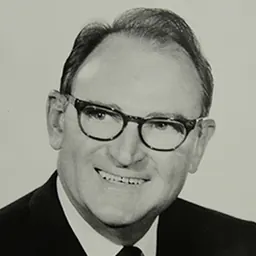
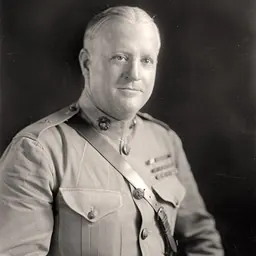




Related people
Same field, nearest in time




Contemporaries
People whose lives overlapped Earle Clements's


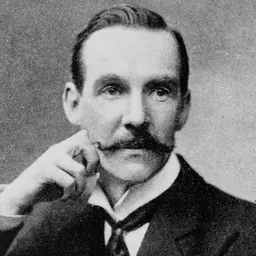


Frequently asked questions
Who was Earle Clements?
American farmer and politician (1896-1985)
When was Earle Clements born?
Earle Clements was born on 22 October 1896 in Morganfield.
When did Earle Clements die?
Earle Clements died on 12 March 1985 in Morganfield.
What was Earle Clements's occupation?
Earle Clements was a politician, judge, lobbyist and farmer.
What nationality was Earle Clements?
Earle Clements was American.
Sources & further reading
Cite this page
APA: Biography.guide. (2026). Earle Clements. https://biography.guide/earle-clements/
MLA: "Earle Clements." Biography.guide, https://biography.guide/earle-clements/.
Chicago: "Earle Clements." Biography.guide. https://biography.guide/earle-clements/.
Data last updated: 2026-09-26 · Spot an error? Report a correction.
Page generated 2026-09-27 05:15 UTC