
About Lawrence Wetherby
Lived 1908 – 1994 (aged 86). Lawrence Wetherby was an American lawyer, politician, judge and governor.
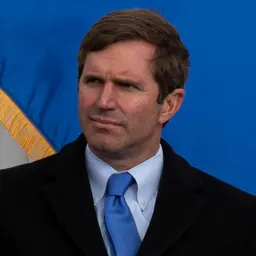
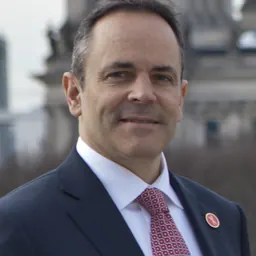
Lawrence Winchester Wetherby (January 2, 1908 – March 27, 1994) was an American politician who served as 40th lieutenant governor and the 48th governor of Kentucky. He was the first of only two Kentucky governors born in Jefferson County, despite the fact that Louisville (the county seat) is the state's most populous city. The second governor born in Jefferson County is the incumbent governor, Democrat Andy Beshear, who grew up in the Lexington area. Two other governors have been elected when residents of Jefferson: Republicans Augustus Willson, 1907–11, and Matt Bevin, 2015–19.
After graduating from the University of Louisville, Wetherby held several offices in the Jefferson County judicial system before being elected lieutenant governor in 1947 as the quiet choice of Democrat 2nd District U.S. Rep. Earle C. Clements from Morganfield, who won the primary for the top job. Wetherby was called Kentucky's first "working" lieutenant governor because Clements had him carry out duties beyond his constitutional responsibility to preside over the state Senate, such as preparing the state budget and attending the Southern Governors Conference. In 1950, Clements was elected to the U.S. Senate, elevating Wetherby to governor on Nov. 27. Wetherby won immediate acclaim by calling a special legislative session to increase funding for education and government benefits from the state's budget surplus, which had been boosted by the Korean War. In 1951, campaigning as a "Middletown farmer" in a largely rural state, he won a full four-year term, during which he continued and expanded many of Clements' programs, including increased road construction and industrial diversification. He endorsed the Supreme Court's 1954 desegregation order in the case of Brown v. Board of Education and appointed a biracial commission to oversee the successful integration of the state's schools. As chairman of the Southern Governors Conference in 1954 and 1955, he encouraged other Southern governors to accept and implement desegregation.
Limited to one term by the state constitution, Wetherby joined Clements and Lt. Gov. Emerson Beauchamp in supporting Bert Combs for governor, but Combs lost in the Democratic primary to former governor A. B. "Happy" Chandler, their factional adversary. When Democratic Sen. Alben W. Barkley died in April 1956, Clements refused to compromise with Chandler on selection of a Democrat for the special election to fill the vacancy, and got the state Democratic committee to nominate Wetherby. With Chandler's organization against them, Wetherby lost to Republican John Sherman Cooper, a former senator who had lost to Barkley in 1954, and Clements narrowly lost to Republican Thruston Morton.
In 1964–65, Wetherby served on a commission that proposed a new state constitution, and in 1965 he was elected to the state Senate from Frankfort, where he provided leadership in drafting the state budget and served as Senate president pro tempore. Following this, he retired from politics and served as a consultant for Brighton Engineering in Frankfort. Wetherby died on March 27, 1994, of complications from a broken hip and was buried in Frankfort Cemetery in Frankfort, Kentucky.
Early life and career Lawrence Wetherby was born January 2, 1908, in Middletown, Kentucky. He was the fourth child of Samuel Davis and Fanny (Yenowine) Wetherby. His grandfather was a surgeon in the Union Army during the Civil War.
After graduating from Anchorage High School, Wetherby enrolled in the pre-law program at the University of Louisville. He was later inducted into the university's Athletic Hall of Fame. In 1929, he earned his Bachelor of Laws degree and went to work for Judge Henry Tilford. On April 24, 1930, he married Helen Dwyer; the couple had three children.
Thanks to his father's influence, Wetherby became interested in local politics at an early age. School board races fascinated him, and he allied himself with a faction of the Jefferson County Democratic Party headed by Leland Taylor and Ben Ewing. May had sought the support of gubernatorial candidate Earle Clements, but Clements refused and chose Wetherby as his unofficial running mate.
Some observers called Wetherby Kentucky's first "working" lieutenant governor. Previous lieutenant governors did little beyond their constitutionally mandated duty of presiding over the Kentucky Senate, but during Clements' administration, Wetherby was charged with preparing a state budget, presiding over the Legislative Research Commission, leading tours for the state Chamber of Commerce, and attending the Southern Governors Conference. Clements also made Wetherby executive secretary of the State Democratic Central Committee, which allowed Wetherby to make many important political contacts. Wetherby's popularity soared as a result of this session, and he seriously considered running for the Senate seat vacated by the death of Virgil Chapman in 1951 but his wife and children vetoed the idea. With the support of Beauchamp, who slated with him for lieutenant governor, he ran for his own term as governor.
1951 gubernatorial election Among the potential candidates for the Democratic gubernatorial nomination in 1951 was former governor A. B. "Happy" Chandler, who was about to be released as baseball commissioner. Chandler and Clements were factional foes, and the possibility of a Chandler candidacy provided the Clements faction with the impetus to unite behind Wetherby to prevent Chandler from gaining the nomination. Wetherby had little trouble defeating Howell Vincent and Jesse Cecil in the Democratic gubernatorial primary, polling the largest majority ever in a Kentucky primary race. Siler was a fundamentalist Christian who claimed that the state government was full of corruption, and only he could stop it. He deployed the newly organized Kentucky State Police to counter organized crime in Campbell and Henderson counties. Wetherby won a full term by 58,331 votes--a margin of 54.6%-45.4%. Having adopted a pay-as-you-go program for the state, he was forced to raise additional revenue after the war ended. Using revenue from a 2-cent-per-gallon gasoline tax passed under the Clements administration, Wetherby authorized the building, re-building, or re-surfacing of nearly of roads during his administration. He encouraged President Dwight D. Eisenhower to construct a federal toll road connecting the Great Lakes and the Gulf of Mexico. Wetherby also brought national attention to Kentucky as prime hunting and fishing land by conducting his own personal sporting excursions in the state. He expanded the Agricultural and Industrial Development Board and charged it with conducting land surveys to identify potential industrial sites. In 1954, he used the state police to quash labor unrest in Central City and other parts of the Western Kentucky Coalfield. he killed a right-to-work bill in 1954. During his time as governor, he also secured passage of the state's first laws regulating strip mining and He called for the creation of an educational television network and initiated the state's first publicly funded bookmobile program. He supported the 1954 Minimum Foundation Program, an amendment to the state constitution that allowed funding to be allocated to school districts based upon need rather than number of pupils. In Kentucky, he appointed an advisory council of both white and black citizens to oversee public school integration, which was accomplished with little acrimony compared to other states. He constructed new state prisons, modernized the probation and parole systems, and established a more orderly system of selecting grand and petit juries. Wetherby had named Combs to the Kentucky Court of Appeals in 1951 to fill a vacancy created by the death of Judge Roy Helm. Chandler ran his campaign not just against Combs, but against Clements and Wetherby, painting Combs as a pawn of "Clementine" and "Wetherbine." He charged both Clements and Wetherby with extravagant spending in their administrations. Chandler's charges may have been inaccurate, but he defeated Combs in the primary and went on to win the general election.
1956 U.S. Senate bid Following his term as governor, Wetherby resumed his private law practice. The timing of his death meant that the state would elect two senators in 1956. Clements' term was expiring and now Barkley's seat was vacant. Barkley's death occurred so late in the year that there was not time for a Democratic primary to choose the party's candidate for the open seat; Chandler had persuaded the legislature to move the primary from early August to late May to complicate the re-election bid of Clements, who had become acting majority leader when Senate Majority Leader Lyndon B. Johnson suffered a heart attack in 1955. It was the first time Clements had lost a race, and Kentucky Democrats would not elect a senator for another 16 years. From 1964 to 1966, he and other ex-governors served in the legislatively created Constitution Revision Assembly, which proposed a new state constitution, chaired by Clements.
Death After his service in the state Senate, Wetherby returned to Brighton, where he became a vice-president. A statue of Wetherby was dedicated at Middletown City Hall in 2014.
Don’t just read it —
keep it.
Full-length biographies made to live with: read them, listen on the way to work, watch them tonight.
- E-book
- Audio
- Video
Instant download · yours to keep · every purchase keeps this site free
Important facts
People in Lawrence Wetherby's life
Named in this biography and alive at the same time





Related people
Same field, nearest in time



Contemporaries
People whose lives overlapped Lawrence Wetherby's


Frequently asked questions
Who was Lawrence Wetherby?
American politician (1908–1994)
When was Lawrence Wetherby born?
Lawrence Wetherby was born on 2 January 1908 in Middletown.
When did Lawrence Wetherby die?
Lawrence Wetherby died on 27 March 1994 in Frankfort.
What was Lawrence Wetherby's occupation?
Lawrence Wetherby was a lawyer, politician, judge and governor.
What nationality was Lawrence Wetherby?
Lawrence Wetherby was American.
Sources & further reading
· Wikipedia: Lawrence Wetherby
Cite this page
APA: Biography.guide. (2026). Lawrence Wetherby. https://biography.guide/lawrence-wetherby/
MLA: "Lawrence Wetherby." Biography.guide, https://biography.guide/lawrence-wetherby/.
Chicago: "Lawrence Wetherby." Biography.guide. https://biography.guide/lawrence-wetherby/.
Data last updated: 2026-09-20 · Spot an error? Report a correction.
Page generated 2026-09-27 05:33 UTC