
About E. J. Woods
Lived 1839 – 1916 (aged 76–77). E. J. Woods was an Australian architect.
Edward John Woods F.R.I.B.A. (1839 – 5 January 1916) was a prominent architect in the early days of the colony of South Australia. He is known for being a co-founder of the large international architectural practice of Woods Bagot, and for designing a number of prominent civic buildings in Adelaide, including Parliament House, the General Post Office, and what is now the Mortlock Chamber in the State Library of South Australia. He was also responsible for much of the design detail of St Peter's Cathedral, based on original plans by English architect William Butterfield.
Early life and education Edward John Woods was born in London in 1839, and was educated at several private schools in England.
After deciding to become an architect, he served his articles for three years with Charles James Richardson. He subsequently spent two years in the office of T. E. Knightly. including the St Rose of Lima Catholic Church, Kapunda in 1866 (rebuilt in 1938 to designs by Herbert Jory)., as well as the St. Laurence Martyr church at North Adelaide.
As part of Wright & Woods, he was involved in designing the Adelaide Town Hall from 1863 to 1866.
Woods designed "Central Chambers", a two-storey suite of offices at the corner of Waymouth and King William streets, opened in January 1873, previously the "Nimble Ninepence" store, which was destroyed by fire.
St. Peter's Cathedral The next important building to come along was St. Peter's Cathedral. was entirely his own, and had nothing whatever to do with Butterfield's original design. The building was carried out in three sections. After the first section had been completed nothing was done for 20 years or more. Then the church authorities proceeded with the building of the nave and a portion of the towers. Eventually Robert Barr Smith gave a donation of £10,000 with which to finish the towers. All this work came under his supervision, and he was sole architect from laying the very first stone to the last.
Government service After a few years successful practice he took William McMinn into his business, which continued profitably for some time. About 1873 he joined the public service as architect to the Council of Education, while retaining the right to carry on private practice. He was appointed by Premier Boucaut as South Australia's architect-in-chief in 1878 but lost the right to continue practising privately.
During the years he held this office a large number of public buildings of all kinds, were erected under his supervision, notably the Governor of South Australia's summer residence at Marble Hill in 1879,
Among the other numerous buildings carried out under his supervision were the new government offices in Victoria Square, the Quarantine Station, Adelaide Gaol, and Yatala Labour Prison, the Customs House at Port Adelaide and substantial additions to the Parkside Asylum.
In 1884 the government of the day was obliged to cut its staff, and Woods was among the many who were dismissed. It was at this time that Parliament House was erected.
Parliament House While he was in the Government service the idea of building a State Parliament House was first mooted. He attended a special meeting of the building committee when the original plans from Taylor and Wright were found to be defective in many details, and he was told to entirely remodel them. Wright had already put in portion of the foundations when he came on the scene, and he took all these foundations out. He was then instructed to call for tenders for the first portion, which included the Chamber of the House of Assembly, smoke room, corridors, etc. The tender of the Kapunda Marble Company was accepted at around £100,000 and they proceeded with the work of laying the foundation and the lower portion of the buildings, which were faced with granite. Then there came some difficulty about the marble, and the committee decided not to go ahead, as the marble portion would cost them too much, and the Government, allowed the company to withdraw after something like £30,000 of work. The negotiations were handled with tact and efficiency by C. E. Owen Smyth, Woods' professional clerk, who had followed him from the Education Department. The work was retendered for, and was secured by James Shaw for about £102,000. Previous to this something like £30,000 had been spent by the Kapunda Marble Company. Woods supervised the contract right through until the building was completed, and put in all the fittings and all the special ventilation, which is different from that in any other building.
Back in private practice Woods recommenced private practice, and did very well. The Catholic Archbishop of Adelaide contracted him to make additions to the St Francis Xavier's Cathedral. He put up several convents in Adelaide, Port Pirie, Broken Hill, and elsewhere, also numerous chapels in the city, suburbs, and country districts.
He was in 1898, with Edward Davies, appointed joint architect of the National Mutual Life Association building on King William Street.
Early in 1905 he took W. H. Bagot into partnership and as Woods and Bagot, Steamship Buildings, Currie Street, carried on business until 1913, when he retired, his health failing.
Other interests Woods was a founding member of the S.A. Rifle Association.
He was an art enthusiast, becoming in 1887 a foundation member and treasurer of the South Australian Society of Artists, then in 1892 a foundation member of the breakaway Adelaide Easel Club. He acted as arts judge for the Show Society.
Personal life and family Woods married Katharine Gooch (19 June 1849 – 18 January 1932) on 3 December 1867. Their home was "Richmond", 41 Dequetteville Terrace, Kent Town. They had two sons and three daughters:
Alice Marion Woods (14 Feb 1870 – ) married explorer Lawrence Allen Wells OBE (30 April 1860 – 11 May 1938) on 22 September 1892. Gertrude Madeleine Woods (19 Oct 1872 – ) married Walter C. Addison on 8 May 1900. Addison was a son of Arthur Richman Addison of Orroroo and a champion rifle shooter. Son Gerald B. Addison was also a champion marksman. (Alfred) Bertram Woods (1 May 1876 – ) married Lillian Ireland ( – 13 October 1942) at Rondebosch, Cape Town on 28 November 1905. Bertram was with Union Bank of Australia in Adelaide, secretary to the Cecil Rhodes Trust, then a public servant in Rhodesia. Ernest Edward Woods (22 Jan 1879 – 25 December 1943) had a career with National Bank. He married Maye Alice Jones on 27 January 1902. Marjorie Josephine Woods (29 April 1891 – ) married Alfred Stevens of Victoria on 28 March 1917. Alfred Thomas Woods (c. 1841 – 16 November 1892), a surveyor with the Surveyor-General George Goyder in the Northern Territory, was a brother.
Recognition Woods was elected a fellow of the Royal Institute of British Architects in 1892.
Don’t just read it —
keep it.
Full-length biographies made to live with: read them, listen on the way to work, watch them tonight.
- E-book
- Audio
- Video
Instant download · yours to keep · every purchase keeps this site free
Important facts
People in E. J. Woods's life
Named in this biography and alive at the same time





Related people
Same field, nearest in time
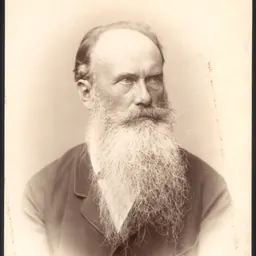

Contemporaries
People whose lives overlapped E. J. Woods's
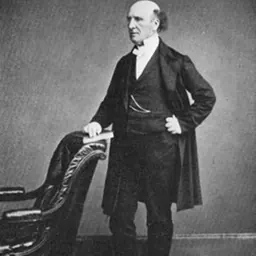
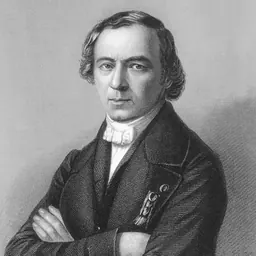
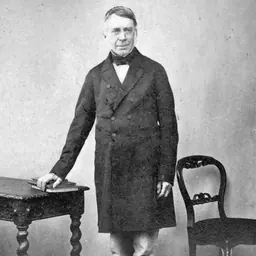
Frequently asked questions
Who was E. J. Woods?
architect (1839–1916)
When was E. J. Woods born?
E. J. Woods was born in 1839 in London.
When did E. J. Woods die?
E. J. Woods died on 5 January 1916 in Kent Town.
What was E. J. Woods's occupation?
E. J. Woods was an architect.
What nationality was E. J. Woods?
E. J. Woods was Australian.
Sources & further reading
Cite this page
APA: Biography.guide. (2026). E. J. Woods. https://biography.guide/e-j-woods/
MLA: "E. J. Woods." Biography.guide, https://biography.guide/e-j-woods/.
Chicago: "E. J. Woods." Biography.guide. https://biography.guide/e-j-woods/.
Data last updated: 2026-09-20 · Spot an error? Report a correction.
Page generated 2026-09-27 05:23 UTC