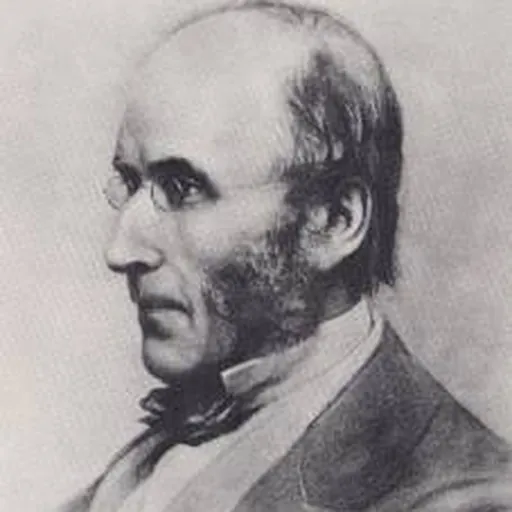
About William Butterfield
Lived 1814 – 1900 (aged 85). William Butterfield was a British architect.
William Butterfield (7 September 1814 – 23 February 1900) was a British Gothic Revival architect and associated with the Oxford Movement (or Tractarian Movement). He is noted for his use of polychromy.
Biography William Butterfield was born in London in 1814. His parents were strict non-conformists who ran a chemist's shop in the Strand. He was one of nine children and was educated at a local school. At the age of 16, he was apprenticed to Thomas Arber, a builder in Pimlico, who later became bankrupt. He studied architecture under E. L. Blackburne (1833–1836). From 1838 to 1839, he was an assistant to Harvey Eginton, an architect in Worcester, where he became articled. He established his own architectural practice at Lincoln's Inn Fields in 1840.
From 1842 Butterfield was involved with the Cambridge Camden Society, later The Ecclesiological Society. He contributed designs to the Society's journal, The Ecclesiologist. His involvement influenced his architectural style. He also drew religious inspiration from the Oxford Movement and as such, he was very high church despite his non-conformist upbringing. He was a Gothic revival architect, and as such he reinterpreted the original Gothic style in Victorian terms. Many of his buildings were for religious use, although he also designed for colleges and schools.
Butterfield's church of All Saints, Margaret Street, London, was, in the view of Henry-Russell Hitchcock, the building that initiated the High Victorian Gothic era. It was designed in 1850, completed externally by 1853 and consecrated in 1859.
At Oxford, Butterfield designed Keble College, in a style radically divergent from the university's existing traditions of Gothic architecture, its walls boldly striped with various colours of brick. Intended for clerical students, it was largely built in 1868–70, on a fairly domestic scale, with a more monumental chapel of 1873–6. In his buildings of 1868–72 at Rugby School, the polychromy is even more brash.
Butterfield received the RIBA Gold Medal in 1884. He died in London in 1900, and was buried in a simple Gothic tomb (designed by himself) in Tottenham Cemetery, Haringey, North London. The grave can be easily seen from the public path through the cemetery, close to the gate from Tottenham Churchyard. There is a blue plaque on his house in Bedford Square, London.
Works
Chalice designed by William Butterfield, 1856–1857 (hallmarked) V&A Museum no. CIRC.521–1962
Butterfield's buildings include: 1842 Highbury Congregational Chapel (Cotham Church), Bristol 1843 St John's Church, Jedburgh: lychgate 1845 St Saviour's Church and vicarage, Coalpit Heath, south Gloucestershire, 1845 (Butterfield's first Anglican work) St Augustine's College, Canterbury, Kent, 1845 St John the Baptist parish church, Hellidon, Northamptonshire: restoration, 1845–47 1846 St Nicholas' Church, Thanington Without, Kent: restoration, 1846 1847 St Andrew's parish church, Ogbourne St Andrew, Wiltshire: restoration, 1847–49 and vicarage, 1848 Parish Church of the Holy Trinity with St Edmund, Horfield, Bristol, nave and aisles c1847 1849 St Bartholomew's Church, Yealmpton, Devon, PL8 2HG, reconstruction 1849–1852 The Cathedral of the Isles, Great Cumbrae, Scotland, started 1849 but still incomplete St Edmund's Church, Thurlaston, Warwickshire. Built as a combined church and school. St Mary's Church, Ottery St Mary, Devon restoration 1849–1850 1850 Goldern Lion Hotel (1850) in the Norfolk sea-side town of Hunstanton. St Mary Magdalene church, West Lavington, West Sussex, 1850 St Ninian's Cathedral, Perth, Scotland, 1850 St James & St Anne parish church and vicarage, Alfington, Devon, 1850 Wantage Cemetery, Berkshire: chapel, 1850 1851 St Mary's Church, Emmorton, Maryland: stained glass windows, 1851 St Martin's Church, Great Mongeham, Kent: restoration, 1851 All Saints, Wykeham, 1853–1855 Milton Ernest Hall, Bedfordshire, 1853–1858 St Mary's Church, Langley, Kent, 1853 The Red House, Hensall, North Yorkshire Hutton Buscel Village Hall, North Yorkshire St Nicholas' Hospital, Salisbury, Wiltshire: restoration, 1854 Church of St John the Baptist, Pollington Cum Balne Church of the Holy Trinity, Snaith 1855 St Mary's parish church, Marlston, Berkshire, 1855 All Saints' Church, Braishfield, Hampshire, 1855 1856 St John the Evangelist's parish church, Milton, Oxfordshire, 1856 Balliol College, Oxford: chapel, 1856–57 1857 St Michael's parish church, Gare Hill (Gaer Hill), near Trudoxhill, Somerset, 1857
St James' church, school and village buildings, Baldersby St James, North Yorkshire, 1857 Charlton-All-Saints, Wiltshire: school, 1857–58 1858 St Mathew's chapel of ease, Easton, Bristol, 1858; demolished 1923 St Andrew's parish church, Landford, Wiltshire, 1858 Church of St John the Evangelist, better known as the Afghan Church, Mumbai: the reredos, the Afghan War Memorial mosaics, and the tiles, pews and screen, 1858 St John the Evangelist parish church, Hammersmith, 1858–59 St John the Baptist, Latton, Wiltshire: chancel, 1858–63 Pitt Mission Church and School, Pitt, Hursley, Hampshire, 1858 1859 All Saints, Margaret Street, London, 1859 St Mary the Virgin, Etal, Northumberland 1859 St Nicholas' school, Newbury, Berkshire, 1859 Standlynch Chapel, Trafalgar House, Wiltshire: restoration, 1859–66 1860 St Giles' Church, Tadlow, Bedfordshire, 1860 Charlton All Saints, Wiltshire: vicarage, 1860–62 Clergy house, St Alban the Martyr, Holborn 1861 St John the Baptist church, Bamford, Hope Valley, Derbyshire: restoration, 1861 St Michael's parish church, Letcombe Bassett, Berkshire (now Oxfordshire): nave and south aisle, 1861 St Mary the Virgin parish church, Castle Eaton, Wiltshire: restoration, 1861–63 1862 Lych gate at St Michael & All Angels' Churchyard extension, Houghton-le-Spring, Durham, 1862 St Martin's parish church, Bremhill, Wiltshire: restoration, 1862–63 St Michael's parish church, Lyneham, Wiltshire: nave roof and chancel, 1862–65 1863 Church of St Cross, Manchester, Clayton, Manchester, 1863–66 St Margaret's parish church, Mapledurham, Oxfordshire: restoration, 1863 St Mary Magdalene church, Enfield Chase, Middlesex, 1883 St Michael's parish church, Aldbourne, Wiltshire: restoration, 1863–67 Merton College, Oxford: Grove Building, 1864 St Andrew's parish church, Blunsdon St Andrew, Wiltshire: restoration: 1864–68 Christ Church, Emery Down, Hampshire, 1864 1865 St George's parish church, Wootton, Northamptonshire: restoration, 1865 St Lawrence's Church, Godmersham, Kent: restoration, 1865 Holy Saviour church, Hitchin, Hertfordshire, 1865 1866 St Anne's church, Dropmore, Littleworth, Buckinghamshire, 1866 All Saints' parish church, Rangemore, Staffordshire, 1866–67 St Peter's parish church, Highway, Wiltshire, 1866–67 1867 Holy Trinity Chapel, Known as the 'Tait Chapel', Fulham Palace, London. St Barnabas' parish church, Horton-cum-Studley, Oxfordshire, 1867 St Mary's parish church, Beech Hill, Berkshire, 1867 Little Faringdon, Oxfordshire: Rectory, 1867 St Mary's parish, Lower Heyford, Oxfordshire: remodelling of Old Rectory, 1867 (now Tall Chimneys) 1870 All Saints' parish church, Whiteparish, Wiltshire: restoration, 1870 St Leonard's parish church, Broad Blunsdon, Wiltshire: rebuilding, 1870 Church of St Peter, Great Berkhamsted, Hertfordshire: restoration, 1870–71 The Rectory (now Butterfield House), formerly attached to Church of St Mary the Virgin, Baldock, Hitchin Street, Baldock, Hertfordshire, 1870–1873 1871 St Margaret of Antioch, Barley, Hertfordshire, 1871 additions St Paul's, Covent Garden, London, 1871–2: interior alterations 1872 St Mary's Church, Milstead, Kent: restoration, 1872 Saint Mary at Stoke parish church, Ipswich, Suffolk, 1872 1873 St Michael and All Angels' parish church & school, Poulton, Gloucestershire, 1873 St Mary's parish church, Dinton, Wiltshire: restoration, 1873–75 Church of St Peter, Clyffe Pypard, Wiltshire: restoration, 1873–75 All Saints' church, Babbacombe, Devon 1874 St Denis' church, East Hatley, Cambridgeshire: restoration, 1874 St George's parish church, West Harnham, Salisbury, Wiltshire: restoration, 1874 St George's Church, Morebath 1874–75 St Mary's School, Wantage, Berkshire (now Oxfordshire), 1874–75 St Margaret's parish church, Knook, Wiltshire: restoration, 1874–76 1875 Rugby School, Warwickshire: Chapel and Quadrangle, 1875 Shaw-cum-Donnington School, Shaw, Berkshire, 1875 All Hallows Church, Tottenham, London: restoration, 1875-1877 1876 Keble College, Oxford 1876 St Andrew's Church, Buckland, Kent: restoration, 1876 St Catherine's parish church, Netherhampton, Wiltshire, 1876–77 1877 Ascot Priory, Ascot, Berkshire: chapel, 1877 St Andrew's parish church, Rugby, Warwickshire, 1877 with later additions of 1895 St James' church, Christleton, Cheshire, rebuilt 1877 1878 Exeter School, Exeter, Devon, 1878–1880 St Mary Magdalene parish church, Winterbourne Monkton, Wiltshire: rebuilding, 1878 St John the Baptist parish church, Foxham, Wiltshire: 1878–81 St John the Evangelist church, Clevedon, Somerset, 1878 St Mary's parish church, Donnington, Berkshire: chancel, 1878 St Mary's Convent, Wantage, Berkshire (now Oxfordshire): Noviciate, 1878 1880 St Columba's College Chapel, Whitechurch, County Dublin, Ireland, 1880 St Edith of Wilton parish church, Baverstock Lane, Dinton, Wiltshire: restoration 1880–93 St Paul's Cathedral, Melbourne (except main tower and spire), Australia, 1880–1891 1881 Sarum College, Salisbury, Wiltshire: chapel, 1881 1885 St John the Baptist's Church, Ault Hucknall Restoration 1885–89. Gordon's School, Surrey, designed the central buildings comprising the Assembly Hall and Reception Building together with the sanatorium and dormitories. 1888 St Michael's Church, Woolwich: nave, 1888
Publications
Don’t just read it —
keep it.
Full-length biographies made to live with: read them, listen on the way to work, watch them tonight.
- E-book
- Audio
- Video
Instant download · yours to keep · every purchase keeps this site free
Important facts
People in William Butterfield's life
Named in this biography and alive at the same time




Related people
Same field, nearest in time



Contemporaries
People whose lives overlapped William Butterfield's




Frequently asked questions
Who was William Butterfield?
British architect (1814-1900)
When was William Butterfield born?
William Butterfield was born on 7 September 1814 in London.
When did William Butterfield die?
William Butterfield died on 23 February 1900 in London.
What was William Butterfield's occupation?
William Butterfield was an architect.
What nationality was William Butterfield?
William Butterfield was British.
Sources & further reading
· Wikipedia: William Butterfield
· DBpedia: William Butterfield
Cite this page
APA: Biography.guide. (2026). William Butterfield. https://biography.guide/william-butterfield/
MLA: "William Butterfield." Biography.guide, https://biography.guide/william-butterfield/.
Chicago: "William Butterfield." Biography.guide. https://biography.guide/william-butterfield/.
Data last updated: 2026-09-22 · Spot an error? Report a correction.
Portrait: Wikimedia Commons · author & licence
Page generated 2026-09-27 05:02 UTC