
About Charles James
Lived 1880 – 1928 (aged 48). Charles James was a British chemist, known for Lutetium.
Charles James (27 April 1880 – 10 December 1928) was a chemist of British origin working in the United States. in Earls Barton near Wellingborough, Northamptonshire. His father died when he was six and he was brought up by his mother. He attended school in Wellinborough, taking classes through Cambridge University. His father's chemistry books sparked his interest in chemistry, and he built himself a home laboratory when he was 15. He also began a correspondence with renowned chemist William Ramsay, who encouraged his interest and became a life-long mentor to James. James won the Ramsay silver medal in 1901.
In 1911, Parsons moved to the U.S. Bureau of Mines. James became a full professor and succeeded Parsons as head of the chemistry department at New Hampshire College. The James Method, using bromates and double magnesium nitrates in fractional crystallization was widely used until the 1940s when Ion Exchange methods were developed.
Promethium As early as 1913, James was involved in searching for element 61, the last of the rare earth elements. At least seven times, investigators believed that they had identified element 61. Charles James and B. Smith Hopkins from the University of Illinois both sought it. In 1926, himself close to publishing on the subject, James was asked to review a paper from Hopkins for the Journal of the American Chemical Society. James subsequently sent his own paper on element 61 to the lesser-known Proceedings of the National Academy of Sciences to avoid any possible conflict of interest. As a result it received less attention than might have been expected. It is likely that neither chemist was aware of the other's work before James reviewed Hopkins' paper. James also reviewed Hopkinsʼs book Chemistry of the Rarer Elements, saying he recommended it. Eventually it was determined that promethium, a radioactive element, does not form stable isotopes. As a result, it is extremely rare and unlikely to occur in nature, but can be formed in a nuclear reactor.
Honors 1901, Ramsay Silver Medal 1912, William H. Nichols Medal, New York Section of the American Chemical Society 1999, Laboratory recognized as a National Historic Chemical Landmark by the American Chemical Society In addition to his work, Charles James became an avid gardener, specializing in delphinium propagation. He also became a beekeeper, and an expert on the social life of bees.
Don’t just read it —
keep it.
Full-length biographies made to live with: read them, listen on the way to work, watch them tonight.
- E-book
- Audio
- Video
Instant download · yours to keep · every purchase keeps this site free
Important facts
People in Charles James's life
Named in this biography and alive at the same time
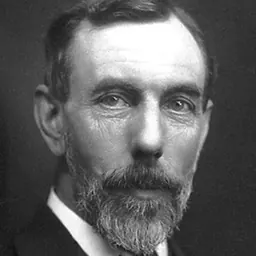
Related people
Same field, nearest in time




Contemporaries
People whose lives overlapped Charles James's



Frequently asked questions
Who was Charles James?
British chemist in the United States
When was Charles James born?
Charles James was born on 27 April 1880 in Earls Barton.
When did Charles James die?
Charles James died on 10 December 1928.
What was Charles James's occupation?
Charles James was a chemist.
What was Charles James known for?
Charles James was known for Lutetium.
What nationality was Charles James?
Charles James was British.
Sources & further reading
· DBpedia: Charles James (chemist)
Cite this page
APA: Biography.guide. (2026). Charles James. https://biography.guide/charles-james/
MLA: "Charles James." Biography.guide, https://biography.guide/charles-james/.
Chicago: "Charles James." Biography.guide. https://biography.guide/charles-james/.
Data last updated: 2026-09-20 · Spot an error? Report a correction.
Page generated 2026-09-27 05:19 UTC