
About Duke Peter of Oldenburg
Lived 1812 – 1881 (aged 68). Duke Peter of Oldenburg was a composer.
Duke Constantine Frederick Peter of Oldenburg (; ; – ) was a Duke of the House of Oldenburg. He was the grandfather of Duke Peter of Oldenburg and Grand Duke Nicholas Nikolaevich, General of the Imperial Russian Army during World War I. His great-great-grandson, Nicholas Romanov, was the President of the Romanov Family Association until his death in 2014.
Peter was a scholar and philanthropist. He was also noted composer of music. In 1857, he composed the music for Marius Petipa's ballet La Rose, la Violette et le Papillon. The Pas d'Esclave from the ballet Le Corsaire, which is taken from his score for this work, is still heard in theatres all over the world.
Early life Duke Peter was born on 26 August 1812 in Yaroslavl, Russia. His father, Duke George, who was only the second son of the reigning Duke of Oldenburg, had no prospects of inherited his father's state or fortune of his own and was living in Russia since his marriage in 1809 to Grand Duchess Catherine Pavlovna of Russia. Duke George, who had been appointed governor on the Volga, died six months after Peter, his second, was born. Peter's mother Grand Duchess Catherine Pavlovna was the favorite sister of Tsar Alexander I of Russia who took his two nephews, Peter and his older brother Alexander, under his protection. The brothers lived in Russia until his mother married King William I of Württemberg in 1816. They moved to Württemberg and were educated in Stuttgart. At the death of his mother, less than three years later, Peter and his brother were sent to their grandfather in Oldenburg. Being in direct line of succession to the throne of Oldenburg, as their uncle the hereditary Grand Duke Augustus was unmarried at the time, both boys were given the same extensive education by their grandfather Duke Peter as he had given his own sons and were regularly sent on instructive trips around Germany to broaden their education. Duke Peter and his wife led an exemplary family life, and looked carefully after the education of their children. The family spent the winter months in Peterhof and moved for the summer to their other residence Kamenoi-Ostroff.
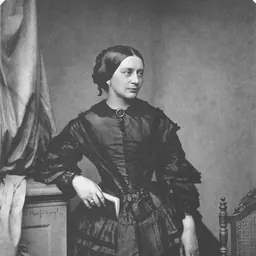
Composer Duke Peter was a talented pianist and composer, and in 1842 he composed his first major piano concerto. In 1844 his second piano concerto was performed for the first time at the Mikhailovsky Palace by the great pianist Clara Schumann, and conducted by his longtime friend and colleague Adolf von Henselt.
As with most Russian nobility, Duke Peter was a longtime balletomane and patron of the arts. In 1857 he was commissioned to compose the score for Marius Petipa's ballet-divertissement La Rose, la Violette et le Papillon, which was given as a performance for the royal court at the Imperial Theatre of Tsarskoe Selo. In 1858 Petipa extracted a Pas de Deux from the Duke's score and added it to his revival of the ballet Le Corsaire, renaming the piece the Pas d'Esclave. It is the only composition of Duke Peter's still heard today in the theater.
Many of Duke Peter's compositions were used as educational tools by the Saint Petersburg Conservatory. The composer and teacher Adolf von Henselt, a close friend of the Duke's, expanded on many of his compositions in order to utilize them for instructional purposes.
Last years Peter spent fifty years in Russia's service, for which he was widely respected and was thanked by a massive celebration in St Petersburg in 1880 attended by his first cousin Tsar Alexander II of Russia and most of the Imperial family, his cousin Grand Duke Nicholas of Oldenburg and representatives of the many organizations with which the Duke was connected. He was close to Tsar Alexander II and took his assassination in March 1881 very badly and died two months later on 14 May 1881 in St. Petersburg. Knight of St. Andrew, October 1812 Knight of St. Alexander Nevsky, October 1812 Knight of St. Anna, 1st Class, October 1812 Knight of St. Vladimir, 2nd Class, June 1835; 1st Class, April 1840 Knight of the White Eagle, 1865 Knight of St. Stanislaus, 1st Class, 1865 Grand Cross of the Württemberg Crown, 1828 Grand Cross of the White Falcon, 17 August 1841 Grand Cross of the Order of Duke Peter Friedrich Ludwig, with Golden Crown, 17 January 1839 Grand Cross of the Netherlands Lion, 1852 Grand Cross of the Ludwig Order, 7 May 1860 Kingdom of Greece: Grand Cross of the Redeemer, 1862 Grand Cross of St. Stephen, 1874 Ernestine duchies: Grand Cross of the Saxe-Ernestine House Order, 1877 Sweden-Norway: Knight of the Seraphim, 21 June 1879
Ancestry
Don’t just read it —
keep it.
Full-length biographies made to live with: read them, listen on the way to work, watch them tonight.
- E-book
- Audio
- Video
Instant download · yours to keep · every purchase keeps this site free
Important facts
Family & relationships
People in Duke Peter of Oldenburg's life
Named in this biography and alive at the same time

Related people
Same field, nearest in time



Contemporaries
People whose lives overlapped Duke Peter of Oldenburg's





Frequently asked questions
Who was Duke Peter of Oldenburg?
Russian duke (1812–1881)
When was Duke Peter of Oldenburg born?
Duke Peter of Oldenburg was born on 26 August 1812 in Yaroslavl.
When did Duke Peter of Oldenburg die?
Duke Peter of Oldenburg died on 14 May 1881 in Saint Petersburg.
What was Duke Peter of Oldenburg's occupation?
Duke Peter of Oldenburg was a composer.
What nationality was Duke Peter of Oldenburg?
Duke Peter of Oldenburg's recorded nationality: Grand Duchy of Oldenburg.
Sources & further reading
· Wikipedia: Duke Peter of Oldenburg
· DBpedia: Duke Peter of Oldenburg
Cite this page
APA: Biography.guide. (2026). Duke Peter of Oldenburg. https://biography.guide/duke-peter-of-oldenburg/
MLA: "Duke Peter of Oldenburg." Biography.guide, https://biography.guide/duke-peter-of-oldenburg/.
Chicago: "Duke Peter of Oldenburg." Biography.guide. https://biography.guide/duke-peter-of-oldenburg/.
Data last updated: 2026-09-20 · Spot an error? Report a correction.
Page generated 2026-09-27 05:31 UTC