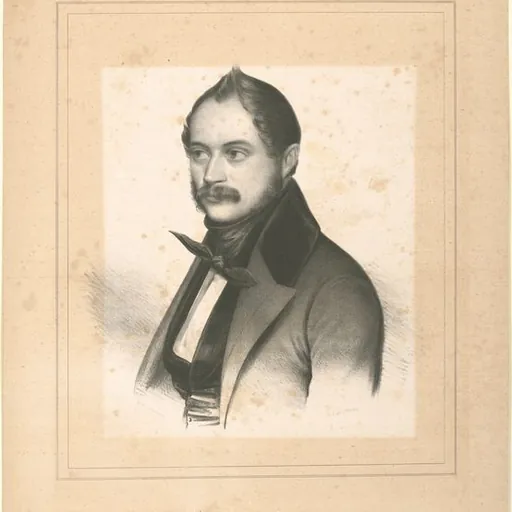
About Adolf von Henselt
Lived 1814 – 1889 (aged 75). Adolf von Henselt was a German pianist and composer.
Portrait of Adolf Henselt, composer (1814-1889), before 1889. Archivio Storico Ricordi. Adolf von Henselt (born Georg Martin Adolf Henselt; 9 May 181410 October 1889) was a German composer and virtuoso pianist. He was a well known composer during his lifetime best known for his Douze Études caractéristiques, which were known for their difficulty. He studied under Johann Nepomuk Hummel and had many notable students of his own. He was also well known for his Piano Concerto in F minor, Op. 16.
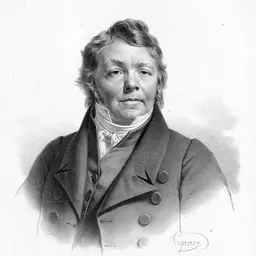
Life Georg Martin Adolf Henselt was born at Schwabach, in Bavaria. At the age of three he began to learn the violin, and at five the piano under Josepha von Fladt (1778–1843), who had trained in composition with Franz Danzi, Abbé (George Joseph) Vogler, Joseph Graetz and studied piano with Franz Lauska (who later coached Giacomo Meyerbeer and Felix and Fanny Mendelssohn). His concert debut was at the Odeon in Munich, where he played the opening Allegro to one of Mozart's C major concertos, a free fantasy with variations on a theme from Weber's Der Freischütz, and a rondo by Kalkbrenner. It was through Fladt's influence with King Ludwig I of Bavaria that Henselt was provided the financial means to undertake further study with Johann Nepomuk Hummel in Weimar in 1832 for some months. Later that year, he went to Vienna, where, besides studying composition under Simon Sechter (the later teacher of Anton Bruckner), he was successful as a concert pianist.
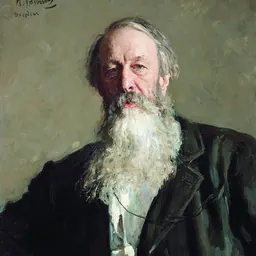
In 1836, to improve his health, he made a prolonged tour through the chief German towns. In 1837, he settled at Breslau, where he had married Rosalie Vogel—but the following year migrated to Saint Petersburg, where previous visits made him welcome. He became court pianist to Alexandra Feodorovna and inspector of musical studies in the Smolny Institute of Noble Maidens, and was ennobled in 1876. Henselt usually spent summer holidays in Germany. Among his many students were Heinrich Ehrlich, Nikolai Zverev, Ingeborg Bronsart von Schellendorf, Alie Lindberg, Vladimir Stasov, , and . In 1852, and again in 1867, he visited England, though in the latter year he made no public appearance. Once he commented on the lengths Henselt took to achieve his famous legato, saying, "I could have had velvet paws like that if I had wanted to." Henselt's influence on the next generation of Russian pianists was immense. Henselt's playing and teaching greatly influenced the Russian school of music, developing from seeds planted by John Field. Sergei Rachmaninoff held him in very great esteem, and considered him one of his most important influences.
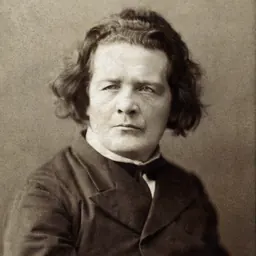
He excelled in his own works and in those of Carl Maria von Weber and Frédéric Chopin. His Piano Concerto in F minor, Op. 16 was once frequently played in Europe, and of his many valuable studies, the Étude in F-sharp major Si oiseau j'étais, was very popular. At one time Henselt was second to Anton Rubinstein in the direction of the Saint Petersburg Conservatory.
Despite his relatively long life, Henselt ceased nearly all composition by the age of thirty, for reasons that are unclear. Chronic stage fright, bordering on paranoia, caused him to withdraw from concert appearances by age thirty-three.
Works
Piano solo (selective list) Variations on ‘Io son' ricco’ from Donizetti's L'elisir d'amore, Op. 1 (1830) Rondo Serioso in D minor, Op. 1b Douze Études caractéristiques, Op. 2 (1837–1838) in D minor, "Orage, tu ne saurais abbattre" in D-flat major, "Pensez un peu à moi" in B minor, "Exauce mes voeux" in B-flat major, "Repos d'amour" in C-sharp minor, "Vie orageuse" in F-sharp major, "Si oiseau j'etais" in D major, "C'est la jeunesse..." in E minor, "Tu m'attires, m'entraines" in F major, "Jeunesse d'amour, plaisir céleste" in E minor, "Comme le ruisseau dans la mer repand" in E-flat major, "Dors tu ma vie" in B-flat minor, "Plein de soupirs, de souvenirs" Poème d'amour, Op. 3 (1838) Rhapsodie in F minor, Op. 4 (1838). Originally published as "Erinnerung und Freundschaft" Op. 4, No. 1. See Op. 51. Douze Études de salon, Op. 5 (1838) in E-flat major, "Eroica" in G major in A minor, "Hexentanz" in E major, "Ave Maria" in F-sharp minor, "Verlorene Heimath" in A-flat major, "Danklied nach Sturm" in C major, "Elfenreigen" in G minor, "Romanze mit Chor-Refrain" in A major in F minor, "Entschwundenes Glück" in B major, "Liebeslied" in G-sharp minor, "Nächtlicher Geisterzug" Deux Nocturnes, Op. 6 in G-flat major, "Schmerz im Glück" (1839) in F major, "La Fontaine" (1839) Impromptu in C minor, Op. 7 (1838) Pensée fugitive in F minor, Op. 8 (1839) Scherzo in B minor, Op. 9 (1839) Romance in B-flat minor, Op. 10 (1840) Variations on a Theme by Meyerbeer, Op. 11 (1840) Introduction Variation I Variation II Variation III Variation IV Variation V Finale Concert Etudes, Op. 13 , "Air russe de Noroff" (1840–1841) in G-flat major, "La Gondola" (1841) "Cavatine de Glinka" "Barcarolle de Glinka" in D-flat major, "Air de Balfe" (1846) "Mazurka et polka" (1846) "Rakoczy-Marche" (1843) "Marche, dédiée à S.M. l'Empereur Nicholas I" "Polka" (1850) "Romance russe de S. Tanéef" Frühlingslied, Op. 15 (1843) Fantaisie sur un air bohemien-russe, Op. 16 (1843) Impromptu No. 1, WoO Impromptu No. 2, Op. 17 (1843) Vier Romanzen, Op. 18 in E-flat major (1847–1848) in B-flat minor, "Der Dombau" (1848) in B-flat major (1843?) in C-sharp minor (1843?) Arrangements of 12 numbers from Weber's operas Der Freischütz, Euryanthe and Oberon, Op. 19 "Pressentiment" for piano, Romance Michel Wielhorsky, Op. 20 (1850) Deux Romances russes de Soumarokoff, Op. 22 (1850) in D minor in A major Marche funèbre in G minor, Op. 23 (1850) Toccatina in E-flat major, Op. 25 (1850) "Das ferne Land", Romanze für Solo-Klavier, Op. 26b (1843) Nocturne in A-flat major, Op. 27. Transcription of Romance de R. Thal (1843) Deux petites valses, Op. 28 in F major (1854) in C major (1854) Sophie-polka, Op. 29 Cadenza for Beethoven's Piano Concerto No. 3 in C minor (Op. 37), Op. 29b (1854) Grande valse – L'aurore boréale, Op. 30 (1854) Ballade in B-flat major, Op. 31 (original version 1854, second version 1854, third revision 1879?) Nocturne in A-flat major, Op. 32 (1854) Chant sans paroles in B minor, Op. 33 (1850?) Romance russe, transcription of song by Dargomyzhsky, Op. 33b (sometimes referred to as Romance No. 6) (1856) Impromptu No. 3 in B-flat minor, Op. 34 (1854–1855) Marche du couronnement d'Alexandre II, Op. 35. In G major (1855) Valse mélancolique in D minor, Op. 36 (1857?) Impromptu No. 4 in B minor, Op. 37 (1859) Morgenständchen in D-flat major, Op. 39 (1866–1867) Deux Romances russes, Op. 40a No. 1, Compte Koucheleff-Besborodko. See Op. 49. No. 2, Prince Kotschoubey Duo pour le chant, Op. 40b No. 2, "Der Abendstern" (1868–1869) Etude de J.B. Cramer, Op. 41 Air bohémien, Op. 42 "Mi manca la voce", Op. 43 Five transcriptions of overtures (Beethoven and Weber), Op. 44 Transcription of Beethoven's Coriolan Overture (Op. 62) Transcription of Beethoven's Egmont Overture (Op. 84) Transcription of Romance by O.K. Klemm Transcription of a Waltz by Johann Strauss Transcription of Weber's Invitation to the Dance Transcription of Weber's Overture to Euryanthe Transcription of Weber's Overture to Oberon Transcription of Weber's Polacca (Op. 72) Wiegenlied in G-flat major, Op. 45 (1840) Invitation à la danse de C.M. Weber, Op. 47 Polacca brillante de C.M. Weber, Op. 48 Romance du Compte G. Koucheleff-Besborodko, Op. 49. See Op. 40a. Duo pour le chant, transcrit pour le piano, Op. 50 Souvenir de Varsovie, A-flat major, Op. 51 (1838). Originally published as Op. 4 No. 2. "Bozhe, Tsarya khrani", WoO. Transcription of the Russian national hymn. Canon pour piano à quatre mains, WoO Chant du printemps, WoO (1833) Etude in A minor, WoO (1876) Fantasiestück in C minor, manuscript "Feuillet d'Album", WoO (about 1870) Hymn für Prinz Pyotr Oldenburg (1882) "L'Innocence", WoO Meister-Studien für Klavier (published in 1892) Mon Chant du cynge, WoO (published in 1885) Morgenlied von Uhland, WoO (1876) Petite Romance in B-flat minor, WoO Petite Pièce, WoO Petite Valse in F major, WoO Poème d'amour - Andante et Allegro concertante, WoO, in B major Polka brilliante in D minor, WoO Polka favorite, WoO Preambules in all the keys, WoO (published in 1884) Preparatory exercises, WoO (published in 1894) Set 1 (1854–1855) Set 2 (1881) Romance in C minor, WoO (1838) Deux romances du Compte Michel Wielhorsky, WoO (1840) Romance in D-flat major, WoO Rondoletto, WoO (written 1832, published 1865) Six Themes avec Variations de N. Paganini, WoO (1830) Vasa-marche, WoO
Orchestral Variations on Quand je quittai la Normandie from Meyerbeer's Robert le diable, Op. 11 (1840) Piano Concerto in F minor, Op. 16 (1847)
Chamber Duo, Op. 14, for cello and piano (1842) Piano Trio in A minor, Op. 24 (1851)
Vocal "Der Dumbau" für vierstimmigen A-cappella-Chor (1840) "Das ferne Land", Romanze für Singstimme und Klavier (1843) "Die Nacht im Walde", song, Op. 52 Five Lieder "Morgenlied" "Pakitas Klage" "Die Auswanderer" "Liebesfahrt" "Stumme Liebe"
Don’t just read it —
keep it.
Full-length biographies made to live with: read them, listen on the way to work, watch them tonight.
- E-book
- Audio
- Video
Instant download · yours to keep · every purchase keeps this site free
Important facts
People in Adolf von Henselt's life
Named in this biography and alive at the same time




Related people
Same field, nearest in time

Contemporaries
People whose lives overlapped Adolf von Henselt's





Frequently asked questions
Who was Adolf von Henselt?
German composer and pianist (1814–1889)
When was Adolf von Henselt born?
Adolf von Henselt was born on 9 May 1814 in Schwabach.
When did Adolf von Henselt die?
Adolf von Henselt died on 10 October 1889 in Cieplice Śląskie-Zdrój.
What was Adolf von Henselt's occupation?
Adolf von Henselt was a pianist and composer.
What nationality was Adolf von Henselt?
Adolf von Henselt was German.
Sources & further reading
· Wikipedia: Adolf von Henselt
Cite this page
APA: Biography.guide. (2026). Adolf von Henselt. https://biography.guide/adolf-von-henselt/
MLA: "Adolf von Henselt." Biography.guide, https://biography.guide/adolf-von-henselt/.
Chicago: "Adolf von Henselt." Biography.guide. https://biography.guide/adolf-von-henselt/.
Data last updated: 2026-09-22 · Spot an error? Report a correction.
Portrait: Wikimedia Commons · author & licence
Page generated 2026-09-27 05:03 UTC