
About Douglas Northcott
Lived 1916 – 2005 (aged 88). Douglas Northcott was a British mathematician, known for Ideal theory.
Douglas Geoffrey Northcott, FRS (31 December 1916 – 8 April 2005) was a British mathematician who worked on ideal theory.
Early life and career Northcott was born Douglas Geoffrey Robertson in Kensington on 31 December 1916 to Clara Freda (née Behl) (1894–1958) and her first husband Geoffrey Douglas Spence Robertson (1894–1978). His mother remarried in 1919 to Arthur Hugh Kynaston Northcott (1887–1952). In 1935, he legally adopted his step-father's surname. He then turned to algebra under the influence of Emil Artin, whom he had met while visiting Princeton University. He became a Research Fellow of St John's College in 1948.
In 1949, he proved an important result in the theory of heights, namely that there are only finitely many algebraic numbers of bounded degree and bounded height. In analogy to this result, a set of algebraic numbers is said to satisfy the Northcott property if there are only finitely many elements of bounded height.
In 1952, he moved to the Town Trust Chair of Pure Mathematics at Sheffield University. He remained at Sheffield until his retirement in 1982, also serving as Head of Department and Dean of Pure Science.
In 1954, Douglas Northcott and David Rees introduced in a joint paper the Northcott-Rees theory of reductions and integral closures, which has subsequently been influential in commutative algebra.
Awards Northcott was awarded the London Mathematical Society Junior Berwick Prize in 1953 and served as LMS Vice-President during 1968-69. He was elected Fellow of the Royal Society in 1961.
Family life In 1949, at Cambridge, Northcott married Rose Hilda Austin (1917-1992), with two daughters, Anne Patricia (born 1950) and Pamela Rose (1952-1992).
Publications Northcott, D. G. Multilinear algebra. Cambridge University Press, Cambridge, 1984. Northcott, D. G. A first course of homological algebra. Reprint of 1973 edition. Cambridge University Press, Cambridge-New York, 1980. Northcott, D. G. Affine sets and affine groups. London Mathematical Society Lecture Note Series, 39. Cambridge University Press, Cambridge-New York, 1980. Northcott, D. G. Finite free resolutions. Cambridge Tracts in Mathematics, No. 71. Cambridge University Press, Cambridge-New York-Melbourne, 1976. Northcott, D. G. Lessons on rings, modules and multiplicities. Cambridge University Press, London 1968 Northcott, D. G. An introduction to homological algebra. Cambridge University Press, New York 1960 Northcott, D. G. Ideal theory. Cambridge Tracts in Mathematics and Mathematical Physics, No. 42. Cambridge, at the University Press, 1953.
Don’t just read it —
keep it.
Full-length biographies made to live with: read them, listen on the way to work, watch them tonight.
- E-book
- Audio
- Video
Instant download · yours to keep · every purchase keeps this site free
Important facts
People in Douglas Northcott's life
Named in this biography and alive at the same time






Related people
Same field, nearest in time


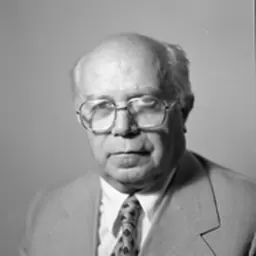
Contemporaries
People whose lives overlapped Douglas Northcott's


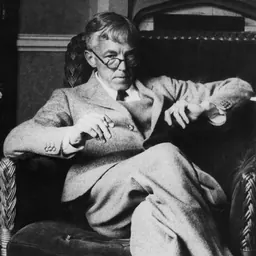
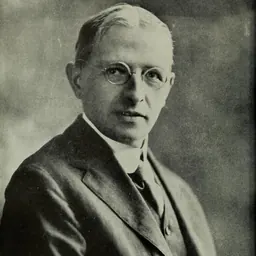
Frequently asked questions
Who was Douglas Northcott?
British mathematician (1916–2005)
When was Douglas Northcott born?
Douglas Northcott was born on 31 December 1916 in London.
When did Douglas Northcott die?
Douglas Northcott died on 8 April 2005 in Sheffield.
What was Douglas Northcott's occupation?
Douglas Northcott was a mathematician.
What was Douglas Northcott known for?
Douglas Northcott was known for Ideal theory.
What nationality was Douglas Northcott?
Douglas Northcott was British.
Sources & further reading
· Wikipedia: Douglas Northcott
Cite this page
APA: Biography.guide. (2026). Douglas Northcott. https://biography.guide/douglas-northcott/
MLA: "Douglas Northcott." Biography.guide, https://biography.guide/douglas-northcott/.
Chicago: "Douglas Northcott." Biography.guide. https://biography.guide/douglas-northcott/.
Data last updated: 2026-09-20 · Spot an error? Report a correction.
Page generated 2026-09-27 05:18 UTC